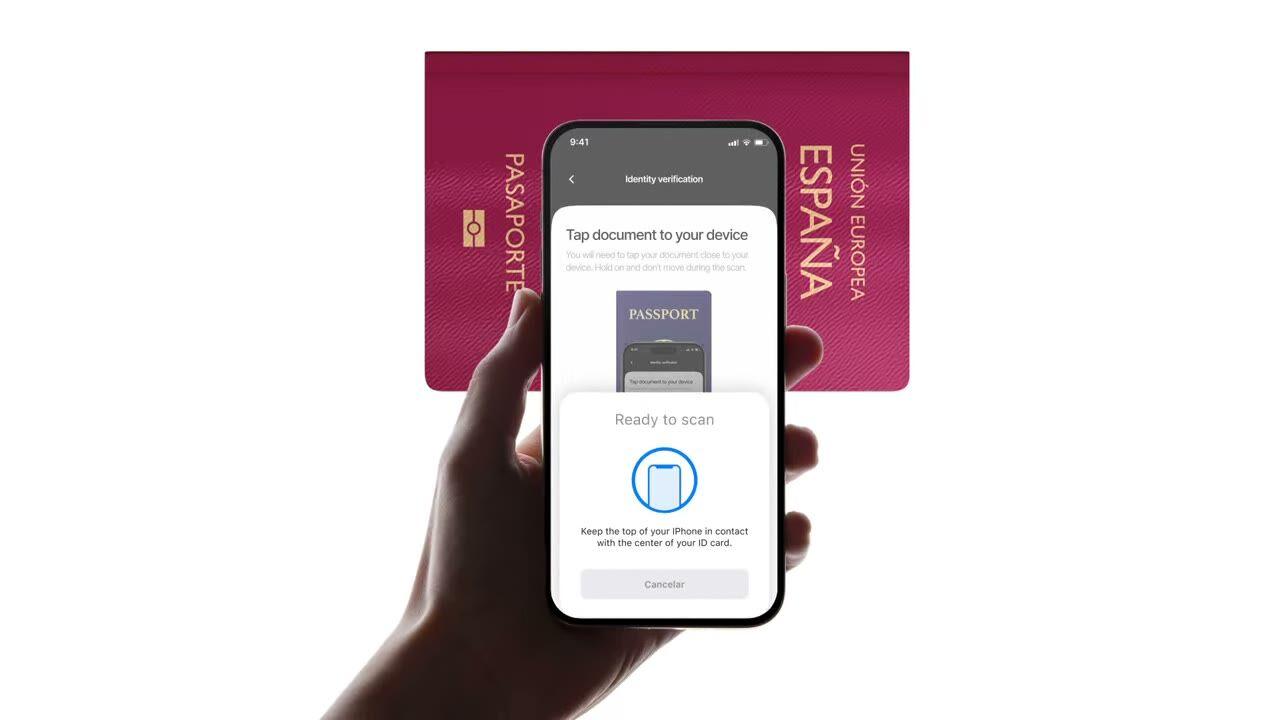
ई-पासपोर्ट या ई-आईडी को फोन पर टैप करें। यह चिप को पढ़ता है, सरकारी हस्ताक्षर को वैलिडेट करता है, और उन जालसाज़ियों को पकड़ता है जो सादे फोटो चेक से छूट जाती हैं। प्रति रीड $0.15, 500 मुफ्त/माह।
पासपोर्ट टैप करें। चिप वही डेटा लौटाती है जो फोटो ने दिया था, सिवाय इसके कि इस बार यह जारी करने वाले देश द्वारा हस्ताक्षरित है। $0.15, 2 सेकंड से कम में।
यह कैसे काम करता है
चार स्टेप्स में साइन-अप से वेरिफाइड यूज़र तक।
चरण 01 / 04
01
वर्कफ़्लो बनाएं
अपनी पसंद के चेक चुनें, ID, Liveness, फेस मैच, सैंक्शन, एड्रेस, एज, फ़ोन, ईमेल, कस्टम प्रश्न। उन्हें डैशबोर्ड में एक फ़्लो में ड्रैग करें, या उसी फ़्लो को हमारी API पर पोस्ट करें। कंडीशंस पर ब्रांच करें, A/B टेस्ट चलाएं, किसी कोड की ज़रूरत नहीं।
इंटीग्रेट करें
हमारे वेब, iOS, Android, React Native, या Flutter SDK के साथ नेटिवली एम्बेड करें। एक होस्टेड पेज पर रीडायरेक्ट करें। या बस अपने यूज़र को एक लिंक भेजें, ईमेल, SMS, WhatsApp, कहीं भी। जो आपके स्टैक के लिए फिट बैठता है, उसे चुनें।
यूज़र फ़्लो से गुज़रता है
Didit कैमरा, लाइटिंग क्यू, मोबाइल हैंड-ऑफ और एक्सेसिबिलिटी होस्ट करता है। जब यूज़र फ़्लो में होता है, तो हम रियल टाइम में 200+ फ्रॉड सिग्नल्स को स्कोर करते हैं और हर फ़ील्ड को आधिकारिक डेटा स्रोतों के खिलाफ वेरिफाई करते हैं। परिणाम दो सेकंड से कम में।
आपको परिणाम मिलते हैं
रियल-टाइम साइंड वेबहुक्स आपके डेटाबेस को सिंक में रखते हैं, जैसे ही कोई यूज़र अप्रूव होता है, डिक्लाइन होता है, या रिव्यू के लिए भेजा जाता है। मांग पर API को पोल करें। या हर सेशन, हर सिग्नल का निरीक्षण करने और अपने तरीके से मामलों को मैनेज करने के लिए कंसोल खोलें।
डेवलपर्स के लिए बनाया गया · फ्रॉड के खिलाफ बनाया गया · डिज़ाइन से खुला
छह क्षमताएँ. एक फ़ीचर फ़्लैग. NFC.
नीचे दी गई हर क्षमता एक ही मॉड्यूल पर एक टॉगल है. कोई अपसेल टियर नहीं, कोई अलग SKU नहीं, कोई ऐड-ऑन कॉल नहीं. उन्हें हर वर्कफ़्लो के हिसाब से चालू करें, या API के ज़रिए वर्कफ़्लो बनाते समय NFC मॉड्यूल को शामिल करें.
हर चिप पर सिग्नेचर वेरिफ़ाई करें, पेज पर प्रिंट नहीं.
हर आधुनिक ई-पासपोर्ट और ई-आईडी में जारी करने वाली सरकार द्वारा हस्ताक्षरित एक कॉन्टैक्ट-लेस चिप होती है. हम इसे NFC (नियर-फ़ील्ड कम्युनिकेशन) के ज़रिए पढ़ते हैं, डिजिटल सिग्नेचर को वैलिडेट करते हैं, और एक छेड़छाड़-प्रूफ फ़ैसला देते हैं. यह मॉर्फ हमलों, फ़ोटो बदलने और उन जालसाज़ियों को पकड़ता है जो विज़ुअल इंस्पेक्शन से पास हो जाती हैं.
SPAINe-Passport
P<ESPROY<<OLIVIA<<<<<<<
Chip readICAO 9303
Passive AuthenticationSOD signature valid
Active AuthenticationChip challenge OK
Chip AuthenticationSession key derived
Signed by issuerAuthentic
02 · ICAO 9303 डेटा ग्रुप
पूरे चिप कंटेंट्स निकाले गए, संरचित और हस्ताक्षरित.
चिप पर हर ICAO 9303 डेटा ग्रुप पढ़ा जाता है, हस्ताक्षरित सुरक्षा ऑब्जेक्ट, व्यक्तिगत डेटा, MRZ (मशीन-रीडेबल ज़ोन), हाई-रिज़ॉल्यूशन फ़ेशियल इमेज, सिग्नेचर इमेज, साथ ही जारी करने वाले देश द्वारा स्टोर किए गए कोई भी अतिरिक्त बायोमेट्रिक्स. आपको एक क्लीन `chip_data` JSON और पोर्ट्रेट और सिग्नेचर के लिए हस्ताक्षरित URL मिलते हैं.
Document chipSOD · signed data groups
Signed
First nameDG1
Olivia
Last nameDG1
Roy
Date of birthDG1
12 Mar 1992
Document numberDG1
XAB204731
Facial imageDG2
High-res portrait
Signed at issuance · not OCR5 fields verified
03 · ICAO PKD ट्रस्ट
ICAO पब्लिक की डायरेक्टरी में ट्रस्ट एंकर किया गया.
हर चिप रीड पूरी सर्टिफ़िकेट चेन को ट्रेस करता है, डॉक्यूमेंट सिग्नेचर → कंट्री साइनिंग अथॉरिटी → ICAO पब्लिक की डायरेक्टरी रूट, और देश की रिवोकेशन लिस्ट को रियल टाइम में चेक करता है. रद्द किए गए और एक्सपायर हुए सर्टिफ़िकेट कॉन्फ़िगर करने योग्य चेतावनियों के रूप में सामने आते हैं; बाकी रिपोर्ट पर ऑथेंटिसिटी बूलियन के रूप में पास हो जाते हैं.
Document SignerDSC · eID Spain
Country Signing CACSCA · CRL current
ICAO PKD RootPublic Key Directory
Root
Integrity
SOD integrity
DG integrity
DSC not revoked
DSC not expired
Verified · ICAO PKDChain valid
04 · फ़ोटो बनाम चिप
हर फ़ील्ड को क्रॉस-चेक करें. बेमेल होने पर अपने आप डिक्लाइन करें.
फ़ोटो डेटा चिप डेटा से मेल खाना चाहिए. जब वे अलग होते हैं, तो सेशन अपने आप डिक्लाइन हो जाता है, उस ट्रिगर को बंद नहीं किया जा सकता. यह छेड़छाड़ किए गए फ़ोटो ज़ोन, बदली हुई चिप, या वास्तविक दिखने वाले प्रिंट वाले नकली दस्तावेज़ का सबसे स्पष्ट संकेत है.
Data source
Camera OCRChip read
Document number
XAB2O4731XAB204731≈ 91.4%Signed
First name
0LIVIAOLIVIA≈ 96.7%Signed
Expiry date
03 / 203103 / 2031≈ 99.1%Signed
Best-effort read · fonts, glare, wearExact values · signed by the issuer2 mismatchesSource of truth
नेटिव SDKs आपके लिए डिवाइस NFC रीडर, एंटाइटेलमेंट और चिप-रीडिंग UI को वायर करते हैं. iOS Core NFC का उपयोग करता है; Android NfcAdapter पर IsoDep का उपयोग करता है; React Native और Flutter दोनों को रैप करते हैं. NFC के बिना ब्राउज़र अपने आप स्टैंडर्ड ID + सेल्फ़ी पर वापस आ जाते हैं, एक स्किप चेतावनी ट्रिगर होती है और सेशन जारी रहता है.
React Native · FlutterBridges the native SDKsBridgedidit.nfc.read()One call · native under the hood
Web browserNo NFC · falls back to OCRFallbackdidit.ocr.scan()Camera capture · OCR fields
One call · NFC when the device supports itAuto-fallback · session continues with OCR
06 · दुनिया भर में कवरेज
हर ICAO-जारी करने वाला देश, हर तिमाही बढ़ रहा है.
2006 के बाद जारी किए गए अधिकांश पासपोर्ट में एक चिप होती है, साथ ही राष्ट्रीय ई-आईडी की बढ़ती सूची, स्पेनिश DNIe, जर्मन Personalausweis, इतालवी CIE, एस्टोनियाई ID-कार्ड, पुर्तगाली Cartão de Cidadão, बेल्जियम eID, डच eID. देश के सर्टिफ़िकेट अपने आप रीफ़्रेश होते हैं; नए देश जिस दिन हम उन्हें इनजेस्ट करते हैं, उसी दिन पढ़ने योग्य हो जाते हैं.
DNIeSpain
PersonalausweisGermany
Carta CIEItaly
Cartão de CidadãoPortugal
ID-kaartEstonia
2006e-Passports since
30+National e-IDs
9303ICAO standard
CSCA certificates refreshed automaticallyReadable via NFC
इंटीग्रेट करें
एक वर्कफ़्लो. चिप रीड लॉन्च करने के दो तरीके.
NFC का कोई सर्वर-टू-सर्वर स्टैंडअलोन एंडपॉइंट नहीं है, चिप को NFC हार्डवेयर वाले डिवाइस की ज़रूरत होती है. नीचे दिए गए दोनों पाथ एक ही क्रिएट-सेशन कॉल शेयर करते हैं; वे केवल इस बात में भिन्न हैं कि यूज़र हमारे होस्ट किए गए UI में या आपके अपने ऐप के अंदर नेटिव SDK के ज़रिए चिप को पढ़ता है.
// iOS · Swift
import DiditSdk
let result = try await DiditSdk.shared.startVerification(
के साथ: sessionId,
कॉन्फ़िगरेशन: config)
donein-app{ "status": "Approved" }
एजेंट-रेडी इंटीग्रेशन
एक प्रॉम्प्ट में NFC वेरिफिकेशन शिप करें।
नीचे दिए गए ब्लॉक को Claude Code, Cursor, Codex, Devin, Aider, या Replit Agent में पेस्ट करें। my_stack प्लेसहोल्डर को अपने फ्रेमवर्क, भाषा और यूज़ केस से भरें। एजेंट Didit को प्रोविज़न करता है, NFC एनेबल्ड वर्कफ़्लो बनाता है, वेबहुक को वायर करता है, और शिप करता है।
didit-integration-prompt.md
# Didit NFC Verification — integrate in 5 minutes

You are integrating Didit's NFC Verification (cryptographic e-passport
and e-ID chip reading) module into <my_stack>. Follow these steps exactly.
Every URL, header, and enum value below is canonical — do not paraphrase
or "improve" them.

## 1. Provision an account
- Sign up: https://business.didit.me (no credit card required).
- Or provision programmatically: POST https://apx.didit.me/auth/v2/programmatic/register/
  (returns an API key bound to the workspace + application).

## 2. What NFC Verification actually does
NFC Verification reads the secure contact-less chip embedded in modern
e-passports and e-IDs (the small chip-and-antenna sticker symbol on the
cover) and runs four cryptographic checks against the data it extracts:

1. Passive Authentication — every Data Group (DG1 personal data, DG2
   facial image, etc.) is hashed and compared against the signed hash
   stored in the Document Security Object (SOD). Catches any single-bit
   tampering of the chip contents.
2. Certificate chain validation — Document Signer Certificate (DSC) →
   Country Signing Certificate Authority (CSCA) → ICAO Public Key
   Directory (PKD) root. Proves the chip was signed by the issuing
   government, not a clone.
3. Certificate Revocation List (CRL) check — DSCs revoked by the issuing
   country are caught and flagged.
4. Chip Authentication — where the document supports it, prevents chip
   cloning by challenging the chip with a key-pair handshake.

PACE (Password Authenticated Connection Establishment) or BAC (Basic
Access Control) is used to derive the session key from the Machine-Readable Zone (MRZ); Didit
handles that automatically. All of this is ICAO 9303 standard.

## 3. Two integration paths — pick one

### Path A — Workflow Builder (hosted UI, REQUIRED for NFC)
NFC Verification has no server-to-server standalone endpoint. The chip
has to be read by a device with NFC hardware, so you always integrate
through the Workflow + native SDK (or hosted mobile web that falls back).

1. Create a workflow that contains the NFC feature:
   POST https://verification.didit.me/v3/workflows/
   Authorization header:  x-api-key: <your-api-key>
   Body: workflow_label, features array with the entries
         { feature: "OCR" }
         { feature: "NFC" }
         (UPPERCASE — strict enum)
   You should always pair NFC with OCR (ID Verification) so the MRZ is captured
   for the chip handshake AND so an OCR cross-validation is available.

2. Create a verification session for an end user:
   POST https://verification.didit.me/v3/session/
   Body: workflow_id (from step 1), vendor_data (your own user id).
   Response: url (the hosted verification link) — redirect the user to
   it (or open it in the native SDK with
   shared.startVerification(with: sessionId)).

3. Listen for webhook callbacks (see "Webhooks" below).

### Path B — Native SDKs (drop-in, recommended for mobile apps)
Same workflow + session above, but launch the verification flow in your
own iOS or Android app via the Didit SDK. The SDK wires the NFC reader,
the entitlements, and the chip-reading UI for you.

- iOS: DiditSdk.shared.startVerification(with: sessionId, configuration:)
  Required entitlements (handled by the SDK):
    - com.apple.developer.nfc.readersession.formats = ["TAG"]
    - ISO7816 application identifiers for ePassports
- Android: DiditSdk.startVerification(sessionId, config) — uses
  IsoDep (android.nfc.tech.IsoDep) under the hood.
- React Native / Flutter: the same SDK, exposed through the cross-
  platform module — see docs.didit.me/integration/native-sdks/.

### Web browsers — NFC is unavailable
Web NFC API is not generally available. Chrome on Android has an
experimental Web NFC that is unstable and requires explicit permissions;
Safari on iOS has no support. For web integrations, NFC is automatically
skipped and the user proceeds with standard ID + selfie. If you require
NFC, deep-link the user into the Didit App or your own native app.

## 4. Webhooks
- Register a webhook destination once via
  POST https://verification.didit.me/v3/webhook/destinations/
  Body: url, subscribed_events: ["session.verified", "session.review_started",
                                  "session.declined"]
- Response includes secret_shared_key — store it.
- Every webhook delivery carries an X-Signature-V2 header you MUST verify
  before trusting the payload.  HMAC-SHA256 verification MUST run against the raw body bytes (the raw payload as Didit sent it) BEFORE any JSON parsing — re-serialising the parsed body changes whitespace and key order, which invalidates the signature.Algorithm:
    1. sortKeys(payload) recursively
    2. shortenFloats (truncate trailing zeros after the decimal point)
    3. JSON.stringify the result
    4. HMAC-SHA256 with the secret_shared_key
    5. Hex-encode, compare to the X-Signature-V2 header.

## 5. Reading the report
The session decision includes an nfc_verifications[] array alongside
id_verifications[] — one entry per workflow node, each with its own node_id.
Fields on each nfc_verifications entry:

- status: "Approved" | "Declined" | "In Review" | "Not Finished"
- portrait_image: signed URL to the chip-extracted DG2 facial image
- signature_image: signed URL to the chip-extracted DG7 signature
- chip_data:
    document_type, issuing_country (ISO 3166-1 alpha-3),
    document_number, expiration_date (YYYY-MM-DD),
    first_name, last_name, birth_date, gender ("M" | "F" | "U"),
    nationality (ISO 3166-1 alpha-3), address, place_of_birth.
- authenticity:
    sod_integrity (boolean — every Data Group hash matched the SOD)
    dg_integrity (boolean — Data Group binary integrity check passed)
- certificate_summary:
    issuer (CSCA Common Name + serial + organization + country)
    subject (DSC Common Name)
    serial_number
    not_valid_after (YYYY-MM-DD HH:MM:SS)
    not_valid_before (YYYY-MM-DD HH:MM:SS)
- warnings: Array of { risk, additional_data, log_type,
                       short_description, long_description }

### Auto-decline (always enforced, never configurable)
- NFC_AND_OCR_DATA_NOT_SAME — Optical Character Recognition (OCR) data
  and chip data differ. Indicates document tampering or fake chip.

### Configurable warnings (per-workflow action: Decline / Review / Approve)
- SKIPPED_NFC_VALIDATION       — chip not read (no NFC hardware, no
                                  permissions, document has no chip)
- NFC_CHIP_NOT_VERIFIED        — chip read but signature could not be
                                  verified (missing CSCA, older document)
- DSC_CERTIFICATE_REVOKED      — Document Signer Certificate listed on
                                  the issuing country's CRL
- DSC_CERTIFICATE_EXPIRED      — Document Signer Certificate past its
                                  validity period

## 6. Hard rules — do not change
- Base URL for /v3/* endpoints is verification.didit.me (NOT apx.didit.me).
- Feature enum is UPPERCASE: NFC, OCR, LIVENESS, FACE_MATCH.
- Auth header is x-api-key (lowercase, hyphenated).
- Webhook signature header is X-Signature-V2 (NOT X-Signature).
- Always verify webhook signatures before trusting payload data.
- Always pair NFC with OCR (ID Verification) in the workflow — NFC alone
  cannot derive the chip key without the MRZ from the document photo.
- Status casing matches exactly: "Approved", "Declined", "In Review",
  "Not Finished" (title-cased, space-separated).
- Treat NFC as an additive confidence boost, not a hard gate, unless
  your risk policy explicitly requires it (regulated remote
  onboarding under PSD3, AMLD6 high-risk customer flows, etc.).

## 7. Pricing reference (public)
- NFC Verification: $0.15 per chip read (standalone module).
- Bundled inside a full Know Your Customer (KYC) workflow (ID + Liveness + Face Match + NFC):
  priced as the underlying KYC bundle ($0.33) + $0.15 NFC if enabled.
- 500 free checks every month, forever, on every account.

## 8. Verify your integration
- Sandbox starts on signup at https://business.didit.me — no separate flag.
- Test documents: use the Didit App on a real iOS or Android device with
  any ICAO 9303 e-passport issued after 2006 (most modern passports).
- Sandbox webhook events fire the same shape as production; verify the
  X-Signature-V2 header in dev too.
- Switch to live: flip the application's environment toggle in console.

When in doubt: https://docs.didit.me/core-technology/nfc-verification/overview
डिज़ाइन द्वारा कंप्लायंट
एक क्लिक में एक नया देश खोलें। हम मुश्किल काम करते हैं।
हम स्थानीय सहायक कंपनियाँ खोलते हैं, लाइसेंस सुरक्षित करते हैं, पेनेट्रेशन टेस्ट चलाते हैं, सर्टिफिकेशन हासिल करते हैं, और हर नए रेगुलेशन के साथ अलाइन करते हैं। एक नए देश में वेरिफिकेशन शिप करने के लिए, बस एक टॉगल फ्लिप करें। 220+ देश लाइव, हर तिमाही ऑडिट और पेन-टेस्टेड, एकमात्र आइडेंटिटी प्रोवाइडर जिसे EU सदस्य-राज्य सरकार ने औपचारिक रूप से इन-पर्सन वेरिफिकेशन से ज़्यादा सुरक्षित बताया है।
हर चिप को कैनोनिकल ई-पासपोर्ट स्टैंडर्ड के हिसाब से पढ़ा जाता है।
PKD
विश्वास ICAO पब्लिक की डायरेक्टरी रूट पर आधारित है।
<2s
आधुनिक स्मार्टफोन पर एंड-टू-एंड चिप रीड।
$0.15
प्रति NFC चिप रीड। हर महीने 500 मुफ्त।
तीन टियर, एक मूल्य सूची
मुफ़्त में शुरू करें। ज़रूरत के हिसाब से भुगतान करें। एंटरप्राइज़ तक स्केल करें।
हर महीने 500 मुफ़्त वेरिफिकेशन, हमेशा के लिए। फिर, केवल तभी भुगतान करें जब कोई मॉड्यूल चले। एंटरप्राइज़ के लिए कस्टम कॉन्ट्रैक्ट, डेटा रेज़िडेंसी और सर्विस लेवल एग्रीमेंट (SLAs) उपलब्ध हैं।