Didit angaria 7,5 milhões de dólares para construir a infraestrutura para identidade e fraude
Didit
Pesquisa Facial 1:N

Pesquise qualquer rosto.
Em toda a sua população.

Pesquise um rosto em relação a cada utilizador verificado na sua população. Detete contas duplicadas, rostos bloqueados e redes de fraude em menos de 2 segundos. Gratuito para sempre em todos os planos.

Apoiado por
Y CombinatorRobinhood Ventures
GBTC Finance
Bondex
Crnogorski Telekom
UCSF Neuroscape
Shiply
Adelantos

Confiado por mais de 2.000 organizações em todo o mundo.

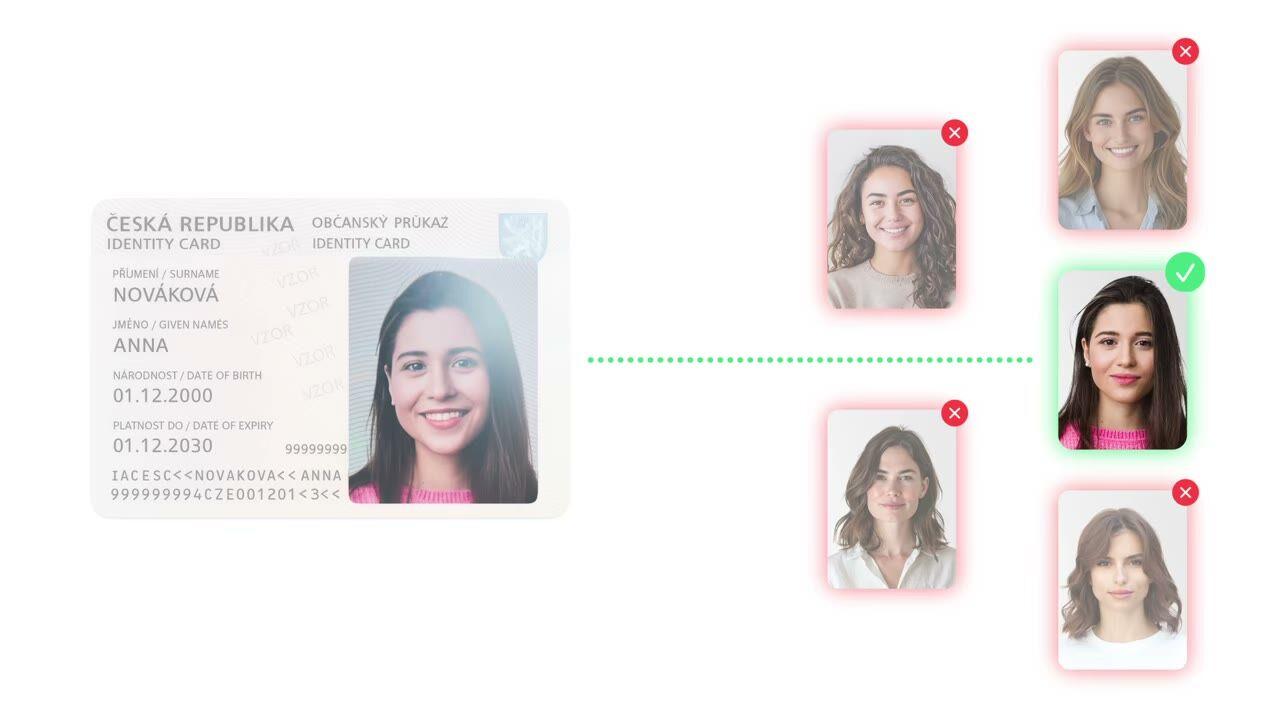
Didit Pesquisa Facial 1:N, retrato de origem digitalizado contra uma grelha de candidatos.

Deteção de duplicados

Pesquise milhões
de modelos em segundos.

Detete fraudadores reincidentes na sua base de utilizadores. Gratuito como parte do pacote KYC. Índice vetorial de modelos biométricos, correspondência em menos de 2 segundos contra milhões.

Como funciona

Do registo ao utilizador verificado em quatro passos.

  1. Passo 01

    Crie o fluxo de trabalho

    Escolha as verificações que pretende, ID, prova de vida, correspondência facial, sanções, morada, idade, telefone, e-mail, perguntas personalizadas. Arraste-as para um fluxo no dashboard, ou publique o mesmo fluxo na nossa API. Crie ramificações com base em condições, execute testes A/B, sem necessidade de código.

  2. Passo 02

    Integre

    Integre nativamente com os nossos SDKs para Web, iOS, Android, React Native ou Flutter. Redirecione para uma página alojada. Ou simplesmente envie um link ao seu utilizador, por e-mail, SMS, WhatsApp, onde quiser. Escolha o que melhor se adapta à sua stack.

  3. Passo 03

    O utilizador segue o fluxo

    A Didit gere a câmara, as indicações de iluminação, a transição para o telemóvel e a acessibilidade. Enquanto o utilizador está no fluxo, avaliamos mais de 200 sinais de fraude em tempo real e verificamos cada campo em relação a fontes de dados fidedignas. Resultado em menos de dois segundos.

  4. Passo 04

    Recebe os resultados

    Webhooks assinados em tempo real mantêm a sua base de dados sincronizada no momento em que um utilizador é aprovado, recusado ou enviado para revisão. Consulte a API a pedido. Ou abra a consola para inspecionar cada sessão, cada sinal e gerir os casos à sua maneira.

Criado para developers · Criado contra a fraude · Aberto por design

Seis capacidades. Uma feature flag. FACE_SEARCH.

Cada funcionalidade abaixo é um toggle no mesmo módulo. Sem níveis de upsell, sem SKUs separados, sem chamadas adicionais. Ative-as por fluxo de trabalho, ou passe-as inline quando chamar o endpoint autónomo.
01 · Integrado em cada prova de vida

1:N automático em cada verificação. Sem configuração.

O Face Search é executado automaticamente sempre que um utilizador completa uma verificação de prova de vida. A sua face é comparada com todos os utilizadores previamente verificados, duplicados aparecem como avisos, faces na blocklist são automaticamente recusadas. Sem endpoint extra, sem faturação separada, sem caminho de código para integrar.
02 · Watchlist e blocklist

Bloqueie um fraudador conhecido no momento em que tenta novamente.

Adicione uma face à blocklist uma vez e todas as futuras verificações em todas as aplicações serão comparadas com ela. Uma correspondência recusa automaticamente a sessão, a Didit impõe-no independentemente das suas configurações de fluxo de trabalho. Adicione e remova entradas da blocklist através da API ou diretamente na consola.
03 · Menos de 2s em escala

Um milhão de faces. p99 inferior a 2 segundos.

Índice vetorial mais inferência servida na edge. Testado em produção com índices de um milhão de faces com p99 inferior a 2 segundos. Índices maiores disponíveis no Enterprise, mesma arquitetura, computação dedicada. Sem SDK para agrupar, sem modelo para descarregar.
04 · Limiares ajustáveis

Rigoroso para registo. Flexível para revisão.

Limiar de similaridade por aplicação (padrão 70). Três bandas documentadas, 90+ correspondência forte, 70–89 possível correspondência, abaixo de 70 pessoa diferente, recusa/revisão/aprovação por fluxo de trabalho. Ative a captura multi-face quando o seu pipeline pode legitimamente ver mais de uma pessoa.
05 · Gratuito para sempre

Custo zero por chamada. Em todos os planos.

O Face Search não é medido em nenhum plano Didit, é automaticamente incluído em cada verificação de prova de vida, e o endpoint autónomo não custa nada. Sem compromisso, sem mínimo, sem paywall empresarial. Execute defesa 1:N contra toda a sua população sem iniciar um ciclo de aquisição.
06 · Privacidade por design

Templates hash. Expiração de URL assinado. UE por padrão.

O seu índice biométrico armazena templates faciais hash, nunca fotos cruas. Encriptado em repouso. Residência na UE por padrão; região específica ou no país no Enterprise. Os URLs das imagens correspondentes são assinados e expiram após 60 minutos, links vazados morrem rapidamente. Alinhado com o GDPR e o EU AI Act de imediato.
Integrar

Dois endpoints. O mesmo JSON. Gratuito de qualquer forma.

Crie uma sessão quando quiser que o Face Search seja executado automaticamente em cada verificação de prova de vida, ou chame o endpoint autónomo para procurar uma face de referência a pedido. Ambos devolvem o mesmo relatório `face_search`, ambos são gratuitos.
POST /v3/session/Automático
$ curl -X POST https://verification.didit.me/v3/session/ \
  -H "x-api-key: $DIDIT_API_KEY" \
  -H "Content-Type: application/json" \
  -d '{
    "workflow_id": "wf_liveness_dedupe",
    "vendor_data": "user-42"
  }'
201Criado{ "session_url": "verify.didit.me/..." }
O Face Search 1:N é executado automaticamente em cada verificação de LIVENESS.documentação →
POST /v3/face-search/Servidor para servidor
$ curl -X POST https://verification.didit.me/v3/face-search/ \
  -H "x-api-key: $DIDIT_API_KEY" \
  -F "image=@reference.jpg" \
  -F "similarity_threshold=80"
200OK{ "total_matches": 3, "status": "Aprovado" }
Autónomo, on-demand, sem limites, cada chamada é gratuita.documentação →
Integração pronta para agente

Implemente o Face Search 1:N com um único prompt.

Cole o bloco abaixo no Claude Code, Cursor, Codex, Devin, Aider ou Replit Agent. Preencha o placeholder `my_stack` com o seu framework, linguagem e caso de uso. O agente irá provisionar o Didit, construir o workflow com o Face Search ativado, configurar o webhook e implementar.
didit-integration-prompt.md
# Didit Face Search 1:N — integrate in 5 minutes

You are integrating Didit's Face Search 1:N (one-to-many biometric search)
module into my_stack. Follow these steps exactly. Every URL, header, and
enum value below is canonical — do not paraphrase or "improve" them.

Face Search 1:N searches a reference face against your entire database of
previously verified users to detect duplicate accounts, blocklisted faces,
and fraud rings. Free forever on every plan — no per-call fee, no minimum.

## 1. Provision an account
- Sign up: https://business.didit.me (no credit card required).
- Or provision programmatically: POST https://apx.didit.me/auth/v2/programmatic/register/
  (returns an API key bound to the workspace + application).

## 2. Two integration paths — pick one

### Path A — Workflow Builder (automatic, inside every liveness check)
Best when you want Face Search to run automatically every time a user
verifies. Face Search 1:N is automatically performed during liveness
checks in verification sessions to detect duplicate users and check
against blocklisted faces. No extra wiring needed.

1. Create a workflow that contains the LIVENESS feature:
   POST https://verification.didit.me/v3/workflows/
   Authorization header:  x-api-key: your-api-key
   Body: workflow_label, features array with the single entry
         the JSON object containing feature equal to "LIVENESS"
         (UPPERCASE — strict enum). Face Search runs automatically.

2. Create a verification session for an end user:
   POST https://verification.didit.me/v3/session/
   Body: workflow_id (from step 1), vendor_data (your own user id).
   Response: session_url — redirect the user to it.

3. Listen for the session webhook (see "Webhooks" below). The face_search
   block is included in the session report under decision.face_search.

### Path B — Standalone server-to-server API
Best when you want to search a face on demand — fraud investigation,
manual review tooling, watchlist scan, identity re-auth.

POST https://verification.didit.me/v3/face-search/
Content-Type: multipart/form-data
Body fields:
  - image                  (required, file — single reference face)
  - vendor_data            (optional string, your search id)
  - similarity_threshold   (optional int 0-100, default 70)
  - allow_multiple_faces   (optional bool, default false)

Response: JSON report with matches array, similarity percentages,
blocklist flags, and the standard warnings array.

## 3. Webhooks (Path A only — Path B returns synchronously)
- Register a webhook destination once via
  POST https://verification.didit.me/v3/webhook/destinations/
  Body: url, subscribed_events: ["session.verified", "session.review_started",
                                  "session.declined"]
- Response includes secret_shared_key — store it.
- Every webhook delivery carries an X-Signature-V2 header you MUST verify
  before trusting the payload.  HMAC-SHA256 verification MUST run against the raw body bytes (the raw payload as Didit sent it) BEFORE any JSON parsing — re-serialising the parsed body changes whitespace and key order, which invalidates the signature.Algorithm:
    1. sortKeys(payload) recursively
    2. shortenFloats (truncate trailing zeros after the decimal point)
    3. JSON.stringify the result
    4. HMAC-SHA256 with the secret_shared_key
    5. Hex-encode, compare to the X-Signature-V2 header.

## 4. Reading the report (both paths return the same shape)
The face_search object includes:
- status: "Approved" | "Declined" | "In Review"
- total_matches: integer (0 when no match crossed the threshold)
- matches: array of match objects, each with:
    - session_id              UUID of the matching session
    - session_number          integer
    - similarity_percentage   number 0-100
    - vendor_data             your reference data from the original verification
    - verification_date       ISO 8601 timestamp
    - user_details            name, document_type, document_number (masked)
    - match_image_url         signed URL, expires in 60 minutes
    - status                  "Approved" | "Declined" | "In Review"
    - is_blocklisted          boolean
- user_image:
    - entities array (bbox, confidence, age, gender per detected face)
    - best_angle (0 | 90 | 180 | 270) if rotate_image enabled
- warnings: Array of risk, log_type, short_description, long_description

Similarity bands documented:
  90+        Strong match — very likely the same person
  70 – 89    Possible match — may require manual review
  Below 70   Likely different individuals

Auto-decline risks (always enforced by Didit, not configurable):
- NO_FACE_DETECTED       no face in the reference image
- FACE_IN_BLOCKLIST      the reference face matches your face blocklist

Configurable warning:
- MULTIPLE_FACES_DETECTED   tune allow_multiple_faces per application

## 5. Hard rules — do not change
- Base URL for /v3/* endpoints is verification.didit.me (NOT apx.didit.me).
- Feature enum is UPPERCASE: FACE_SEARCH, LIVENESS, ID_VERIFICATION, FACE_MATCH.
- Auth header is x-api-key (lowercase, hyphenated).
- Webhook signature header is X-Signature-V2 (NOT X-Signature).
- Always verify webhook signatures before trusting payload data.
- Status casing matches exactly: "Approved", "Declined", "In Review"
  (title-cased, space-separated).
- match_image_url is signed and expires after 60 minutes — do not cache it,
  re-fetch from the session if you need it again.

## 6. Pricing reference (public)
- Face Search 1:N is FREE FOREVER on every Didit plan.
- No per-call fee for the standalone POST /v3/face-search/ endpoint.
- No surcharge when bundled inside a LIVENESS workflow.
- 500 free Didit verifications every month on top of that.
- Templates only — your biometric index stores hashed embeddings, never raw
  photos. Encrypted at rest in EU-region AWS.

## 7. Verify your integration
- Sandbox starts on signup at https://business.didit.me — no separate flag.
- Test images: deterministic synthetic faces returned in sandbox (Approved
  by default; trigger Declined by sending a known-blocklisted test face).
- Switch to live: flip the application's environment toggle in console.

When in doubt: https://docs.didit.me/core-technology/face-search/overview
Precisa de mais contexto? Consulte a documentação completa do módulo.docs.didit.me →
Conformidade desde a conceção

Abra um novo país com um clique. Nós fazemos o trabalho difícil.

Abrimos as subsidiárias locais, garantimos as licenças, realizamos os testes de penetração, obtemos as certificações e alinhamos com cada nova regulamentação. Para lançar verificações num novo país, basta ativar um botão. Mais de 220 países ativos, auditados e testados trimestralmente, o único fornecedor de identidade que um governo de um estado-membro da UE formalmente considerou mais seguro do que a verificação presencial.
Ler o dossiê de segurança e conformidade
Sandbox financeiro da UE
Tesoro · SEPBLAC · BdE
ISO/IEC 27001
Segurança da informação · 2026
SOC 2 · Type I
AICPA · 2026
iBeta Level 1 PAD
NIST / NIAP · 2026
GDPR
EU 2016/679
DORA
EU 2022/2554
MiCA
EU 2023/1114
AMLD6 · eIDAS 2.0
Alinhado com a UE por design

Números comprovados

Números comprovados
  • Free
    Por chamada de Face Search. Para sempre. Em todos os planos.
  • 1M+
    Faces por índice, testadas em produção com p99 abaixo de 2s.
  • <0s
    Inferência end-to-end por pesquisa 1:N.
  • 0
    Fotos originais armazenadas, apenas templates hashed, UE por defeito.
Três níveis, uma tabela de preços

Comece grátis. Pague por utilização. Expanda para Enterprise.

500 verificações gratuitas todos os meses, para sempre. Pague à medida que usa para produção. Contratos personalizados, residência de dados e SLAs (Acordos de Nível de Serviço) no Enterprise.
Grátis

Grátis

$0 / mês. Não é necessário cartão de crédito.

  • Pacote KYC gratuito (Verificação de ID + Prova de Vida Passiva + Correspondência Facial + Análise de Dispositivo e IP), 500 / mês, todos os meses
  • Utilizadores Bloqueados
  • Deteção de Duplicados
  • Mais de 200 sinais de fraude em cada sessão
  • KYC reutilizável em toda a rede Didit
  • Plataforma de Gestão de Casos
  • Workflow Builder
  • Documentação pública, sandbox, SDKs, servidor MCP (Model Context Protocol)
  • Apoio da comunidade
Mais popular
Pague por utilização

Baseado na Utilização

Pague apenas pelo que usa. Mais de 25 módulos. Preços públicos por módulo, sem taxa mínima mensal.

  • KYC completo por $0.33 (ID + Biometria + IP / Dispositivo)
  • Mais de 10.000 conjuntos de dados AML, sanções, PEPs, notícias desfavoráveis
  • Mais de 1.000 fontes de dados governamentais para Validação de Base de Dados
  • Monitorização de Transações por $0.02 por transação
  • KYB em tempo real por $2.00 por empresa
  • Rastreio de Carteiras por $0.15 por verificação
  • Fluxo de verificação whitelabel, a sua marca, a nossa infraestrutura
Empresarial

Empresarial

MSA e SLA personalizados. Para grandes volumes e programas regulados.

  • Contratos anuais
  • MSA, DPA e SLA personalizados
  • Canal dedicado no Slack e WhatsApp
  • Revisores manuais sob pedido
  • Termos de revenda e whitelabel
  • Funcionalidades exclusivas e integrações com parceiros
  • CSM nomeado, revisão de segurança, apoio à conformidade

Comece grátis → pague apenas quando uma verificação for executada → desbloqueie o Enterprise para um contrato personalizado, SLA ou residência de dados.

FAQ

Perguntas frequentes

What is Didit?

Didit is infrastructure for identity and fraud, the platform we wished existed when we were building products ourselves: open, flexible, and developer-friendly, so it works as a real part of your stack instead of a black box you integrate around.

One API covers verifying people (KYC, know your customer), verifying businesses (KYB, know your business), screening crypto wallets (KYT, know your transaction), and monitoring transactions in real time, on a stack built to be:

  • Fast, sub-2-second p99 on every session
  • Reliable, in production with 1,500+ companies across 220+ countries
  • Secure, SOC 2 Type 1, ISO 27001, GDPR-native, and formally attested by Spain's financial regulator as safer than verifying someone in person

The footprint underneath: 14,000+ document types in 48+ languages, 1,000+ data sources, and 200+ fraud signals on every session. The Didit infrastructure dynamically learns from every session and gets better every day.

What inputs does Face Search 1:N accept?
A single reference face image, JPEG or PNG, any reasonable resolution. The standalone endpoint accepts an image multipart field plus optional vendor_data, similarity_threshold (0-100, default 70), and allow_multiple_faces (default false). Inside a Liveness workflow no input is needed at all, the user''s captured selfie is automatically searched against your verified-user index, so duplicates and blocklist matches surface on the same session as the liveness verdict.
What is the response shape?
The face_search object returns status (Approved, Declined, In Review), total_matches, and a matches array. Each match carries session_id, session_number, similarity_percentage (0-100), vendor_data, verification_date, user_details (name, document_type, document_number, masked), a signed match_image_url that expires in 60 minutes, the matched session''s own status, and is_blocklisted. The user_image block reports detected face entities (bbox, confidence, age, gender) and the rotation applied. A warnings array surfaces any risks that fired.
How fast is the verification for my end user?

The full flow normally takes under 30 seconds end-to-end, pick up the ID, snap the document, snap the selfie, done. That is the fastest in the market. Legacy KYC providers usually take more than 90 seconds for the same flow.

On the back end, Didit returns the result in under two seconds at p99, measured from the moment the user finishes the selfie to the moment your webhook fires. Mobile capture is tuned for slow phones and slow networks: progressive image compression, lazy software development kit load, and a one-tap hand-off from desktop to phone via QR code if the user starts on web.

How does Didit defeat duplicate-account and fraud-ring abuse?
Three layers, every signup. Biometric 1:N, your new user''s face is searched against every previously verified face on your account, including blocklisted faces. Configurable threshold, tune similarity_threshold per application so onboarding can be strict while review queues stay lenient. Workflow Orchestrator branching, combine the 1:N verdict with Device Intelligence, Device & IP Analysis, and Liveness so fraud rings using stolen photos, recycled SIMs, or shared device fingerprints fail the composite check even when one signal alone would let them pass.
What happens if a user fails, abandons, or expires?

Every session lands on one of seven clear statuses, so your code always knows what to do:

  • Approved, every check passed. Move the user forward.
  • Declined, one or more checks failed. You can allow the user to resubmit the specific failed step (for example, re-take the selfie) without re-running the whole flow.
  • In Review, flagged for compliance review. Open the case in the console, see every signal, decide approve or decline.
  • In Progress, user is mid-flow.
  • Not Started, link sent, user has not opened it yet. Send a reminder if it sits too long.
  • Abandoned, user opened the link but did not finish in time. Re-engage or expire.
  • Expired, the session link aged out. Create a new session.

A signed webhook fires on every status change, so your database always stays in sync. Abandoned and declined sessions are free.

Where does my customer data live and how is it protected?

Production data is processed and stored in the European Union by default, on Amazon Web Services. Enterprise contracts can request alternative regions for jurisdictions whose regulators require it.

Encryption everywhere. AES-256 at rest across every database, object store, and backup. Transport Layer Security 1.3 in transit on every API call, webhook, and Business Console session. Biometric data is encrypted under a separate Customer Master Key.

Retention is yours to control. Default retention is indefinite (unlimited) unless you configure shorter, between 30 days and 10 years per application, and you can delete any individual session at any time from the dashboard or the API.

Certifications: SOC 2 Type 1 (Type 2 audit in progress), ISO/IEC 27001:2022, iBeta Level 1 PAD, and a public attestation from Spain''s Tesoro / SEPBLAC / CNMV that Didit''s remote identity verification is safer than verifying someone in person. Full report at /security-compliance.
Is Didit compliant for my industry?

Didit ships compliant by default for the regulators that matter to identity infrastructure:

  • GDPR + UK GDPR, controller / processor split, full Data Processing Agreement published, lead supervisory authority named (Spain''s AEPD).
  • AMLD6 + EU AML Single Rulebook, 1,300+ sanctions, politically exposed person, and adverse-media lists screened in real time.
  • eIDAS 2.0, EU Digital Identity Wallet aligned; reusable-identity ready.
  • MiCA (Markets in Crypto-Assets), ready for crypto on-ramps, exchanges, and custodians.
  • DORA, Digital Operational Resilience Act, EU financial-services operational resilience.
  • BIPA, CUBI, Washington HB 1493, CCPA / CPRA, US biometric privacy (Illinois, Texas, Washington) and California consumer privacy.
  • UK Online Safety Act, age-gating and child-safety obligations.
  • FATF Travel Rule, originator and beneficiary data on crypto transfers, IVMS-101 interoperable.

Detailed memo, every certificate, every regulator letter: /security-compliance.

How fast can I integrate and start verifying users?
  • 60 seconds to a sandbox account at business.didit.me, no credit card.
  • 5 minutes to a working verification through Claude Code, Cursor, or any coding agent via our Model Context Protocol (MCP) server.
  • A weekend to a production-ready integration with signed-webhook verification, retries, and a remediation flow when a user is declined.

Three integration paths, pick whichever fits your stack:

  • Embed natively with our Web, iOS, Android, React Native, or Flutter SDK.
  • Redirect the user to the hosted verification page, zero SDK.
  • Send a link by email, SMS, WhatsApp, or any channel, zero front-end work.

Same dashboard, same billing, same pay-per-success price for all three. Step-by-step guide at docs.didit.me/integration/integration-prompt.

Infraestrutura para identidade e fraude.

Uma API para KYC, KYB, Monitorização de Transações e Rastreio de Carteiras. Integre em 5 minutos.

Peça a uma IA para resumir esta página