
Das Neueste vom Didit Blog.
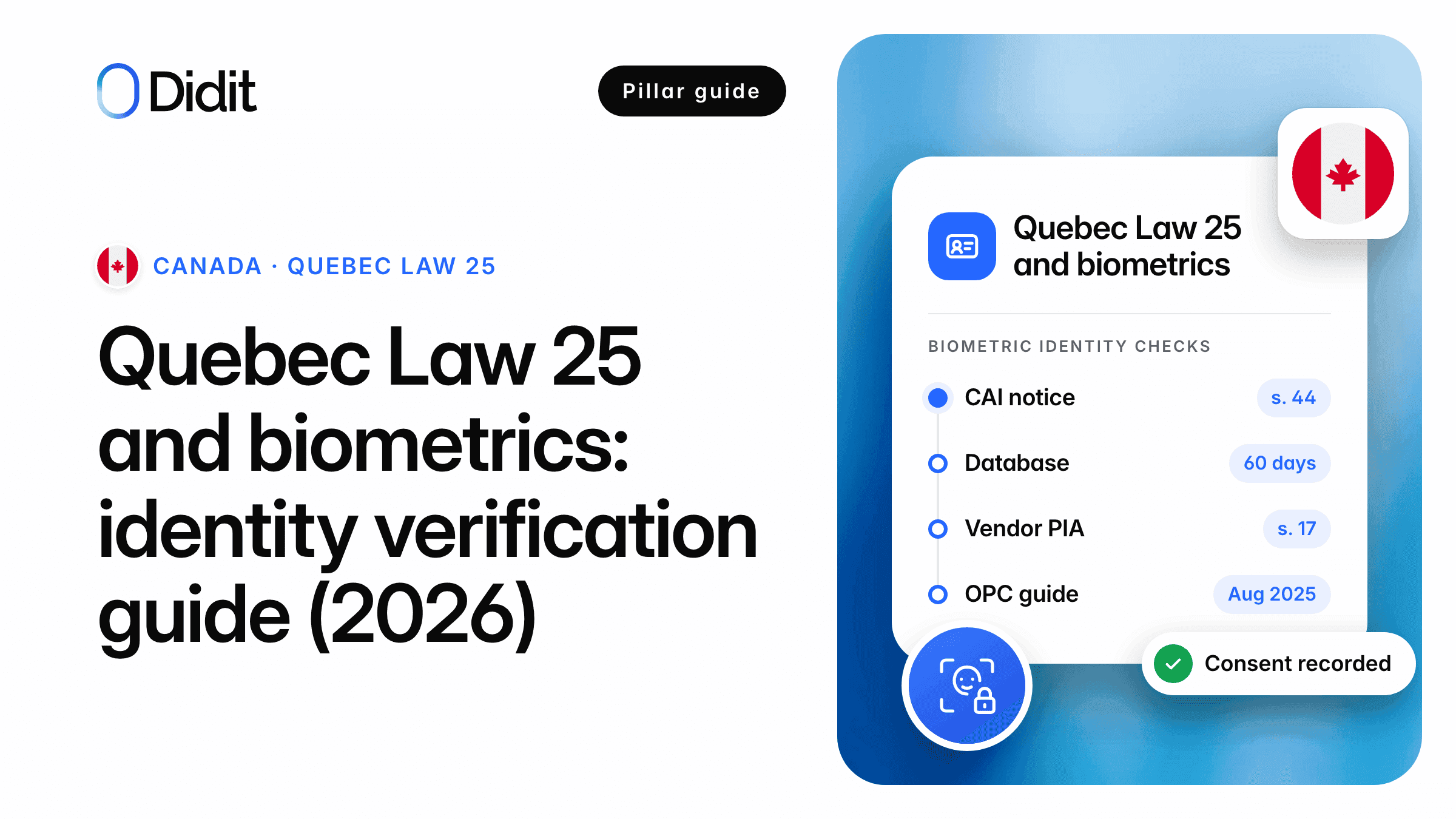
Quebec Law 25 und Biometrie: Leitfaden zur Identitätsprüfung (2026)
Quebec Law 25 und biometrische Identitätsprüfung: CAI-Meldung und ausdrückliche Einwilligung (Art. 44), Datenbanken (Art. 45), Bewertung für Anbieter (Art. 17), Sanktionen, CAI-Entscheidungen, OPC-Leitlinien, Käufer-Checkliste.
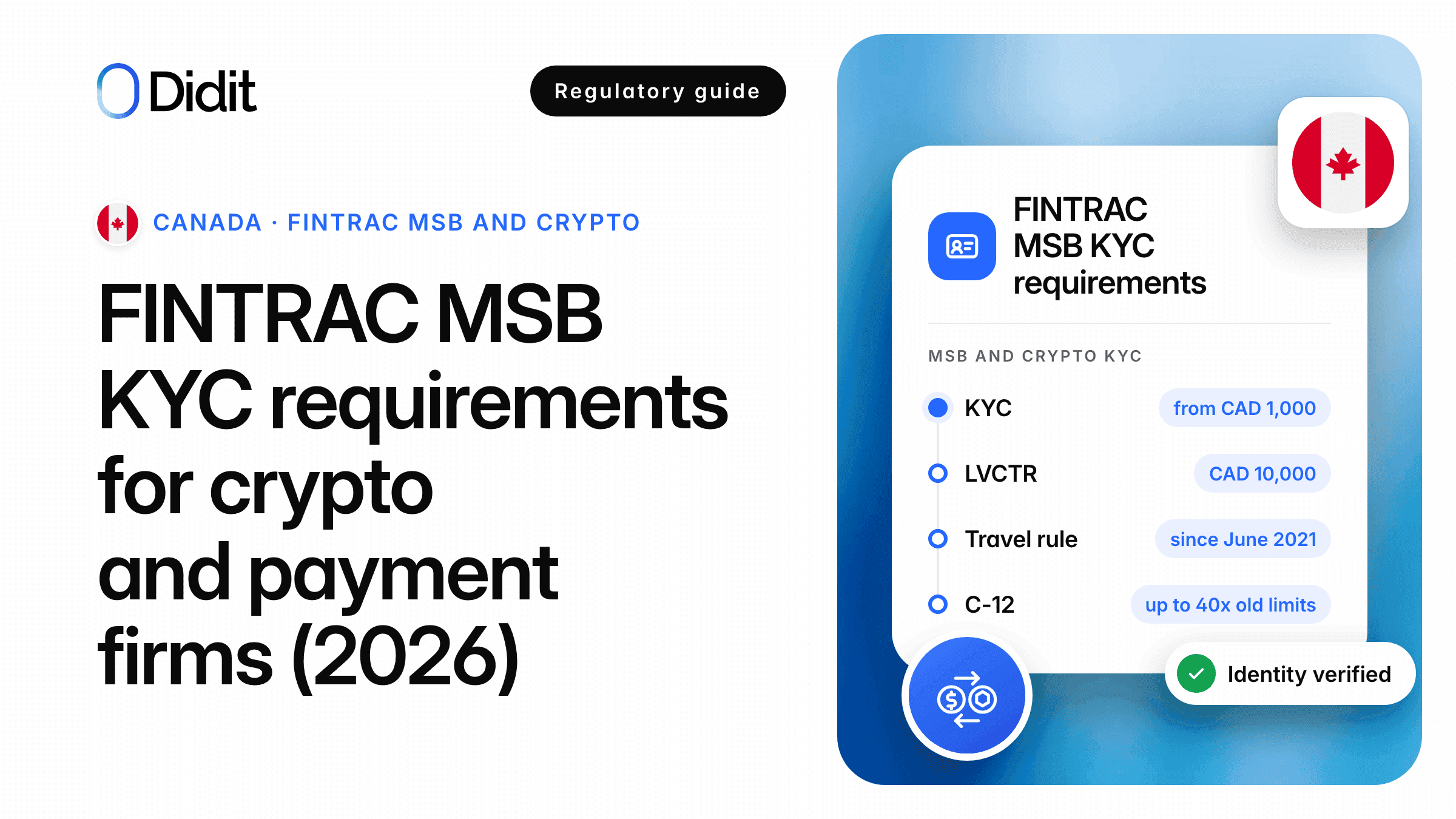
FINTRAC: KYC-Anforderungen an MSB für Krypto- und Zahlungsfirmen (2026)
FINTRAC-Regeln für MSB im Krypto-, Stablecoin- und Zahlungsbereich in Kanada: Registrierung, KYC-Schwelle von CAD 1,000, Meldungen ab CAD 10,000 in virtueller Währung, Travel Rule, RPAA, Sanktionen und ein Onboarding-Ablauf.
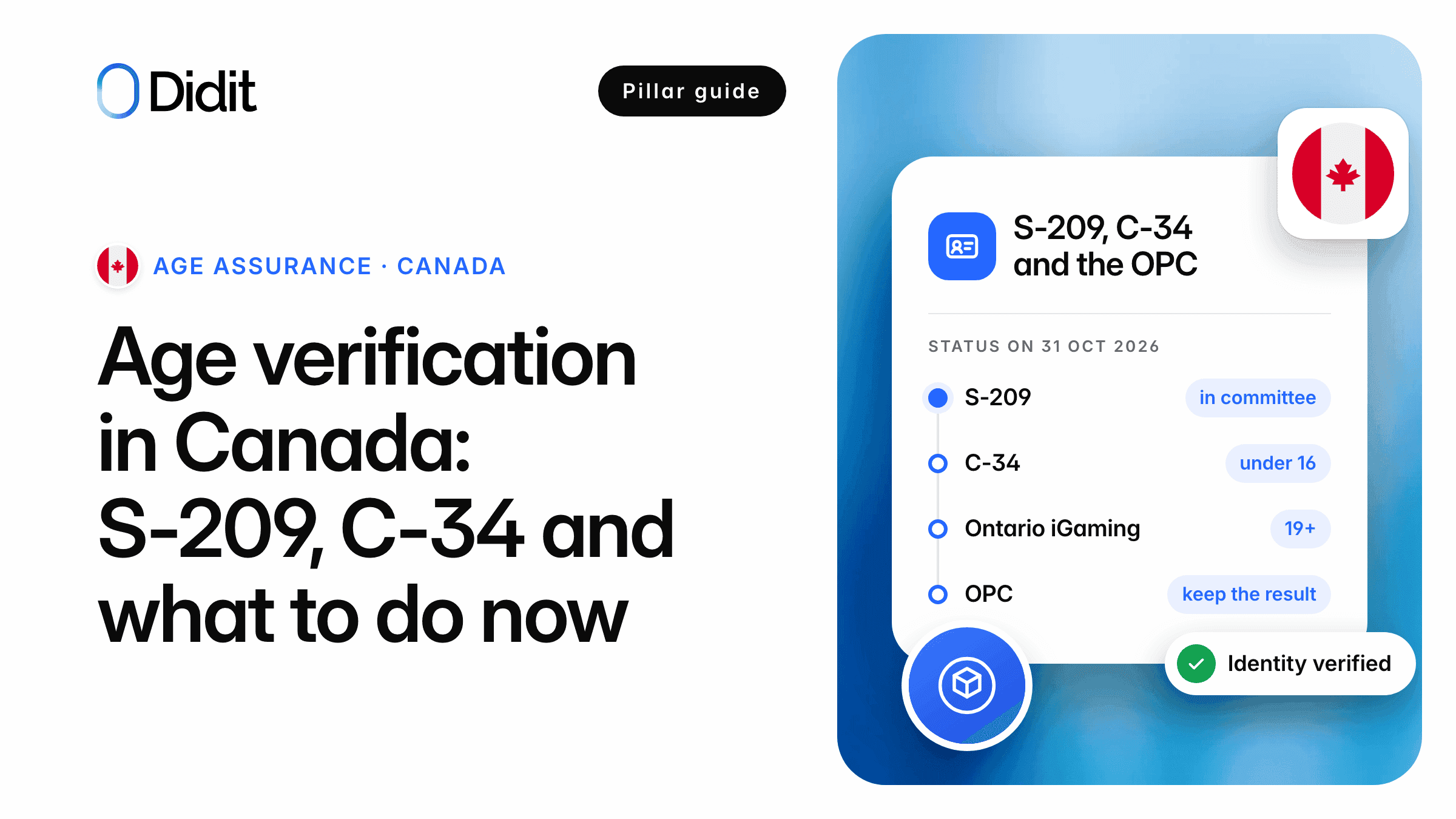
Altersverifikation in Kanada: S-209, C-34 und was jetzt zu tun ist
Altersverifikation in Kanada am 31. Oktober 2026: Bills S-209 und C-34 Abschnitt für Abschnitt, OPC-Leitlinien zur Altersprüfung, iGaming in Ontario und Alberta, Quebecs digitale Volljährigkeit, Methoden und eine Checkliste.

The Binance breach shows the gap: a key proves a device, not a person
Binance traced a ~$6.3B incident to a compromised engineer's laptop. Why passkeys and hardware keys alone can't stop that kind of attack, and how to bind withdrawals, permission changes and account recovery to a live, verified…

AI labs are buying human data. Fraud rings are selling it.
AI labs pay for human data, and fraud rings sell fake and rented contributor accounts into it. How the rings work, why it is hard, and how Didit verifies every contributor at signup, every session and every payout.
Didit vs Unit21: KYC, KYB, AML und Überwachung in einem Datensatz
Didit vs Unit21 laut öffentlichen Seiten: natives KYC und KYB mit KYC pro Eigentümer im selben Datensatz wie AML-Screening und Transaktionsüberwachung, dazu der Investigator-Agent, ein MCP für Regeln und veröffentlichte Preise.