Interviews
Juan Oliveros: "Training obligated entities is key to massive crypto adoption"
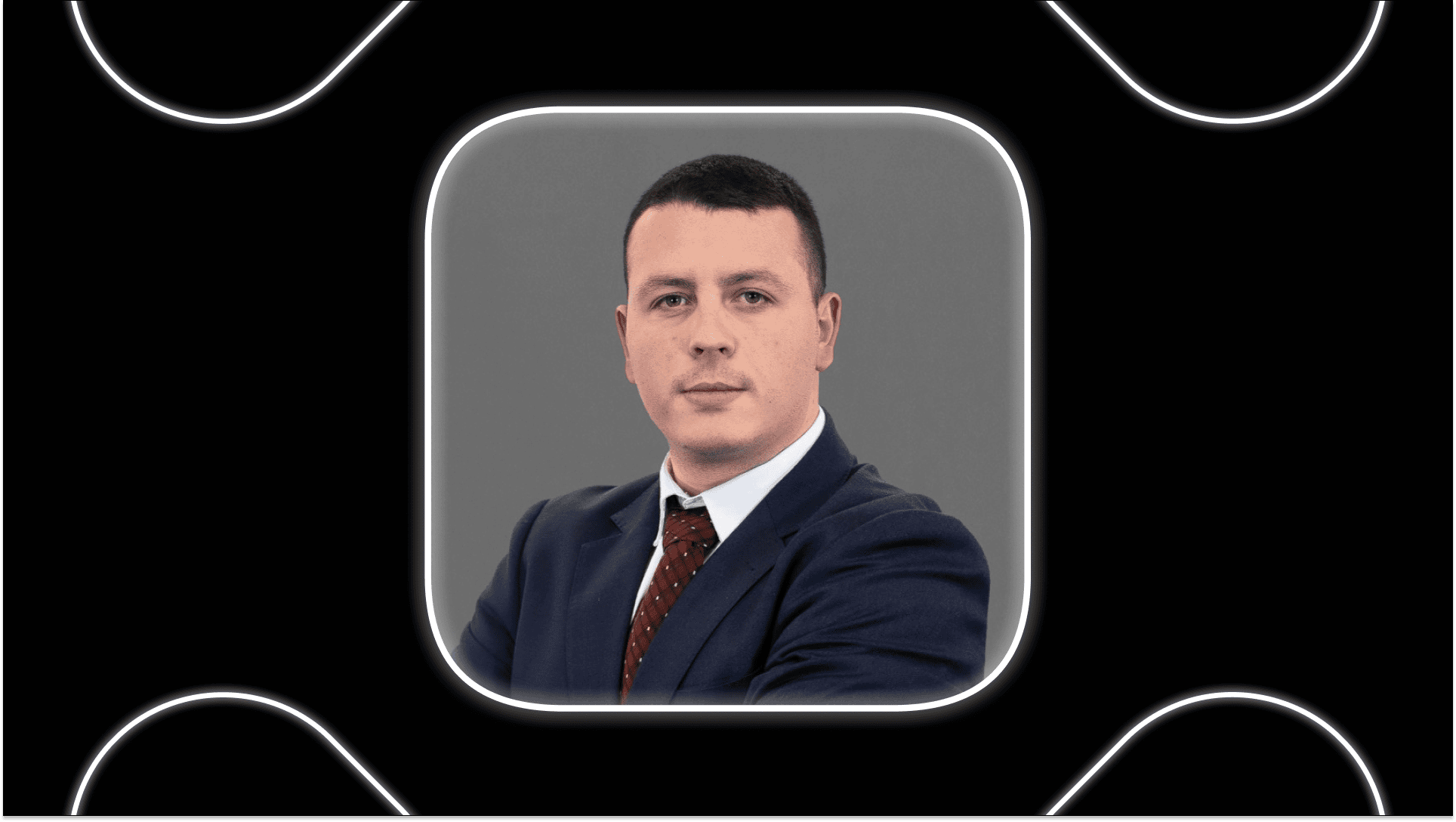
Juan Oliveros works as an AML Specialist at Cuatrecasas, bringing expertise in both Law and Business Administration.
 Alberto RosasCo-founder and CEO
Contents
In this guide
Jump to the part you need.
Juan Oliveros works as an AML Specialist at Cuatrecasas, bringing expertise in both Law and Business Administration. His career began at a digital asset custodian, where he first dove into the cryptocurrency sector. Since February 2021, he has dedicated his professional journey to anti-money laundering prevention and regulatory compliance, specializing in the traceability that blockchain technology offers and designing effective AML processes tailored to the sector. He has worked on KYC reviews, transaction analysis, and advising entities on integrating crypto AML tools and processes.
"What really drew me in was discovering that, unlike fiat money, with blockchain you can trace every single transaction back to its source—it's a practical tool for stopping illicit use of funds," Juan explains, highlighting the transparency advantage it brings to compliance. Looking ahead, Oliveros warns that "we're at a turning point where regulation is becoming stricter and expanding to cover new obligated entities, which will require all organizations to raise their compliance standards."
Question: What led you to specialize in compliance applied to crypto assets?
Answer: When I finished my studies in Law and Business Administration, I had the opportunity to start working at Onyze, a digital asset custodian. At that time, honestly, I didn't have much knowledge about the crypto world. However, I did have a lifelong friend deeply involved in this sector, known for developing relevant projects like Aragon, and currently working on a decentralized banking project. Initially, when he talked to me about it, it sounded like sirens' songs—something distant and strange—but when this opportunity came up, I spoke with him and he guided me a lot. Looking back, I think it was one of the best professional decisions I've made. Right now I could say I'm a real sector geek—I'm constantly reading, staying informed, and diving deeper into it. That said, I try to distance myself from the stigma of Bitcoin's speculative value and focus more on the technological potential and how it's going to transform the financial system.
Q: Has the sector changed much since you started in February 2021?
A: Tremendously. Especially in money laundering prevention—I remember perfectly when I started in the sector, crypto companies weren't even obligated entities. It was absolutely the Wild West, which forced us to adapt all AML processes to regulations and obtain registration with the Bank of Spain. Since then, the evolution has been radical. Whenever crypto is discussed, many people throw up their hands saying it can't be traced, that you don't know who's behind it. And it's true that initially Bitcoin emerged in contexts like Silk Road and the Dark Web, which linked the sector to illicit activities. But today's reality is very different. The great value of blockchain is precisely its traceability: you can track absolutely everything. A visual example I often give is: today you receive a $50 bill, and you don't know who had that bill five steps back. With blockchain, you can find out. Plus, there are very powerful analysis tools that allow you to identify the entities and movements behind each operation.
Q: Do you perceive a change in how professionals view the crypto sector nowadays?
A: Definitely, but it depends a lot on the profile and generation. People from traditional sectors tend to be quite resistant. Maybe due to lack of knowledge or indirect bad experiences, but they usually show more resistance. On the other hand, when you talk to more tech-oriented profiles or young people, the perception changes radically. This segment quickly understands the real value of the sector, gets it, and adopts it much faster.
Q: Do you consider current regulations on money laundering prevention and KYC to be sufficiently robust?
A: They've advanced considerably in recent years, especially thanks to FATF standards and the creation of the new European Anti-Money Laundering Authority, AMLA. Before there was some regulatory dispersion—each country applied European directives in different ways—but with AMLA, crucial harmonization is expected. I think it's the most relevant regulatory advance in Europe in recent times, and it will help ensure consistency across the UE.
Q: How do you think regulations like MiCA, DORA, or the Travel Rule will impact crypto companies?
A: Very positively, because they provide legal certainty. When I started, as I mentioned before, there was hardly any regulation. Now, with MiCA or the Travel Rule, key regulatory stability is being offered to attract large financial institutions and investment funds, which previously didn't enter precisely because of that lack of clear regulation. This regulatory security is essential for achieving mass adoption of the sector.
Q: Do you think regulation is sufficient to attract the general public to the crypto market?
A: Regulation helps, but it's not sufficient on its own. Young people, in general, already know how to access easily, but for older audiences—people like my parents or grandparents—creating an account on an exchange isn't something simple or usual. This is where traditional financial institutions come in: if major banks start offering these services with current regulatory security, they'll make it much easier for the average user. However, many financial institutions apply the infamous de-risking, thinking everything crypto-related is bad. Instead, they should leverage the sector's boom, properly train their teams, create good crypto AML procedures, and understand the real opportunities this market offers.
Q: Isn't there a risk that excessive regulation could harm the user experience?
A: Excessive regulation can be negative, but I don't think such excess currently exists in crypto. What I do perceive is poor understanding of the sector and incorrect application of existing regulation. The balance lies in truly understanding the sector, properly training professionals, and making proper use of available tools.
Q: How important is the KYC process in money laundering prevention within the crypto world?
A: KYC is absolutely fundamental, both in crypto and any financial sector. It allows you to really know who's behind each operation, prevent fraud, identity theft, and illicit acts. Additionally, the data obtained in the KYC process directly feeds the algorithms that define each client's risk profile. Without robust KYC and reliable data, you can't have an effective algorithm or properly manage risk.
Q: What elements can't be missing from a good money laundering prevention plan?
A: In my opinion, there are three essential things:
A KYC provider that guarantees reliable verifications.
A well-calibrated risk algorithm that allows proper client segmentation, accompanied by a robust alert system.
A very well-trained and qualified human team. This last point is crucial because they're the ones making critical decisions. Additionally, continuous training is essential because we live in a very changing environment, with new technologies and new ways of committing fraud.
Q: Why is it so important for an AML analyst to correctly define risk profiles?
A: Because it's the first reference and perception you have from any analysis. A well-defined profile enormously helps in managing suspicious operations quickly and effectively. It's the foundation you work on daily.
Q: What's the day-to-day life of an AML analyst like?
A: Very dynamic. Personally, I consider myself very lucky because in my career I've been able to work on every step of a complete compliance cycle: from initial KYC reviews, operational analysis, profile definition, to final decisions. This has allowed me to have a global view of the process, which I value greatly because it helps you grow professionally.
Q: Where do you think future AML regulations are heading?
A: Probably toward expanding obligated entities. For example, the new European directive plans to include sports clubs and soccer agents. And specifically in crypto, aspects that MiCA left out will likely be regulated, such as NFTs or decentralized finance (DeFi)—an area that, from my perspective, represents the next major financial revolution.
Try it
Try this in the sandbox
Run the check this guide describes, free.
The product this post is about, taken from its topic. Run it free in the sandbox.
Author
Alberto Rosas
Co-founder and CEO

Keep reading
Other guides in the same topic.
 InterviewsAlan Poyatos: “Regulation is a consumer value—when it’s proportionate and workable”
BitBase CCO Alan Poyatos explains MiCA, KYC/AML, proof-of-reserves, and why smart regulation drives crypto adoption across Europe and Latin America.
Alberto RosasNov 29, 2025 InterviewsMartín Perucca: “Preventing Fraud Enhances an Organization’s Value Proposition”
Martín Perucca has spent more than two decades dedicated to fighting fraud and money laundering. In Argentina and across Latin America, he is a leading authority.
Alberto RosasNov 29, 2025 InterviewsLuana Romero: "Strong Regulations Don't Always Equal Effectiveness: We Need Better Oversight, Training & Financial Intelligence"
Luana Romero, leading AML expert, discusses crypto compliance challenges, regulatory gaps, and why robust frameworks need better supervision and training.
Alberto RosasNov 29, 2025Questions
Blog questions
Who writes the Didit blog?
Which topics does the blog cover?
Is the blog available in my language?
Where do I find product updates?
Are these posts legal advice?
How do I find posts on one topic?
Are posts dated?
Do posts link to the docs?
Is the blog the same as the docs?
Compliance built in
Audited, certified and attested.
We hold the certifications and build each country's rules into your flows, so you can launch anywhere without worrying. Security and Compliance center
- Regulation encoded into your flows
Tell us what you do and where. Didit lists the rules that apply to you, with sources, and builds the checks each country needs into one workflow.
- Ready for AMLR
Every requirement of the new EU anti-money laundering rules, from checking customers to human review, is already covered by a Didit check.
- Tested in Spain's Treasury sandbox
Spain's Treasury published its supervised sandbox report on Didit's NFC plus active liveness onboarding; SEPBLAC took part and valued the added measures positively.
- Audited, not self-declared
iBeta Level 1 and Level 2. Liveness tested under ISO/IEC 30107-3.
Your obligations · 3 regions
 SOC 2 Type 2
 ISO 27001
 iBeta Level 1 and Level 2
 EU regulator attestation
 FSM youth protection
 GDPR
 EBA remote onboarding
 MiCA compatible
 FIDO Alliance member
- AMLREU AML Regulation ready
Integration · Didit MCP
Run Didit from your own AI agent
Connect Didit to Claude, Cursor, VS Code or ChatGPT and just ask in plain words. Your agent can do anything you can do in the console, with the same permissions you have.
 Add to Claude
 ChatGPT
 Cursor
- Build workflowsDescribe the checks you need. The agent creates and publishes the flow.
- Run investigationsAsk why a session was declined, review cases, search people and companies.
- Change rulesCreate payment rules, test them on past data and switch them on.
- Pull reportsAsk for numbers, exports or the audit log.
Didit Academy


