Business
Non-Document Verification in France: KYC Without Document Uploads
How non-doc identity verification works in France using ANTS, CNI data, and FranceConnect infrastructure. Faster onboarding with full ACPR and EU AMLD compliance.
 Alberto RosasCo-founder and CEO
Contents
In this guide
Jump to the part you need.
Non-Document Verification in France: KYC Without Document Uploads
France's fintech ecosystem is accelerating. Companies like Qonto, Lydia, Shine, and Spendesk are reshaping financial services for French consumers and businesses, and they all share a common challenge: onboarding users quickly without sacrificing regulatory compliance.
Traditional document-based KYC -- where users photograph their Carte Nationale d'Identite or passport -- creates friction that costs conversions. Blurry photos, expired documents, and manual review queues slow down what should be an instant experience.
Non-document verification eliminates these obstacles. Users verify their identity by providing their national ID number and completing a liveness selfie. Their identity is confirmed directly against government registry data. No document photos. No waiting. Just fast, compliant verification.
What Is Non-Document Verification?
Non-document verification is an identity verification method that removes the need for users to photograph or scan physical identity documents. Rather than analyzing document images for authenticity, the system validates identity directly against authoritative government databases.
The user provides their national identifier, completes a biometric liveness check (a quick selfie), and the system matches the selfie against the official photo stored in the government registry. Personal data is validated in real time, and a verification decision is returned instantly.
This eliminates the most common failure points of document-based KYC: poor image quality, reflections, unsupported document versions, and unnecessary friction.
How Non-Doc Verification Works in France
France operates a robust national identity infrastructure that provides the foundation for effective non-doc verification.
ANTS: The National Secure Documents Agency
The ANTS (Agence Nationale des Titres Securises) is the French government agency responsible for managing secure identity documents, including national ID cards, passports, and driving licences. ANTS maintains the centralized databases that store biometric photos and identity data for French citizens, making it the authoritative source for identity verification.
CNI: The National Identity Card
The CNI (Carte Nationale d'Identite) is France's national identity card, held by the vast majority of French citizens. The new-format CNI, introduced in 2021, includes biometric data and is compliant with EU standards. The CNI number serves as a key identifier that links to the holder's record in ANTS databases.
INSEE Number (NIR)
The INSEE Number (NIR) is a 13-digit social security number assigned to every person born in France. While primarily used for social security and healthcare, the NIR serves as an additional data point for identity triangulation.
FranceConnect: Digital Identity Federation
FranceConnect is the French government's digital identity federation platform, enabling citizens to authenticate across government services with a single set of credentials. This infrastructure supports the broader ecosystem that non-doc verification leverages.
CNIL and Data Protection
All identity data processing in France falls under CNIL (Commission Nationale de l'Informatique et des Libertes) oversight, enforcing GDPR and French data protection law. Non-doc verification solutions must comply with data minimization, purpose limitation, and consent requirements.
The Non-Doc Verification Flow: Step by Step
Here is how non-doc verification works for a French user:
- User inputs CNI number. The user enters their Carte Nationale d'Identite number into the onboarding flow. No need to photograph the physical card.
- Liveness selfie. The user completes a biometric liveness check -- a brief selfie capture that confirms a real, live person is present. This defeats spoofing attempts using photos, videos, or masks.
- Face match against government photo. The selfie is compared against the official biometric photo stored in the ANTS database. Facial recognition algorithms confirm or deny the match with high precision.
- Data validation. Personal data -- name, date of birth, nationality, place of birth -- is retrieved from the government registry and validated against the information provided by the user.
- Instant decision. The verification result is returned in seconds: approved, declined, or flagged for review. The overwhelming majority of legitimate users pass automatically.
The complete flow typically takes under 30 seconds.
Why French Businesses Need Non-Doc Verification
Regulatory Compliance
The ACPR (Autorite de Controle Prudentiel et de Resolution) oversees KYC/AML compliance for banks, payment institutions, and insurance companies. France implements the EU's AMLD5 and AMLD6, which require rigorous customer due diligence.
Non-doc verification satisfies these obligations by validating identity directly against government-held data. Matching a live biometric against an official government photo provides strong assurance that the person is who they claim to be.
Conversion and User Experience
French consumers expect seamless digital experiences. Document-based KYC forces users to locate their CNI, photograph it clearly, and wait for review. Non-doc verification reduces this to entering a number and taking a selfie. For fintechs competing on onboarding speed, this translates directly to higher conversion rates.
Fraud Prevention
Document forgery is a persistent challenge in France, with sophisticated counterfeit CNIs circulating in fraud networks. Non-doc verification sidesteps this entirely -- there is no physical document to forge. The biometric liveness check prevents presentation attacks, and the government database match confirms identity at the source.
GDPR Compliance by Design
Non-doc verification collects only the specific data points required for identity confirmation, rather than full document images containing excess sensitive data. This aligns naturally with GDPR's data minimization principle and reduces the compliance burden.
How Didit Makes Non-Doc Verification Simple
Didit provides non-doc verification as part of a complete identity verification platform designed for compliance, speed, and affordability.
At $0.33 per verification, Didit has transparent pay-per-use pricing compared with legacy providers like Onfido, Jumio, or Veriff.
Key capabilities for French businesses:
- API-first integration. A single API call initiates the full non-doc verification flow. Web and mobile SDKs for fast deployment.
- Full AML screening. Integrated checks against 1,000+ global watchlists, sanctions lists, and PEPs databases -- meeting ACPR and AMLD5/6 requirements.
- 220+ countries supported. French non-doc verification is part of a global platform covering 14,000+ document types and 54 languages for document-based fallback when needed.
- Biometric liveness detection. ISO 30107-3 certified liveness technology that defeats deepfakes, spoofing, and presentation attacks.
- GDPR-compliant architecture. Data minimization, encryption at rest and in transit, and configurable data retention policies.
- Ongoing monitoring. Continuous AML screening after initial verification, not just a one-time check at onboarding.
- Pay only for what you use. Pay only for what you use. Scale freely as your user base grows.
Whether you are a French neobank, a payment platform, a lending company, or a marketplace, Didit delivers the infrastructure to verify identities without documents -- faster, cheaper, and with stronger fraud prevention than traditional approaches. It is available today and ready to transform how your business onboards users.
Try it
Try this in the sandbox
Run the check this guide describes, free.
The product this post is about, taken from its topic. Run it free in the sandbox.
Author
Alberto Rosas
Co-founder and CEO

Keep reading
Other guides in the same topic.
 Business7 Best AML Software Platforms in 2026
Compare 7 AML software platforms for screening, ongoing monitoring, and investigations, with pricing and practical criteria for choosing the right fit.
Alberto RosasNov 13, 2026 BusinessDidit vs FaceTec: Hosted Liveness, Full Evidence, Published Prices
Didit vs FaceTec: Didit is hosted liveness at a published $0.10 passive or $0.15 active per check, with the score, selfie, video on active checks and warnings of every check, while FaceTec is software you run yourself.
Alberto RosasNov 10, 2026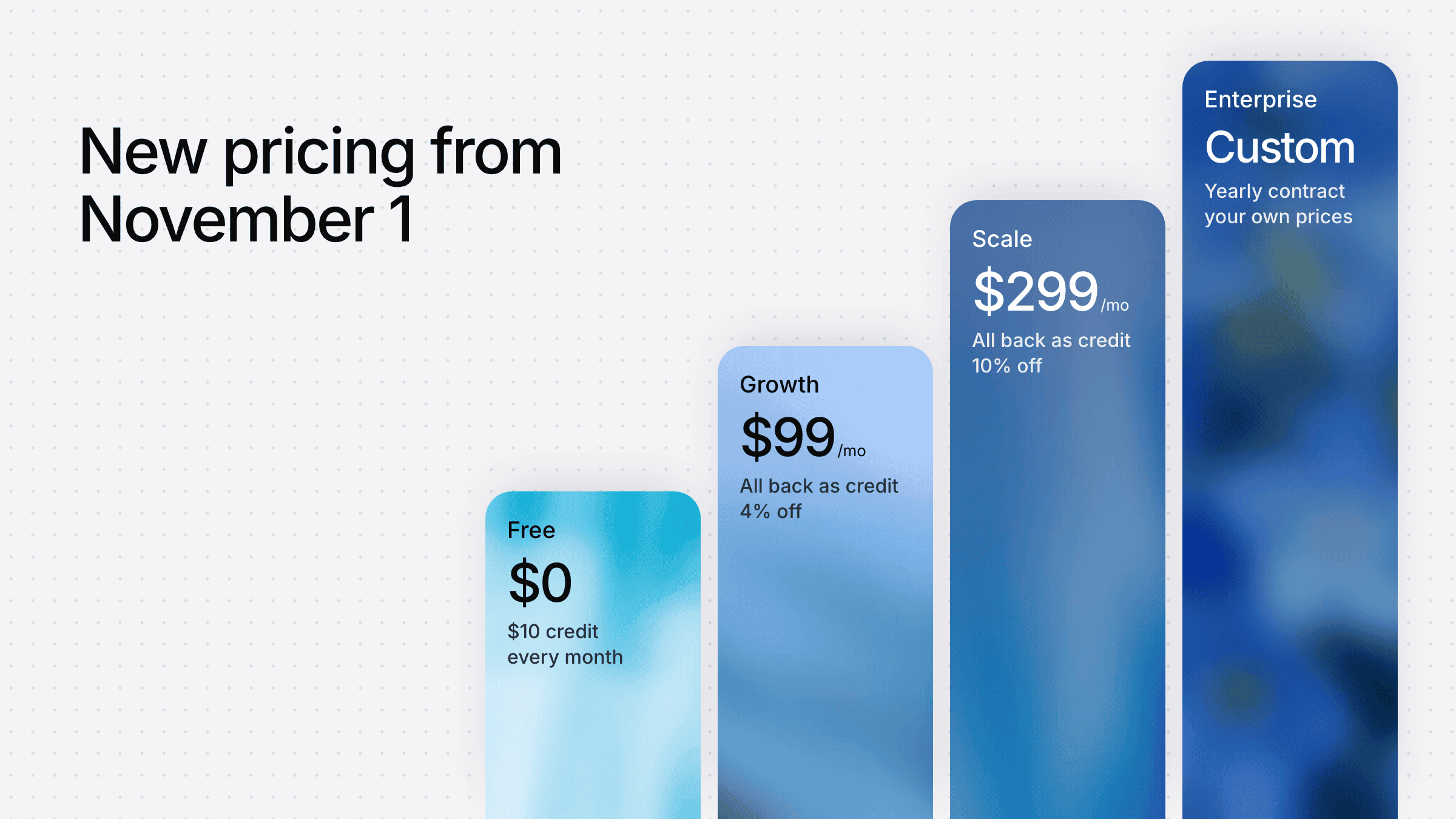 AnnouncementsNew pricing from November 1: one plan, one balance for everything
One plan for every product, $10 of free credit a month, pay as you go, and one balance for every check. Effective November 1, 2026.
Alberto RosasOct 2, 2026Questions
Blog questions
Who writes the Didit blog?
Which topics does the blog cover?
Is the blog available in my language?
Where do I find product updates?
Are these posts legal advice?
How do I find posts on one topic?
Are posts dated?
Do posts link to the docs?
Is the blog the same as the docs?
Compliance built in
Audited, certified and attested.
We hold the certifications and build each country's rules into your flows, so you can launch anywhere without worrying. Security and Compliance center
- Regulation encoded into your flows
Tell us what you do and where. Didit lists the rules that apply to you, with sources, and builds the checks each country needs into one workflow.
- Ready for AMLR
Every requirement of the new EU anti-money laundering rules, from checking customers to human review, is already covered by a Didit check.
- Tested in Spain's Treasury sandbox
Spain's Treasury published its supervised sandbox report on Didit's NFC plus active liveness onboarding; SEPBLAC took part and valued the added measures positively.
- Audited, not self-declared
iBeta Level 1 and Level 2. Liveness tested under ISO/IEC 30107-3.
Your obligations · 3 regions
 SOC 2 Type 2
 ISO 27001
 iBeta Level 1 and Level 2
 EU regulator attestation
 FSM youth protection
 GDPR
 EBA remote onboarding
 MiCA compatible
 FIDO Alliance member
- AMLREU AML Regulation ready
Integration · Didit MCP
Run Didit from your own AI agent
Connect Didit to Claude, Cursor, VS Code or ChatGPT and just ask in plain words. Your agent can do anything you can do in the console, with the same permissions you have.
 Add to Claude
 ChatGPT
 Cursor
- Build workflowsDescribe the checks you need. The agent creates and publishes the flow.
- Run investigationsAsk why a session was declined, review cases, search people and companies.
- Change rulesCreate payment rules, test them on past data and switch them on.
- Pull reportsAsk for numbers, exports or the audit log.
Didit Academy


