Interviews
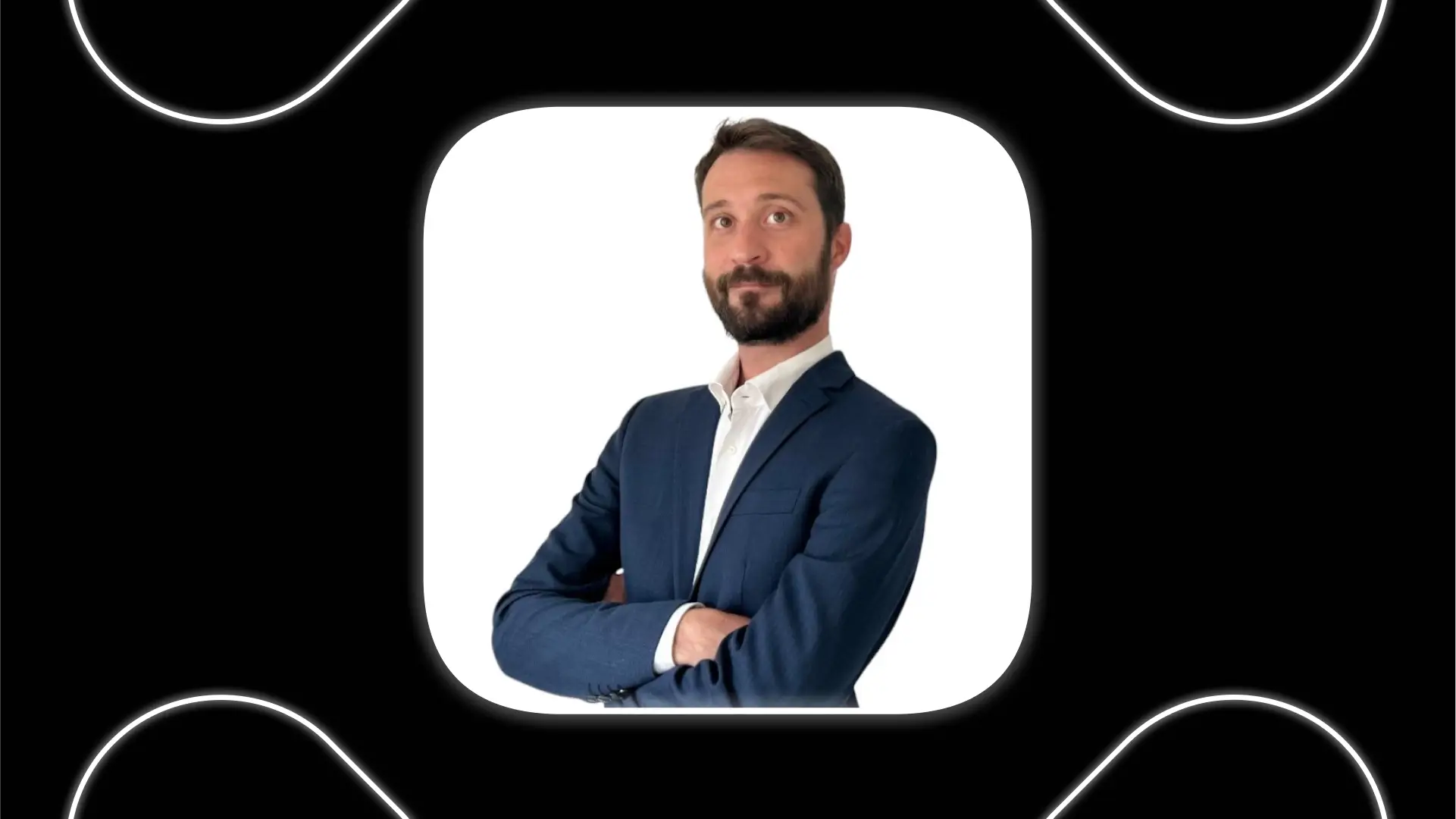
Pietro Odorisio: "Money laundering is poison for the economy and finance"
Pietro Odorisio is an Anti-Money Laundering (AML) Consultant with a deep passion for regulatory compliance and financial crime prevention.
 Alberto RosasCo-founder and CEO
Contents
In this guide
Jump to the part you need.
Pietro Odorisio is an Anti-Money Laundering (AML) Consultant with a deep passion for regulatory compliance and financial crime prevention. His professional background seamlessly combines academic knowledge with practical experience, positioning him as a thought leader in the world of financial integrity.
With his rich background in political philosophy and business ethics, Odorisio has carved a niche as a strategic practitioner who transforms complex regulatory challenges into practical solutions. “Money laundering is a poison for the economy and finance, causing major social disruption and destabilizing entire sectors,” Odorisio asserts.
Question: What motivated you to specialize in regulatory compliance and money laundering prevention? Tell us about your professional journey and what you're passionate about in this field.
Answer: My experience in this field stems from a desire to combine my academic background in political philosophy and business ethics with a role that could have a tangible impact on combating illicit financial activities. Over the course of my career, I have developed specific skills in promoting and utilizing advanced technological tools for AML controls, updating dedicated databases, and providing clients with training and support. My passion for this field comes from the challenge of contributing to a more transparent and secure economic system.
Q: How are technologies like AI and machine learning transforming risk detection processes in KYC and AML? What are the most disruptive tools you've worked with?
A: The introduction of technologies like AI and machine learning has revolutionized the AML sector by enhancing the ability to analyze large volumes of data and detect suspicious patterns. I have worked with platforms that integrate advanced algorithms for screening and monitoring, significantly improving efficiency and reducing false positives. These tools help institutions optimize their verification processes while maintaining accuracy.
Q: Given the international context, what differences do you see between compliance models in different European regions? How do these variations impact global business strategies?
A: European regulations follow a common framework, but individual countries often introduce significant variations, creating challenges for multinational companies. For example, some jurisdictions enforce KYC rules more strictly than others, and these discrepancies require tailored strategies to ensure compliance without compromising operational efficiency.
Q: From your experience, what are the main red flags for detecting suspicious transactions? How should companies effectively address them?
A: The main red flags include inconsistencies in client-provided data, transactions that are not aligned with the client’s economic profile, repeated transactions just below reporting thresholds, and money flows directed to high-risk jurisdictions. Companies should address these issues by combining advanced monitoring technologies with skilled personnel capable of quickly analyzing anomalies and taking timely actions.
Q: Here's a question we've asked our other interviewees: Can you be an effective compliance professional without technology?
A: I believe that technology has become indispensable for managing the complexities of modern compliance. It primarily helps reduce the time and effort required for routine tasks and enables the efficient handling of analyses that, while straightforward for a professional, can become overwhelming due to the sheer volume of information and activities involved. Innovative systems eliminate unnecessary efforts and time, allowing professionals to focus on analyses that still require human responsibility, judgment, and commitment. Technology enhances, but does not replace, the importance of human expertise and capabilities.
Q: How do you strike a balance between a rigorous KYC process and a smooth, non-intrusive user experience?
A: The key lies in adopting a dual approach: on the one hand, professionals must make the KYC process as non-intrusive as possible by leveraging advanced technologies and streamlined procedures to minimize impact on the user experience. On the other hand, institutions must educate clients on the importance of these controls, emphasizing that KYC is not an invasion of privacy or a limitation of freedom but rather a means to maintain financial integrity.
Money laundering is a poison for the economy and finance, causing significant social disruptions and destabilizing entire sectors. KYC processes should therefore be viewed as a tool to protect both individuals and the broader economic system, helping to combat potential criminal activities. Building this awareness can transform regulatory compliance into a shared and meaningful responsibility.
Q: From your perspective, which sectors - both emerging (blockchain, crypto) and traditional (real estate, insurance) - are most vulnerable to money laundering?
A: Traditional sectors such as banking, insurance, and gambling, along with other classic financial activities, have always been at high risk for money laundering. However, they are also among the most prepared to combat it, as evidenced by the growing number of suspicious transaction reports.
On the other hand, there are new areas, not strictly financial, that are less covered or more resistant to adopting preventive measures. For example, the legal and accounting professions, such as lawyers and accountants, are approaching these activities with understandable reluctance. Additionally, sectors like entertainment, cinema, and sports handle enormous financial flows that are difficult to trace, representing a significant vulnerability. These areas require enhanced monitoring and greater awareness of the importance of adopting effective preventive measures.
Q: A previous interviewee said that continuous learning is fundamental for a Compliance Officer. Do you agree?
A: Absolutely. In a constantly evolving regulatory environment, continuous learning is essential for a Compliance Officer. I experience this firsthand: practically every day, the regulations of various countries undergo modernization processes to adapt to new challenges.
There are numerous sources of updates that must be continuously monitored, such as directives from supranational organizations, guidance from the Wolfsberg Group and FATF, and publications from major think tanks. Additionally, documents and activities from each country's Financial Intelligence Units (FIUs) are invaluable resources. Without continuous learning, it would be impossible to quickly adapt to changes and implement best practices effectively.
Q: What specific advice would you give to institutions to develop a true culture of regulatory compliance that goes beyond mere regulatory obligation?
A: It is crucial for compliance to be perceived as a strategic value rather than just a regulatory obligation. To achieve this, institutions must invest in continuous training, foster clear internal communication, and adopt a proactive approach to risk management.
Additionally, institutions need to improve external communication by highlighting the tangible interventions and results achieved through compliance. Displaying precise and up-to-date data on progress and successes can make the critical importance of these activities visible. Effective communication not only raises awareness among professionals but also creates broader societal understanding, transforming compliance into a shared and recognized value.
Q: Looking to the future, where are KYC processes heading in the next 5-10 years? What emerging trends do you foresee?
A: I foresee increased automation and the integration of advanced technologies such as artificial intelligence and blockchain to ensure greater security, transparency, and efficiency in KYC processes. The use of digital identities and predictive analytics could further streamline procedures, reducing time while improving operational outcomes.
However, it is essential to remember that technology, while impactful and indispensable, cannot entirely replace human involvement. The direct and legal responsibility for decisions made during compliance and anti-money laundering processes will always rest with individuals.
For this reason, a complete mechanization of the process should be avoided. Final decisions, often involving complex and non-standardizable situations, require human judgment. The future will rely on a balance between technology and personal responsibility, with innovative tools supporting professionals in optimizing controls while leaving critical decisions to human expertise and accountability.

Try it
Try this in the sandbox
Run the check this guide describes, free.
The product this post is about, taken from its topic. Run it free in the sandbox.
Author
Alberto Rosas
Co-founder and CEO

Keep reading
Other guides in the same topic.
 InterviewsAlan Poyatos: “Regulation is a consumer value—when it’s proportionate and workable”
BitBase CCO Alan Poyatos explains MiCA, KYC/AML, proof-of-reserves, and why smart regulation drives crypto adoption across Europe and Latin America.
Alberto RosasNov 29, 2025 InterviewsMartín Perucca: “Preventing Fraud Enhances an Organization’s Value Proposition”
Martín Perucca has spent more than two decades dedicated to fighting fraud and money laundering. In Argentina and across Latin America, he is a leading authority.
Alberto RosasNov 29, 2025 InterviewsLuana Romero: "Strong Regulations Don't Always Equal Effectiveness: We Need Better Oversight, Training & Financial Intelligence"
Luana Romero, leading AML expert, discusses crypto compliance challenges, regulatory gaps, and why robust frameworks need better supervision and training.
Alberto RosasNov 29, 2025Questions
Blog questions
Who writes the Didit blog?
Which topics does the blog cover?
Is the blog available in my language?
Where do I find product updates?
Are these posts legal advice?
How do I find posts on one topic?
Are posts dated?
Do posts link to the docs?
Is the blog the same as the docs?
Compliance built in
Audited, certified and attested.
We hold the certifications and build each country's rules into your flows, so you can launch anywhere without worrying. Security and Compliance center
- Regulation encoded into your flows
Tell us what you do and where. Didit lists the rules that apply to you, with sources, and builds the checks each country needs into one workflow.
- Ready for AMLR
Every requirement of the new EU anti-money laundering rules, from checking customers to human review, is already covered by a Didit check.
- Tested in Spain's Treasury sandbox
Spain's Treasury published its supervised sandbox report on Didit's NFC plus active liveness onboarding; SEPBLAC took part and valued the added measures positively.
- Audited, not self-declared
iBeta Level 1 and Level 2. Liveness tested under ISO/IEC 30107-3.
Your obligations · 3 regions
 SOC 2 Type 2
 ISO 27001
 iBeta Level 1 and Level 2
 EU regulator attestation
 FSM youth protection
 GDPR
 EBA remote onboarding
 MiCA compatible
 FIDO Alliance member
- AMLREU AML Regulation ready
Integration · Didit MCP
Run Didit from your own AI agent
Connect Didit to Claude, Cursor, VS Code or ChatGPT and just ask in plain words. Your agent can do anything you can do in the console, with the same permissions you have.
 Add to Claude
 ChatGPT
 Cursor
- Build workflowsDescribe the checks you need. The agent creates and publishes the flow.
- Run investigationsAsk why a session was declined, review cases, search people and companies.
- Change rulesCreate payment rules, test them on past data and switch them on.
- Pull reportsAsk for numbers, exports or the audit log.
Didit Academy


