Cloud-Native Identity Platforms: Balancing Cost and Performance
Choosing the right cloud-native identity platform means weighing cost against performance and scalability. This guide explores the trade-offs, highlights common pitfalls, and showcases how AI-native solutions like Didit offer.
 Alberto RosasCo-founder and CEO
Contents
In this guide
Jump to the part you need.
Optimize for Value, Not Just PriceThe cheapest upfront solution often incurs higher operational costs and technical debt. Focus on platforms that offer transparent, pay-per-successful-check models, like Didit.
AI-Native is the FutureLegacy systems struggle with modern fraud like deepfakes. AI-native platforms deliver superior accuracy, automated decision-making, and real-time threat detection, improving both performance and security.
Modularity Drives EfficiencyAvoid bundled, inflexible products. Modular platforms allow you to pay only for the identity checks you need, reducing waste and simplifying integration into existing workflows.
Didit Delivers Unmatched ROIWith Core KYC, AI-native architecture, and a developer-first approach, Didit offers a highly performant, cost-effective solution for identity verification and fraud prevention, and pay-per-use pricing eliminates setup fees.
The Evolving Landscape of Identity Verification
In today's digital-first world, reliable identity verification is no longer a luxury but a necessity. Businesses across all sectors—from fintech to online gaming—rely on robust identity platforms to onboard users, prevent fraud, and comply with regulations. The shift to cloud-native architectures has accelerated, promising scalability, flexibility, and reduced infrastructure overhead. However, navigating the myriad of cloud-native identity platforms can be challenging, especially when trying to balance cost-effectiveness with high performance and advanced capabilities.
Many legacy identity verification systems were designed for a different era, often resulting in punitive pricing models, manual review processes, and developer-hostile tooling. They struggle to keep pace with sophisticated AI-driven fraud attempts like deepfakes and synthetic identities. This forces businesses to choose between exorbitant costs, slow verification times, or inadequate security. The key is to find a platform that not only performs efficiently but also offers transparent pricing and a future-proof architecture.
Understanding the Cost-Performance Trade-Off
When evaluating cloud-native identity platforms, the immediate cost is often a primary concern. However, a low upfront price can mask significant long-term expenses related to poor performance, integration complexities, and lack of scalability. Here's what to consider:
-
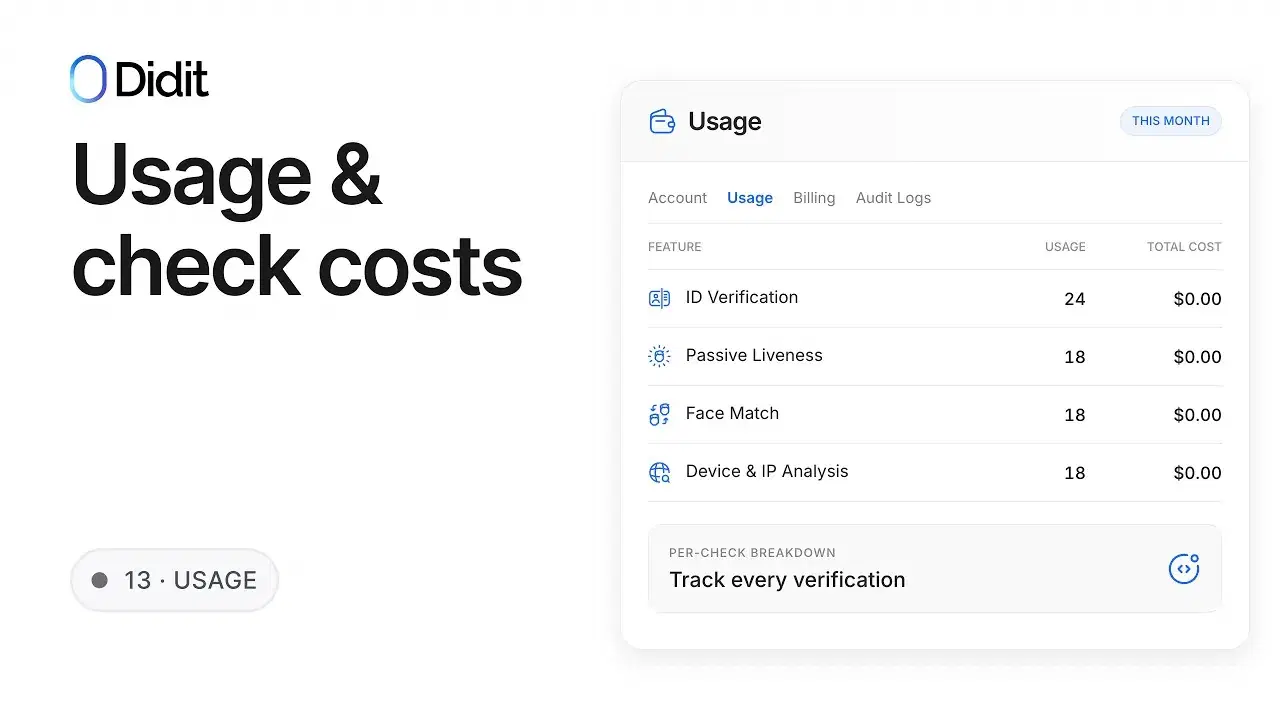
Pricing Models: Many providers use opaque, sales-gated pricing with annual contracts and minimum commitments. This can stifle experimentation and inflate costs for businesses with fluctuating verification needs. Look for transparent, pay-per-successful-check models that align costs directly with value received. Didit, for instance, offers Core KYC and a clear pay-per-successful-check structure, ensuring you only pay for what you use.
-
Integration Costs: Fragile SDKs and poor documentation can turn integration into a weeks-long, expensive ordeal. A developer-first platform with clear APIs, instant sandboxes, and pre-built AI Agent Skills can drastically reduce integration time and costs, allowing teams to ship faster.
-
Fraud Prevention Effectiveness: A platform that fails to detect sophisticated fraud like deepfakes or synthetic IDs will lead to significant financial losses, reputational damage, and potential regulatory fines. Investing in AI-native solutions with advanced Passive & Active Liveness detection, like Didit, is crucial for long-term cost savings by minimizing fraud. Didit's AI-native approach ensures real-time detection and automated decisions, drastically cutting down on manual review overhead.
-
Scalability and Flexibility: As your business grows, your identity verification needs will evolve. A modular platform that allows you to add or remove features (e.g., ID Verification, AML Screening, Age Estimation) without overhauling your entire system is invaluable. This prevents being locked into bloated packages and ensures you're always optimized for your current requirements.
The Pitfalls of Legacy Systems and Bundled Products
Many traditional identity verification providers operate with outdated technology and business models. Their systems are often not designed for the AI-era, struggling to combat advanced fraud techniques. This leads to:
-
High False Positives/Negatives: Inaccurate verification results can either block legitimate users (poor conversion) or let fraudsters through (high risk). AI-native platforms significantly reduce these errors.
-
Manual Review Bottlenecks: Reliance on human-in-the-loop processes slows down onboarding, increases operational costs, and introduces inconsistencies. Automation, powered by AI, is key to scaling efficiently.
-
Vendor Lock-in and Inflexibility: Being forced to buy 'KYC packages' that include features you don't need is inefficient. A modular, API-first approach allows you to compose the exact identity checks you require, from ID Verification (OCR, MRZ, barcodes) to NFC Verification for ePassports.
A truly cloud-native, AI-first platform addresses these issues head-on, offering superior performance, lower total cost of ownership, and enhanced security.
The AI-Native Advantage: Didit's Approach to Identity
Didit stands apart by building the open, modular identity layer of the internet, fundamentally changing how businesses approach identity verification. Our AI-native architecture ensures that every decision is automated and real-time, drastically improving performance and accuracy. For instance, our Passive & Active Liveness detection capabilities are specifically designed to combat sophisticated deepfakes and replay attacks, offering a level of fraud prevention unmatched by legacy systems.
Didit's commitment to a developer-first experience means easy integration with clean APIs and an instant sandbox. For those using React Native, our React Native SDK provides a TypeScript API with native iOS and Android SDKs, including NFC passport reading and liveness detection, making integration seamless.
Our modular approach allows you to pick and choose the exact identity primitives you need, such as 1:1 Face Match & Face Search, AML Screening & Monitoring, Proof of Address, or Age Estimation. This prevents unnecessary costs associated with bundled products and gives you complete control over your verification workflows. Furthermore, our core KYC and pay-per-successful-check model, with no setup fees, make Didit a transparent and cost-effective solution on the market.
How Didit Helps
Didit is engineered to solve the complex challenges of balancing cost and performance in identity verification. We offer an AI-native, developer-first platform that is both powerful and affordable.
-
Core KYC: Get started with essential identity checks under pay-per-use pricing with no upfront costs, so you can test and scale efficiently.
-
Modular Architecture: Build exactly what you need with our composable identity primitives. Integrate ID Verification (OCR, MRZ, barcodes), Passive & Active Liveness, 1:1 Face Match, AML Screening & Monitoring, Proof of Address, Age Estimation, and NFC Verification as required, avoiding unnecessary expenses.
-
AI-Native Fraud Prevention: Our platform is built from the ground up to detect advanced fraud, including deepfakes and synthetic identities, ensuring higher accuracy and lower fraud rates. This translates directly into cost savings and enhanced security.
-
Developer-First Experience: With clean APIs, comprehensive documentation, and pre-built AI Agent Skills, integration is fast and straightforward, reducing development costs and accelerating time-to-market.
-
Transparent Pricing: No hidden fees. You pay only for successful verifications, making budgeting predictable and cost allocation efficient.
Ready to Get Started?
Ready to see Didit in action? Get a free demo today.
Start verifying identities for free with Didit's free tier.
Try it
Try this in the sandbox
Run the check this guide describes, free.
The product this post is about, taken from its topic. Run it free in the sandbox.
Author
Alberto Rosas
Co-founder and CEO

Keep reading
Other guides in the same topic.
 What Is the Purpose of FICA in South Africa? 2026 Guide
FICA is South Africa's anti-money laundering law. It creates the Financial Intelligence Centre and requires accountable institutions to identify and verify clients, screen for PEP and sanctions risk and report suspicious.
Alberto RosasNov 26, 2026 Sixth Money Laundering Directive (6AMLD): What Changed and Which Rules Apply
6AMLD is Directive (EU) 2018/1673: Member States must criminalise laundering, widen predicate offences and set a four-year penalty floor. It adds no new due diligence duties for firms.
Alberto RosasNov 26, 2026 Automated Sanctions Screening: Canada, the Entity List and Embargoes
Automated sanctions screening matches people and companies against lists such as Canada's autonomous sanctions made under SEMA and JVCFOA and the OFAC SDN List, and returns candidate hits scored for identity confidence and.
Alberto RosasNov 26, 2026Questions
Blog questions
Who writes the Didit blog?
Which topics does the blog cover?
Is the blog available in my language?
Where do I find product updates?
Are these posts legal advice?
How do I find posts on one topic?
Are posts dated?
Do posts link to the docs?
Is the blog the same as the docs?
Compliance built in
Audited, certified and attested.
We hold the certifications and build each country's rules into your flows, so you can launch anywhere without worrying. Security and Compliance center
- Regulation encoded into your flows
Tell us what you do and where. Didit lists the rules that apply to you, with sources, and builds the checks each country needs into one workflow.
- Ready for AMLR
Every requirement of the new EU anti-money laundering rules, from checking customers to human review, is already covered by a Didit check.
- Tested in Spain's Treasury sandbox
Spain's Treasury published its supervised sandbox report on Didit's NFC plus active liveness onboarding; SEPBLAC took part and valued the added measures positively.
- Audited, not self-declared
iBeta Level 1 and Level 2. Liveness tested under ISO/IEC 30107-3.
Your obligations · 3 regions
 SOC 2 Type 2
 ISO 27001
 iBeta Level 1 and Level 2
 EU regulator attestation
 FSM youth protection
 GDPR
 EBA remote onboarding
 MiCA compatible
 FIDO Alliance member
- AMLREU AML Regulation ready
Integration · Didit MCP
Run Didit from your own AI agent
Connect Didit to Claude, Cursor, VS Code or ChatGPT and just ask in plain words. Your agent can do anything you can do in the console, with the same permissions you have.
 Add to Claude
 ChatGPT
 Cursor
- Build workflowsDescribe the checks you need. The agent creates and publishes the flow.
- Run investigationsAsk why a session was declined, review cases, search people and companies.
- Change rulesCreate payment rules, test them on past data and switch them on.
- Pull reportsAsk for numbers, exports or the audit log.
Didit Academy