Streamlining Remote Work Visa Applications with Travel Document Scanning
Efficient travel document scanning is crucial for smooth remote work visa applications. This guide explores the benefits of advanced OCR and AI in processing diverse international documents, ensuring compliance and reducing fraud.
 Alberto RosasCo-founder and CEO
Contents
In this guide
Jump to the part you need.
Accelerated ProcessingAdvanced OCR and AI-powered document scanning significantly reduce manual processing times for remote work visa applications, making the process faster and more efficient for applicants and authorities alike.
Enhanced Accuracy & ComplianceAutomated systems minimize human error in data extraction and validation, ensuring higher accuracy and helping organizations maintain strict compliance with global KYC/AML regulations.
Fraud PreventionRobust document verification, including features like liveness detection and tamper detection, is vital for identifying fraudulent applications and protecting the integrity of the visa process.
Didit's AI-Native SolutionDidit provides a modular, AI-native identity platform with Core KYC, offering comprehensive ID Verification, NFC Verification, and Document Monitoring to streamline remote work visa applications and ongoing compliance.
The rise of remote work has ushered in a new era of global mobility, with an increasing number of countries offering specialized visas for digital nomads and remote workers. While exciting, this trend also introduces complexities, particularly in the application process. A critical component of these applications is the accurate and secure scanning and verification of travel documents. For individuals, this means a smoother application; for governments and processing agencies, it means enhanced security and compliance. This blog post delves into the importance of advanced travel document scanning for remote work visa applications and how cutting-edge technology is transforming this landscape.
The Growing Need for Seamless Travel Document Scanning
Remote work visas often require applicants to submit a variety of official documents, including passports, national ID cards, and proof of address. The traditional manual review of these documents is time-consuming, prone to human error, and can create significant bottlenecks, delaying visa approvals. As the volume of applications grows, the need for an automated, highly accurate, and secure system becomes paramount. Imagine an applicant from one country applying for a remote work visa in another, needing to submit a passport, a driver's license as secondary ID, and a utility bill for proof of address. Each document has a different format, language, and security features. Manual verification of these diverse documents across various jurisdictions is incredibly inefficient and costly.
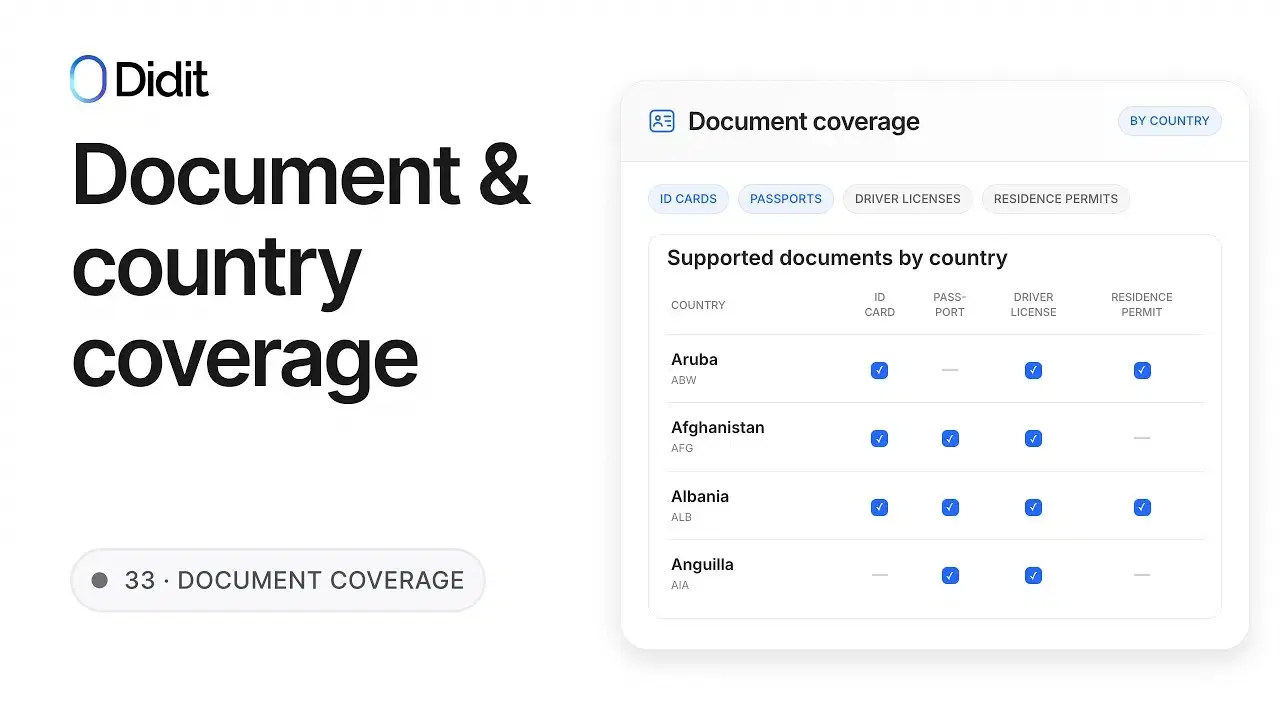
This is where advanced travel document scanning solutions, like Didit's ID Verification, come into play. These systems leverage Optical Character Recognition (OCR) to extract data, Machine-Readable Zone (MRZ) parsing for passports, and barcode decoding for enhanced accuracy. They can process documents from over 220 countries and territories in more than 130 languages, ensuring global compatibility and reducing the friction associated with international applications.
Key Technologies Driving Document Verification Efficiency
Modern travel document scanning goes far beyond simply taking a picture. It involves a sophisticated suite of technologies designed to ensure authenticity, extract data, and prevent fraud.
-
Advanced OCR and MRZ Parsing: At the heart of efficient document scanning is intelligent OCR, which accurately extracts data from various fields on a document. For travel documents like passports, MRZ parsing is crucial for quickly and reliably reading the coded information. Didit's AI-native ID Verification excels in this area, accurately capturing full names, dates of birth, document numbers, issue/expiry dates, and nationality, even from complex international documents.
-
AI-Powered Data Validation: Extracted data isn't just read; it's validated. This involves cross-referencing information between visual zones, MRZ, and barcodes, and performing format and pattern matching to detect anomalies. This level of validation is critical for identifying inconsistencies that might indicate tampering or forgery.
-
Liveness Detection and Biometric Face Match: To prevent identity fraud, especially with deepfakes and sophisticated spoofing attempts, advanced systems integrate Passive & Active Liveness detection. This ensures the person presenting the document is genuinely present and not a static image or video. Paired with 1:1 Face Match, which compares a live selfie to the photo on the ID document, this biometric verification adds a robust layer of security. Didit's advanced liveness and face match capabilities are designed to combat even the most sophisticated fraud attempts.
-
NFC Verification: For the highest level of security, NFC Verification allows for the direct reading of encrypted data from ePassports and eIDs. This provides an undisputed source of truth, making it virtually impossible to tamper with the document's digital information. Didit integrates NFC Verification, offering an unparalleled level of assurance for critical applications like remote work visas.
Combating Fraud and Ensuring Compliance
The stakes are high in visa applications. Fraudulent documents can pose significant security risks and undermine immigration controls. Advanced document scanning solutions play a vital role in mitigating these risks:
-
Tamper Detection: Sophisticated algorithms analyze documents for signs of alteration, such as manipulated text, swapped photos, or altered security features. This includes detecting inconsistencies in fonts, colors, and patterns that might be invisible to the human eye.
-
Document Authenticity Checks: Beyond visual inspection, systems verify document security features, such as holograms, watermarks, and UV elements, against a vast database of known document templates. Didit's extensive database of over 14,000 document types ensures comprehensive authenticity checks.
-
Continuous Document Monitoring: For long-term visas, documents can expire. Didit's Document Monitoring feature automatically tracks expiration dates and alerts organizations when a document is nearing or has passed its expiry. This proactive approach ensures ongoing compliance and prevents individuals from residing or working with invalid identification. This is particularly important for remote work visas that might be valid for extended periods.
-
AML Screening: While not directly part of document scanning, for financial service providers or governments that need to vet applicants, AML Screening & Monitoring can be integrated to check against watchlists and sanction lists, adding another layer of fraud and compliance protection.
By integrating these features, organizations can build a robust defense against identity fraud, ensuring that remote work visas are granted only to legitimate applicants.
The Applicant Experience: Speed and Simplicity
While security and accuracy are paramount, the user experience for applicants cannot be overlooked. A cumbersome or confusing verification process can lead to frustration, abandoned applications, and a negative perception of the host country or organization. Modern document scanning solutions prioritize ease of use:
-
Intuitive Capture: Users can simply upload or photograph their ID documents with real-time assistance. Didit's intelligent capture provides visual cues for optimal positioning, lighting, and focus, and automatically captures the image when conditions are ideal, minimizing retries.
-
Fast Processing: The entire verification process, from document upload to data extraction and validation, can be completed in seconds, not minutes or hours. This significantly reduces waiting times for applicants.
-
Multi-language Support: With a global applicant base, supporting multiple languages and document types is essential, making the process accessible to everyone.
By making the verification process swift and straightforward, these technologies enhance the overall applicant experience, contributing to higher completion rates and greater satisfaction.
How Didit Helps
Didit is at the forefront of revolutionizing identity verification for remote work visa applications. Our AI-native, developer-first identity platform offers a modular architecture that allows organizations to compose verification workflows tailored to their specific needs. For remote work visa applications, Didit's comprehensive suite of products provides an unparalleled solution:
-
ID Verification: Our core offering provides enterprise-grade document authentication across 130+ languages and 14,000+ document types from over 220 countries and territories. This includes advanced OCR, MRZ parsing, and barcode decoding, ensuring accurate data extraction from any travel document.
-
Passive & Active Liveness: Combat deepfakes and spoofing attempts with our robust liveness detection, ensuring the applicant is a real, present individual.
-
1:1 Face Match: Securely compare a live selfie against the identity document photo, confirming the applicant is the legitimate owner of the document.
-
NFC Verification: For the highest assurance, Didit supports NFC verification for ePassports and eIDs, reading encrypted data directly from the chip.
-
Document Monitoring: Proactively track document expiration dates to ensure continuous compliance throughout the visa's validity period, automatically alerting you to expired IDs.
-
Proof of Address: Our Document Geolocation feature validates user addresses by extracting information from documents and cross-referencing it with external sources like Google Maps, detecting fictitious addresses.
Didit's advantages, including Core KYC, a modular architecture, and AI-native design, mean no setup fees and a flexible platform that scales with your needs. Our orchestrated workflows and clean APIs make integration seamless, allowing governments and private agencies to automate trust and streamline the entire visa application process with confidence.
Ready to Get Started?
Ready to see Didit in action? Get a free demo today.
Start verifying identities for free with Didit's free tier.
Try it
Try this in the sandbox
Run the check this guide describes, free.
The product this post is about, taken from its topic. Run it free in the sandbox.
Author
Alberto Rosas
Co-founder and CEO

Keep reading
Other guides in the same topic.
 What Is the Purpose of FICA in South Africa? 2026 Guide
FICA is South Africa's anti-money laundering law. It creates the Financial Intelligence Centre and requires accountable institutions to identify and verify clients, screen for PEP and sanctions risk and report suspicious.
Alberto RosasNov 26, 2026 Sixth Money Laundering Directive (6AMLD): What Changed and Which Rules Apply
6AMLD is Directive (EU) 2018/1673: Member States must criminalise laundering, widen predicate offences and set a four-year penalty floor. It adds no new due diligence duties for firms.
Alberto RosasNov 26, 2026 Automated Sanctions Screening: Canada, the Entity List and Embargoes
Automated sanctions screening matches people and companies against lists such as Canada's autonomous sanctions made under SEMA and JVCFOA and the OFAC SDN List, and returns candidate hits scored for identity confidence and.
Alberto RosasNov 26, 2026Questions
Blog questions
Who writes the Didit blog?
Which topics does the blog cover?
Is the blog available in my language?
Where do I find product updates?
Are these posts legal advice?
How do I find posts on one topic?
Are posts dated?
Do posts link to the docs?
Is the blog the same as the docs?
Compliance built in
Audited, certified and attested.
We hold the certifications and build each country's rules into your flows, so you can launch anywhere without worrying. Security and Compliance center
- Regulation encoded into your flows
Tell us what you do and where. Didit lists the rules that apply to you, with sources, and builds the checks each country needs into one workflow.
- Ready for AMLR
Every requirement of the new EU anti-money laundering rules, from checking customers to human review, is already covered by a Didit check.
- Tested in Spain's Treasury sandbox
Spain's Treasury published its supervised sandbox report on Didit's NFC plus active liveness onboarding; SEPBLAC took part and valued the added measures positively.
- Audited, not self-declared
iBeta Level 1 and Level 2. Liveness tested under ISO/IEC 30107-3.
Your obligations · 3 regions
 SOC 2 Type 2
 ISO 27001
 iBeta Level 1 and Level 2
 EU regulator attestation
 FSM youth protection
 GDPR
 EBA remote onboarding
 MiCA compatible
 FIDO Alliance member
- AMLREU AML Regulation ready
Integration · Didit MCP
Run Didit from your own AI agent
Connect Didit to Claude, Cursor, VS Code or ChatGPT and just ask in plain words. Your agent can do anything you can do in the console, with the same permissions you have.
 Add to Claude
 ChatGPT
 Cursor
- Build workflowsDescribe the checks you need. The agent creates and publishes the flow.
- Run investigationsAsk why a session was declined, review cases, search people and companies.
- Change rulesCreate payment rules, test them on past data and switch them on.
- Pull reportsAsk for numbers, exports or the audit log.
Didit Academy