Beyond Passports: Verifying Alternative IDs in LatAm
Latin America presents unique challenges for identity verification due to the prevalence of diverse and often less standardized alternative identity documents.
 Alberto RosasCo-founder and CEO
Contents
In this guide
Jump to the part you need.
Diverse ID LandscapeLatin America utilizes a wide array of alternative identity documents beyond just passports and national IDs, including various forms of municipal, regional, and specialized IDs.
Fraud RisksVerifying these non-standard documents carries increased risks of fraud, including forgery, stolen identities, and synthetic IDs, demanding sophisticated detection methods.
Inclusivity & AccessEffective verification of alternative IDs is crucial for financial inclusion and equitable access to services for millions in LatAm who may not possess traditional documents.
Technology as a SolutionAdvanced identity verification platforms like Didit leverage AI, biometrics, and orchestration to accurately and securely process diverse LatAm identity documents, mitigating fraud and improving conversion.
The Complex World of Latin American Identity Documents
Latin America is a vibrant and diverse region, but its identity document landscape can be a labyrinth for businesses operating online. While national ID cards and passports are common, a significant portion of the population relies on a broader array of alternative identity documents. These can range from municipal IDs and provisional government documents to indigenous community cards, driver's licenses, and even utility bills used as proof of address in lieu of formal identification in some contexts. The challenge lies in the sheer variety, varying security features, and often, the lack of standardized digital verification methods for these documents across different countries and even within regions of the same country.
For example, in countries like Mexico, while the INE card is the primary national ID, there are also various state-issued professional licenses or even older forms of identification that individuals might still possess. In Brazil, beyond the RG (Registro Geral) and CNH (Carteira Nacional de Habilitação), there can be professional council cards or military IDs. Each comes with its own unique design, security features, and data structure, making automated verification incredibly difficult for traditional systems built primarily for passports and standardized national IDs.
Why Alternative ID Verification Matters for LatAm Businesses
Ignoring the need to verify alternative identity documents in Latin America isn't just about turning away potential customers; it's about excluding entire demographics. Millions of people in the region, particularly those in rural areas, indigenous communities, or recent migrants, may not possess the standard, federally issued IDs that most digital services expect. By failing to accommodate these alternative documents, businesses inadvertently create barriers to entry, hindering financial inclusion and limiting their own market reach.
Consider a fintech company looking to expand into Colombia. While the Cédula de Ciudadanía is standard, many individuals in remote areas might only have a provisional identification paper issued by a local municipality or an older, less common form of ID that is still legally valid but rarely seen by automated systems. If the fintech's onboarding process can't handle these, it loses a significant segment of potential users who could benefit most from their services. Similarly, an e-commerce platform in Peru might need to verify age for certain products, and relying solely on DNI (Documento Nacional de Identidad) would exclude many who might present a valid driver's license or other government-issued photo ID.
Navigating the Risks: Fraud Detection for Non-Standard IDs
The complexity of alternative identity documents unfortunately opens the door to increased fraud risks. Less standardized formats mean fewer consistent security features, making it harder for conventional systems to detect sophisticated forgeries, altered documents, or synthetic IDs. Fraudsters often target these less scrutinized document types, exploiting gaps in verification processes.
Common fraud vectors include:
- Forged Documents: Creating fake versions of less common IDs, relying on their unfamiliarity to bypass checks.
- Stolen Identities: Using legitimate but stolen alternative IDs, which might not be linked to traditional databases or watchlists.
- Synthetic IDs: Combining real and fake information to create a new identity, often leveraging the less robust data checks associated with non-standard documents.
- Deepfakes/Spoofing: Attempting to bypass liveness checks by presenting photos, videos, or even 3D masks, especially when the verification process is less rigorous for certain document types.
A robust identity verification solution must go beyond simple document checks. It needs to incorporate advanced AI for visual analysis, liveness detection to ensure the person is real, and cross-referencing capabilities against various data sources, even for documents that aren't globally recognized. For instance, if an individual presents a regional agricultural worker ID, the system should ideally be able to extract data, check its validity against any available regional databases, and compare the facial biometrics to a live selfie, all while detecting any signs of tampering or spoofing.
How Didit Helps Verify Alternative IDs in LatAm
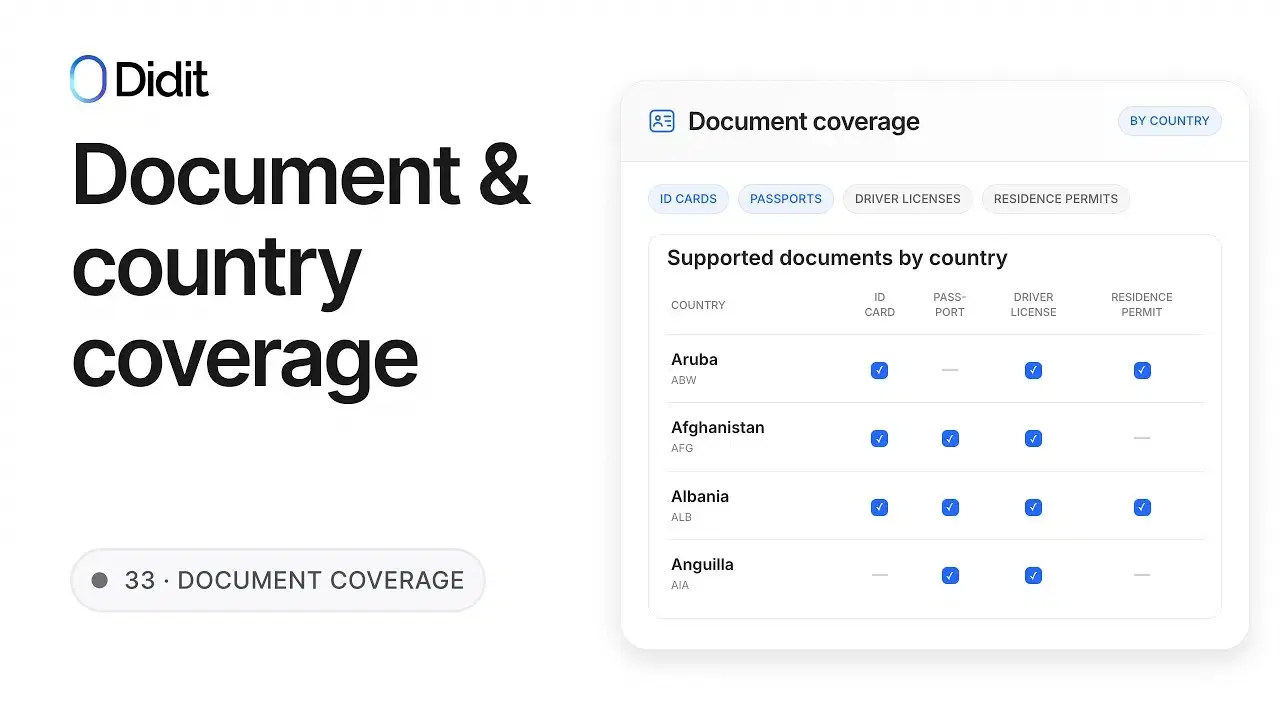
Didit's all-in-one identity platform is uniquely positioned to tackle the challenges of verifying alternative identity documents in Latin America. Our solution isn't just built for passports; it's designed with a deep understanding of global identity complexities, including the diverse landscape of LatAm. With support for over 14,000 document types across 220+ countries and 130+ languages, Didit can accurately process a vast array of government-issued IDs, including many of the alternative documents prevalent in Latin America.
Here's how Didit ensures secure and inclusive verification:
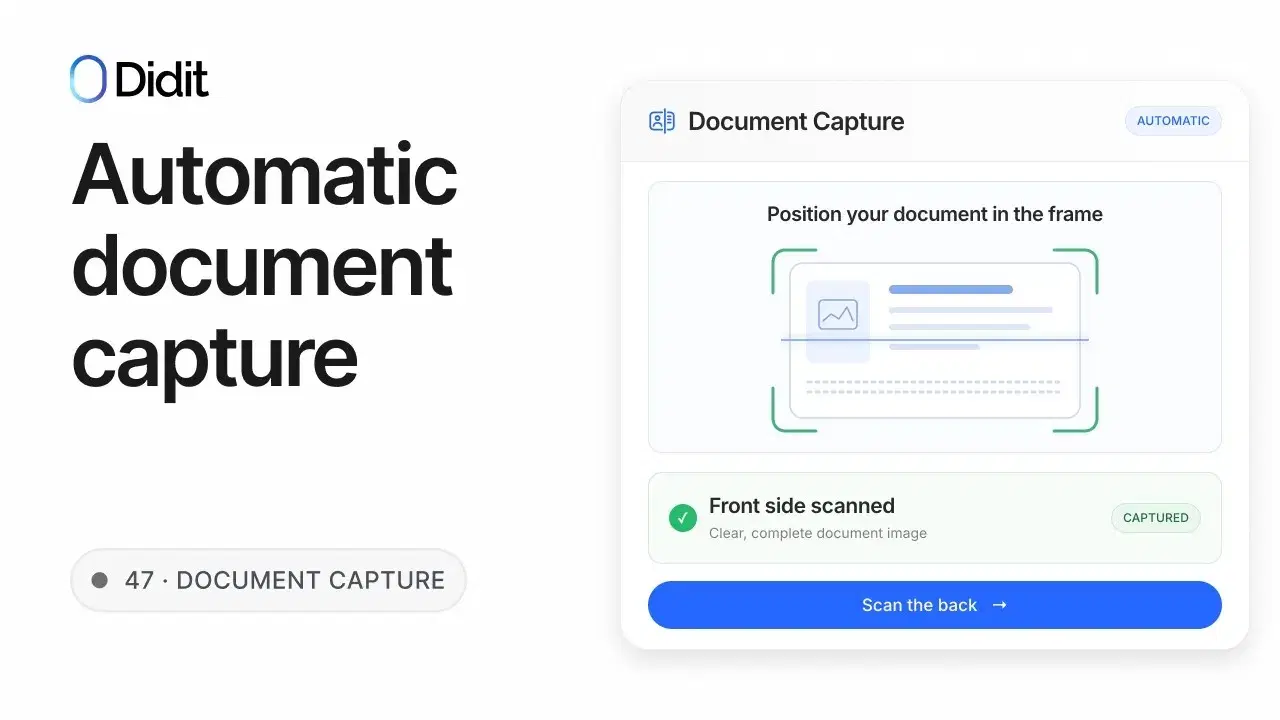
- AI-Powered Document Verification: Our AI models are continuously trained on a massive dataset, enabling them to recognize and extract data from diverse document formats, including those with unique regional characteristics. This includes advanced tamper detection, OCR data extraction, and authenticity scoring, even for less common IDs.
- Robust Biometric Verification: We combine passive and active liveness detection (with 99.9% accuracy) with 1:1 face matching against the document photo. Didit passive liveness is iBeta Level 1 and Level 2 certified for presentation attack detection (ISO/IEC 30107-3). This ensures the person presenting the document is its legitimate owner and is physically present, effectively countering deepfakes and spoofing attacks, regardless of the document type.
- Workflow Orchestration: Didit's visual workflow builder allows businesses to create custom verification flows tailored to specific regions or risk profiles. For instance, a flow for a high-risk LatAm market might combine ID verification with active liveness, AML screening, and IP analysis, even if the primary ID is a less common document. Our system can also set conditional logic to escalate to additional checks if an alternative ID presents a higher risk score.
- Fraud Signals & AML Screening: Beyond document and biometric checks, Didit integrates IP analysis, device data, and real-time AML screening against 1,300+ global watchlists. This multi-layered approach provides a comprehensive risk assessment, crucial when dealing with documents that might not have easily verifiable digital records.
- Developer-Friendly Integration: With comprehensive SDKs and an API, businesses can seamlessly integrate Didit's capabilities into their existing platforms, enabling them to verify a wider range of users without extensive development overhead.
By leveraging Didit, businesses in Latin America can expand their reach, reduce fraud, and ensure compliance, all while providing a fast and frictionless onboarding experience for a more diverse user base.
Ready to Get Started?
Don't let the complexity of alternative identity documents limit your business growth in Latin America. Embrace a solution that prioritizes both security and inclusivity. Explore how Didit can transform your identity verification process today.
Visit our pricing page to see our transparent, pay-as-you-go model, or try our ROI calculator to understand your potential savings. You can also contact us at hello@didit.me to talk to our team and see Didit in action.
Try it
Try this in the sandbox
Run the check this guide describes, free.
The product this post is about, taken from its topic. Run it free in the sandbox.
Author
Alberto Rosas
Co-founder and CEO

Keep reading
Other guides in the same topic.
 What Is the Purpose of FICA in South Africa? 2026 Guide
FICA is South Africa's anti-money laundering law. It creates the Financial Intelligence Centre and requires accountable institutions to identify and verify clients, screen for PEP and sanctions risk and report suspicious.
Alberto RosasNov 26, 2026 Sixth Money Laundering Directive (6AMLD): What Changed and Which Rules Apply
6AMLD is Directive (EU) 2018/1673: Member States must criminalise laundering, widen predicate offences and set a four-year penalty floor. It adds no new due diligence duties for firms.
Alberto RosasNov 26, 2026 Automated Sanctions Screening: Canada, the Entity List and Embargoes
Automated sanctions screening matches people and companies against lists such as Canada's autonomous sanctions made under SEMA and JVCFOA and the OFAC SDN List, and returns candidate hits scored for identity confidence and.
Alberto RosasNov 26, 2026Questions
Blog questions
Who writes the Didit blog?
Which topics does the blog cover?
Is the blog available in my language?
Where do I find product updates?
Are these posts legal advice?
How do I find posts on one topic?
Are posts dated?
Do posts link to the docs?
Is the blog the same as the docs?
Compliance built in
Audited, certified and attested.
We hold the certifications and build each country's rules into your flows, so you can launch anywhere without worrying. Security and Compliance center
- Regulation encoded into your flows
Tell us what you do and where. Didit lists the rules that apply to you, with sources, and builds the checks each country needs into one workflow.
- Ready for AMLR
Every requirement of the new EU anti-money laundering rules, from checking customers to human review, is already covered by a Didit check.
- Tested in Spain's Treasury sandbox
Spain's Treasury published its supervised sandbox report on Didit's NFC plus active liveness onboarding; SEPBLAC took part and valued the added measures positively.
- Audited, not self-declared
iBeta Level 1 and Level 2. Liveness tested under ISO/IEC 30107-3.
Your obligations · 3 regions
 SOC 2 Type 2
 ISO 27001
 iBeta Level 1 and Level 2
 EU regulator attestation
 FSM youth protection
 GDPR
 EBA remote onboarding
 MiCA compatible
 FIDO Alliance member
- AMLREU AML Regulation ready
Integration · Didit MCP
Run Didit from your own AI agent
Connect Didit to Claude, Cursor, VS Code or ChatGPT and just ask in plain words. Your agent can do anything you can do in the console, with the same permissions you have.
 Add to Claude
 ChatGPT
 Cursor
- Build workflowsDescribe the checks you need. The agent creates and publishes the flow.
- Run investigationsAsk why a session was declined, review cases, search people and companies.
- Change rulesCreate payment rules, test them on past data and switch them on.
- Pull reportsAsk for numbers, exports or the audit log.
Didit Academy