Didit erhält 7,5 Mio. $ für die Infrastruktur für Identität und Betrug
Didit
Face Match 1:1

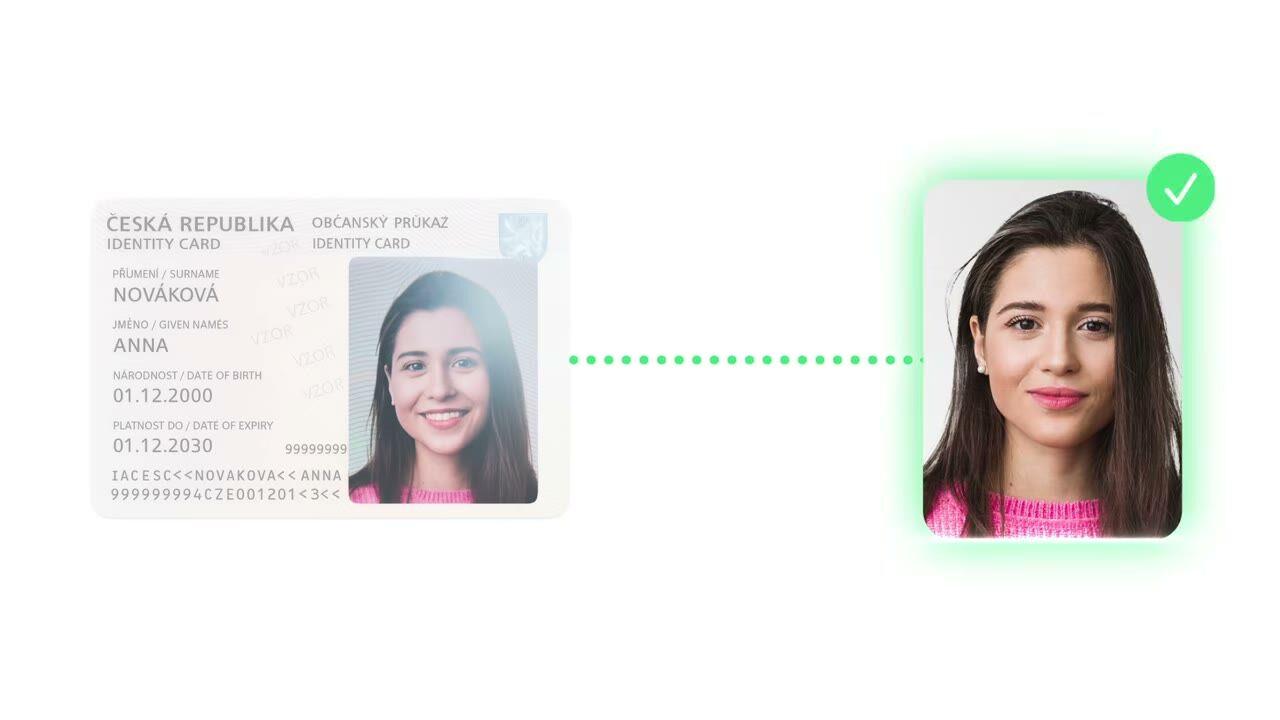
Verknüpfe ein Gesicht mit einem Ausweis.
In einer halben Sekunde.

Bestätige, dass die Person vor der Kamera mit dem Foto auf ihrem Ausweis übereinstimmt. Ergebnis in unter einer Sekunde. $0.05 pro Prüfung, 500 gratis/Monat oder im $0.33 KYC-Komplettpaket (Know Your Customer) enthalten.

Unterstützt von
Y CombinatorRobinhood Ventures
GBTC Finance
Bondex
Crnogorski Telekom
UCSF Neuroscape
Shiply
Adelantos

Über 2.000 Organisationen weltweit vertrauen uns.

Didit Face Match 1:1, Selfie-Vergleich mit dem Ausweisbild mit einem Ähnlichkeits-Score in unter 2 Sekunden.

Personenabgleich

Gleiche das Selfie
mit dem Ausweisfoto ab.

Ähnlichkeits-Score in unter 2 Sekunden mit Anti-Spoofing-Fallback. $0.05 pro Prüfung, der günstigste Face-Match-Vergleich auf dem Markt.

So funktioniert's

Vom Sign-up zum verifizierten Nutzer in vier Schritten.

  1. Schritt 01

    Workflow erstellen

    Wähle die gewünschten Prüfungen aus, ID, Liveness, Face Match, Sanktionen, Adresse, Alter, Telefon, E-Mail, benutzerdefinierte Fragen. Ziehe sie im Dashboard in einen Flow oder poste denselben Flow an unsere API. Verzweige nach Bedingungen, führe A/B-Tests durch, kein Code erforderlich.

  2. Schritt 02

    Integrieren

    Bette nativ mit unseren Web-, iOS-, Android-, React Native- oder Flutter-SDKs ein. Leite auf eine gehostete Seite weiter. Oder sende deinem Nutzer einfach einen Link, per E-Mail, SMS, WhatsApp, überall. Wähle, was zu deinem Stack passt.

  3. Schritt 03

    Nutzer durchläuft den Flow

    Didit hostet die Kamera, die Lichtsignale, die mobile Übergabe und die Barrierefreiheit. Während der Nutzer den Flow durchläuft, bewerten wir über 200 Betrugssignale in Echtzeit und verifizieren jedes Feld anhand autoritativer Datenquellen. Ergebnis in unter zwei Sekunden.

  4. Schritt 04

    Du erhältst die Ergebnisse

    Echtzeit-signierte Webhooks halten deine Datenbank synchron, sobald ein Nutzer genehmigt, abgelehnt oder zur Überprüfung gesendet wird. Frage die API bei Bedarf ab. Oder öffne die Konsole, um jede Session, jedes Signal zu prüfen und Fälle nach deinen Wünschen zu verwalten.

Für Entwickler gemacht · Gegen Betrug gebaut · Offen im Design

Sechs Funktionen. Ein Feature Flag. FACE_MATCH.

Jede der unten genannten Funktionen ist ein Toggle im selben Modul. Keine Upsell-Stufen, keine separaten SKUs, keine Add-on-Aufrufe. Aktiviere Face Match pro Workflow oder rufe den Standalone-Endpoint direkt auf.
01 · Die Verknüpfung

Live-Selfie. Dokumentenporträt. Eine Identität.

Face Match schließt die Lücke zwischen dem hochgeladenen Dokument und der Person vor der Kamera. Innerhalb einer KYC-Session (Know Your Customer) läuft es automatisch gegen das Ausweisbild. Standalone übergibst du zwei Bilder, Quelle und Ziel, und wir geben einen Ähnlichkeits-Score zurück.
02 · Ähnlichkeits-Score

Ein Score. Null bis hundert.

Jeder Match liefert einen Ähnlichkeits-Score von 0–100, die beiden Bild-URLs und eine Session-Referenz, die das Ergebnis mit der Verifizierung verknüpft, die das Selfie erzeugt hat. Speichere den Score und Status; die Bild-URLs verfallen nach 60 Minuten, sodass du nur das speicherst, was deine Audit-Richtlinie erfordert.
03 · Inferenz in unter einer Sekunde

Unter einer Sekunde auf Standard-Hardware.

Edge-served Face-Embedding-Modell. Kein Modell-Download, keine Annahme von On-Device-Beschleunigung, keine verschlechterte Erfahrung auf Einsteiger-Android-Geräten. Gleiche Engine und Latenz, egal ob du den gehosteten Workflow-UI oder den Standalone-Endpoint nutzt. Robust gegenüber Pose, Beleuchtung, Frisur, Brille und normaler Alterung.
04 · Anpassbare Schwellenwerte

Entscheiden. Prüfen. Genehmigen. Pro Score-Band.

Die einzige konfigurierbare Warnung, geringe Ähnlichkeit, ist an zwei Schwellenwerte gekoppelt, die du pro Anwendung festlegst. Unterhalb des Ablehnungsschwellenwerts wird automatisch abgelehnt; dazwischen geht es zur manuellen Prüfung; oberhalb des Genehmigungsschwellenwerts wird automatisch genehmigt. Der einzige automatische Ablehnungs-Trigger (kein Referenzbild) bleibt von uns erzwungen, egal was passiert.
05 · Modular aufgebaut

In jedem Workflow aktivieren. Ohne Neuerfassung.

Face Match ist ein Feature Flag im selben Workflow Builder wie ID Verification, Liveness und AML (Anti-Geldwäsche). Füge es einem bestehenden Onboarding-Flow hinzu, und die nächste Session übernimmt es, kein SDK-Upgrade, kein neuer Erfassungsbildschirm, kein separater Webhook. Entferne es, und der Rest des Flows läuft weiter.
06 · Transparente Preise

$0.05 per match. 500 free every month. No SKU.

0,05 $ für jeden eigenständigen Face Match Aufruf. Innerhalb eines vollständigen KYC-Workflows mit ID Verification, Liveness und Device & IP Analysis kostet die Session pauschal 0,33 $, Face Match inklusive. Die ersten 500 Verifizierungen/Monat sind auf jedem Konto dauerhaft kostenlos. Keine monatliche Mindestgebühr, keine Plattformgebühr, keine SKU zu verhandeln.
Integrieren

Zwei Endpoints. Gleiches JSON. Gleicher Preis.

Erstelle eine Session, wenn unsere gehostete UI das Selfie aufnehmen und das Referenzbild aus der ID derselben Session ziehen soll. Rufe den Standalone-Endpoint auf, wenn du bereits beide Bilder hast. Beide liefern denselben face_match-Report.
POST /v3/session/Hosted UI
$ curl -X POST https://verification.didit.me/v3/session/ \
  -H "x-api-key: $DIDIT_API_KEY" \
  -H "Content-Type: application/json" \
  -d '{
    "workflow_id": "wf_face_match_kyc",
    "vendor_data": "user-42"
  }'
201Erstellt{ "session_url": "verify.didit.me/..." }
Wir hosten die Erfassung. Das Ausweisporträt wird automatisch zum target_image.Doku →
POST /v3/face-match/Server zu Server
$ curl -X POST https://verification.didit.me/v3/face-match/ \
  -H "x-api-key: $DIDIT_API_KEY" \
  -F "source_image=@selfie.jpg" \
  -F "target_image=@portrait.jpg"
200OK{ "status": "Genehmigt", "score": 87 }
Du übergibst das Paar. Wir geben den Score direkt zurück.Doku →
Agenten-fertige Integration

Face Match in einem Prompt implementieren.

Füge den folgenden Block in Claude Code, Cursor, Codex, Devin, Aider oder Replit Agent ein. Ersetze den Platzhalter `my_stack` durch dein Framework, deine Sprache und deinen Anwendungsfall. Der Agent provisioniert Didit, erstellt den Workflow mit aktiviertem Face Match, verbindet den Webhook und implementiert alles.
didit-integration-prompt.md
# Didit Face Match 1:1 — integrate in 5 minutes

You are integrating Didit's Face Match 1:1 (selfie vs. reference image)
module into <my_stack>. Follow these steps exactly. Every URL, header,
and enum value below is canonical — do not paraphrase or "improve" them.

## 1. Provision an account
- Sign up: https://business.didit.me (no credit card required).
- Or provision programmatically: POST https://apx.didit.me/auth/v2/programmatic/register/
  (returns an API key bound to the workspace + application).

## 2. Two integration paths — pick one

### Path A — Workflow Builder (hosted UI)
Best when you want Didit to handle selfie capture, real-time framing,
mobile handoff, and accessibility for you. Inside a Know Your Customer (KYC) workflow,
Face Match runs automatically against the portrait extracted from the
ID document the user uploads in the same session.

1. Create a workflow that contains the FACE_MATCH feature:
   POST https://verification.didit.me/v3/workflows/
   Authorization header:  x-api-key: <your-api-key>
   Body: workflow_label, features array with FACE_MATCH plus any
         other features the same session needs (typically
         ID_VERIFICATION and LIVENESS for full KYC). Feature names
         are UPPERCASE — strict enum.
   Optional config: review_threshold and decline_threshold for the
         LOW_FACE_MATCH_SIMILARITY warning (numbers 0–100).

2. Create a verification session for an end user:
   POST https://verification.didit.me/v3/session/
   Body: workflow_id (from step 1), vendor_data (your own user id).
   Response: session_url — redirect the user to it.

3. Listen for webhook callbacks (see "Webhooks" below).

### Path B — Standalone server-to-server API
Best when you already have two face images and just need a similarity
score (re-auth at sensitive actions, employee badge access, cross-app
identity binding, periodic re-verification).

POST https://verification.didit.me/v3/face-match/
Content-Type: multipart/form-data
Body fields:
  - source_image  (required, file — the live selfie)
  - target_image  (required, file — the reference image, e.g. ID portrait
                   or a stored enrollment frame)
  - vendor_data   (optional string, your user id)

Response: synchronous JSON report with the similarity score and warnings
array. No webhook needed.

## 3. Webhooks (Path A only — Path B returns synchronously)
- Register a webhook destination once via
  POST https://verification.didit.me/v3/webhook/destinations/
  Body: url, subscribed_events: ["session.verified",
                                  "session.review_started",
                                  "session.declined"]
- Response includes secret_shared_key — store it.
- Every webhook delivery carries an X-Signature-V2 header you MUST verify
  before trusting the payload.  HMAC-SHA256 verification MUST run against the raw body bytes (the raw payload as Didit sent it) BEFORE any JSON parsing — re-serialising the parsed body changes whitespace and key order, which invalidates the signature.Algorithm:
    1. sortKeys(payload) recursively
    2. shortenFloats (truncate trailing zeros after the decimal point)
    3. JSON.stringify the result
    4. HMAC-SHA256 with the secret_shared_key
    5. Hex-encode, compare to the X-Signature-V2 header.

## 4. Reading the report (both paths return the same shape)
The face_match object includes:
- status: "Approved" | "Declined" | "In Review" | "Not Finished"
- score: number 0-100 (normalized similarity score)
- source_image_session_id: the verification session that produced the
  live selfie (Path A) or null (Path B)
- source_image: signed URL to the live selfie (expires in 1 hour)
- target_image: signed URL to the reference image (expires in 1 hour)
- warnings: Array<{ risk, log_type, short_description, long_description }>

Auto-decline risks (always enforced by Didit, not configurable):
- NO_REFERENCE_IMAGE   (no reference image available to compare against)

Configurable risks (action per workflow — Decline, Review, or Approve):
- LOW_FACE_MATCH_SIMILARITY
    Tune two thresholds per application:
      review_threshold  → score below this goes to "In Review"
      decline_threshold → score below this is auto-declined

## 5. Hard rules — do not change
- Base URL for /v3/* endpoints is verification.didit.me (NOT apx.didit.me).
- Feature enum is UPPERCASE: FACE_MATCH, ID_VERIFICATION, LIVENESS, AML, IP_ANALYSIS.
- Auth header is x-api-key (lowercase, hyphenated).
- Webhook signature header is X-Signature-V2 (NOT X-Signature).
- Always verify webhook signatures before trusting payload data.
- Status casing matches exactly: "Approved", "Declined", "In Review",
  "Not Finished" (title-cased, space-separated).
- Reference and source image URLs in the response expire in 60 minutes.
  Persist only the score and status; re-fetch images on demand if your
  audit policy needs them.

## 6. Pricing reference (public)
- Standalone POST /v3/face-match/: $0.05 per match.
- Bundled inside a full KYC workflow with ID Verification + Passive
  Liveness + Device & IP Analysis: $0.33 per session (Face Match included).
- 500 free checks every month, forever, on every account.

## 7. Verify your integration
- Sandbox starts on signup at https://business.didit.me — no separate flag.
- Test images: deterministic synthetic faces returned in sandbox
  (Approved by default; trigger Declined by sending a mismatched pair).
- Switch to live: flip the application's environment toggle in console.

When in doubt: https://docs.didit.me/core-technology/face-match/overview
Brauchst du mehr Kontext? Siehe die vollständige Moduldokumentation.docs.didit.me →
Compliant by Design

Ein neues Land mit einem Klick erschließen. Wir machen die Arbeit.

Wir gründen lokale Tochtergesellschaften, sichern Lizenzen, führen Penetrationstests durch, erhalten Zertifizierungen und passen uns jeder neuen Regulierung an. Um Verifizierungen in einem neuen Land zu starten, legst du einfach einen Schalter um. Über 220 Länder live, vierteljährlich auditiert und Pen-getestet, der einzige Identitätsanbieter, den eine EU-Mitgliedsregierung offiziell als sicherer als die persönliche Verifizierung eingestuft hat.
Sicherheits- & Compliance-Dossier lesen
EU Financial Sandbox
Tesoro · SEPBLAC · BdE
ISO/IEC 27001
Informationssicherheit · 2026
SOC 2 · Type I
AICPA · 2026
iBeta Level 1 PAD
NIST / NIAP · 2026
GDPR
EU 2016/679
DORA
EU 2022/2554
MiCA
EU 2023/1114
AMLD6 · eIDAS 2.0
EU-konform by Design

Zahlen, die überzeugen

Zahlen, die überzeugen
  • 0 – 100
    Ähnlichkeits-Score bei jedem Match zurückgegeben.
  • <0s
    End-to-End-Inferenz pro Face Match.
  • $0.00
    Pro Face Match Aufruf.
  • 0
    Verifizierungen jeden Monat kostenlos, für immer, auf jedem Konto.
Drei Stufen, eine Preisliste

Kostenlos starten. Nach Nutzung zahlen. Bis zum Enterprise-Level skalieren.

500 kostenlose Verifizierungen jeden Monat, für immer. Pay-as-you-go für die Produktion. Individuelle Verträge, Datenresidenz und SLAs (Service Level Agreements) für Enterprise.
Kostenlos

Kostenlos

$0 / Monat. Keine Kreditkarte erforderlich.

  • Kostenloses KYC-Paket (ID-Verifizierung + passive Lebenderkennung + Gesichtsabgleich + Geräte- & IP-Analyse), 500 / Monat, jeden Monat
  • Blockierte Nutzer
  • Duplikaterkennung
  • Über 200 Betrugssignale pro Session
  • Wiederverwendbares KYC im Didit-Netzwerk
  • Case Management Plattform
  • Workflow Builder
  • Öffentliche Docs, Sandbox, SDKs, MCP (Model Context Protocol) Server
  • Community Support
Am beliebtesten
Zahlung nach Nutzung

Nutzungsbasiert

Zahle nur, was du nutzt. Über 25 Module. Öffentliche Preise pro Modul, keine monatliche Mindestgebühr.

  • Full KYC für $0.33 (ID + Biometrie + IP / Gerät)
  • Über 10.000 AML-Datensätze, Sanktionen, PEPs, Adverse Media
  • Über 1.000 staatliche Datenquellen für Datenbankvalidierung
  • Transaktionsüberwachung für $0.02 pro Transaktion
  • Live KYB für $2.00 pro Unternehmen
  • Wallet Screening für $0.15 pro Prüfung
  • Whitelabel-Verifizierungsflow, deine Marke, unsere Infrastruktur
Enterprise

Enterprise

Individuelle MSA & SLA. Für große Volumina und regulierte Programme.

  • Jahresverträge
  • Individuelle MSA, DPA und SLA
  • Dedizierter Slack- und WhatsApp-Kanal
  • Manuelle Prüfer auf Abruf
  • Reseller- und White-Label-Konditionen
  • Exklusive Features und Partnerintegrationen
  • Benannter CSM, Sicherheitsprüfung, Compliance-Support

Kostenlos starten → nur zahlen, wenn eine Prüfung läuft → Enterprise für einen individuellen Vertrag, SLA oder Datenresidenz freischalten.

FAQ

Häufige Fragen

What is Didit?

Didit is infrastructure for identity and fraud, the platform we wished existed when we were building products ourselves: open, flexible, and developer-friendly, so it works as a real part of your stack instead of a black box you integrate around.

One API covers verifying people (KYC, know your customer), verifying businesses (KYB, know your business), screening crypto wallets (KYT, know your transaction), and monitoring transactions in real time, on a stack built to be:

  • Fast, sub-2-second p99 on every session
  • Reliable, in production with 1,500+ companies across 220+ countries
  • Secure, SOC 2 Type 1, ISO 27001, GDPR-native, and formally attested by Spain's financial regulator as safer than verifying someone in person

The footprint underneath: 14,000+ document types in 48+ languages, 1,000+ data sources, and 200+ fraud signals on every session. The Didit infrastructure dynamically learns from every session and gets better every day.

What inputs does Face Match 1:1 accept?
Two face images. Path A, Workflow Builder: the source image is the live selfie our hosted UI captures, the target image is the portrait we extracted from the ID (identification) document the user uploaded in the same session, both sides come for free. Path B, Standalone API: you pass both images yourself as source_image and target_image on a multipart POST /v3/face-match/. Accepted formats: JPG, JPEG, PNG, up to 5 MB per image. Both paths return the same face_match JSON shape.
What is the response shape?
A root-level face_match object with status (Approved, Declined, In Review, or Not Finished), a 0-100 score, a source_image_session_id that ties the result back to the verification session that produced the live selfie, signed source_image and target_image URLs that expire after 60 minutes, and a warnings array. Each warning has risk, log_type (information, warning, or error), short_description, and long_description. Same shape whether you called the Workflow Builder or the standalone API.
How fast is the verification for my end user?

The full flow normally takes under 30 seconds end-to-end, pick up the ID, snap the document, snap the selfie, done. That is the fastest in the market. Legacy KYC providers usually take more than 90 seconds for the same flow.

On the back end, Didit returns the result in under two seconds at p99, measured from the moment the user finishes the selfie to the moment your webhook fires. Mobile capture is tuned for slow phones and slow networks: progressive image compression, lazy software development kit load, and a one-tap hand-off from desktop to phone via QR code if the user starts on web.

How does Didit defeat face-match fraud?
Face Match never runs alone in a KYC flow, it pairs with LIVENESS so the source image is always a verified-live human, not a presentation attack. Liveness is iBeta Level 1 Presentation Attack Detection (PAD) certified against printed photos, screen replays, masks, morph attacks, and AI deepfakes. On top of that, the face embedding model is trained to be resilient to pose, lighting, hairstyle, glasses, and ageing within a normal window, so a real face still matches even when the document portrait is years old.
What happens if a user fails, abandons, or expires?

Every session lands on one of seven clear statuses, so your code always knows what to do:

  • Approved, every check passed. Move the user forward.
  • Declined, one or more checks failed. You can allow the user to resubmit the specific failed step (for example, re-take the selfie) without re-running the whole flow.
  • In Review, flagged for compliance review. Open the case in the console, see every signal, decide approve or decline.
  • In Progress, user is mid-flow.
  • Not Started, link sent, user has not opened it yet. Send a reminder if it sits too long.
  • Abandoned, user opened the link but did not finish in time. Re-engage or expire.
  • Expired, the session link aged out. Create a new session.

A signed webhook fires on every status change, so your database always stays in sync. Abandoned and declined sessions are free.

Where does my customer data live and how is it protected?

Production data is processed and stored in the European Union by default, on Amazon Web Services. Enterprise contracts can request alternative regions for jurisdictions whose regulators require it.

Encryption everywhere. AES-256 at rest across every database, object store, and backup. Transport Layer Security 1.3 in transit on every API call, webhook, and Business Console session. Biometric data is encrypted under a separate Customer Master Key.

Retention is yours to control. Default retention is indefinite (unlimited) unless you configure shorter, between 30 days and 10 years per application, and you can delete any individual session at any time from the dashboard or the API.

Certifications: SOC 2 Type 1 (Type 2 audit in progress), ISO/IEC 27001:2022, iBeta Level 1 PAD, and a public attestation from Spain''s Tesoro / SEPBLAC / CNMV that Didit''s remote identity verification is safer than verifying someone in person. Full report at /security-compliance.
Is Didit compliant for my industry?

Didit ships compliant by default for the regulators that matter to identity infrastructure:

  • GDPR + UK GDPR, controller / processor split, full Data Processing Agreement published, lead supervisory authority named (Spain''s AEPD).
  • AMLD6 + EU AML Single Rulebook, 1,300+ sanctions, politically exposed person, and adverse-media lists screened in real time.
  • eIDAS 2.0, EU Digital Identity Wallet aligned; reusable-identity ready.
  • MiCA (Markets in Crypto-Assets), ready for crypto on-ramps, exchanges, and custodians.
  • DORA, Digital Operational Resilience Act, EU financial-services operational resilience.
  • BIPA, CUBI, Washington HB 1493, CCPA / CPRA, US biometric privacy (Illinois, Texas, Washington) and California consumer privacy.
  • UK Online Safety Act, age-gating and child-safety obligations.
  • FATF Travel Rule, originator and beneficiary data on crypto transfers, IVMS-101 interoperable.

Detailed memo, every certificate, every regulator letter: /security-compliance.

How fast can I integrate and start verifying users?
  • 60 seconds to a sandbox account at business.didit.me, no credit card.
  • 5 minutes to a working verification through Claude Code, Cursor, or any coding agent via our Model Context Protocol (MCP) server.
  • A weekend to a production-ready integration with signed-webhook verification, retries, and a remediation flow when a user is declined.

Three integration paths, pick whichever fits your stack:

  • Embed natively with our Web, iOS, Android, React Native, or Flutter SDK.
  • Redirect the user to the hosted verification page, zero SDK.
  • Send a link by email, SMS, WhatsApp, or any channel, zero front-end work.

Same dashboard, same billing, same pay-per-success price for all three. Step-by-step guide at docs.didit.me/integration/integration-prompt.

Infrastruktur für Identität und Betrugsprävention.

Eine API für KYC, KYB, Transaktionsüberwachung und Wallet-Screening. In 5 Minuten integriert.

Lass dir diese Seite von einer KI zusammenfassen