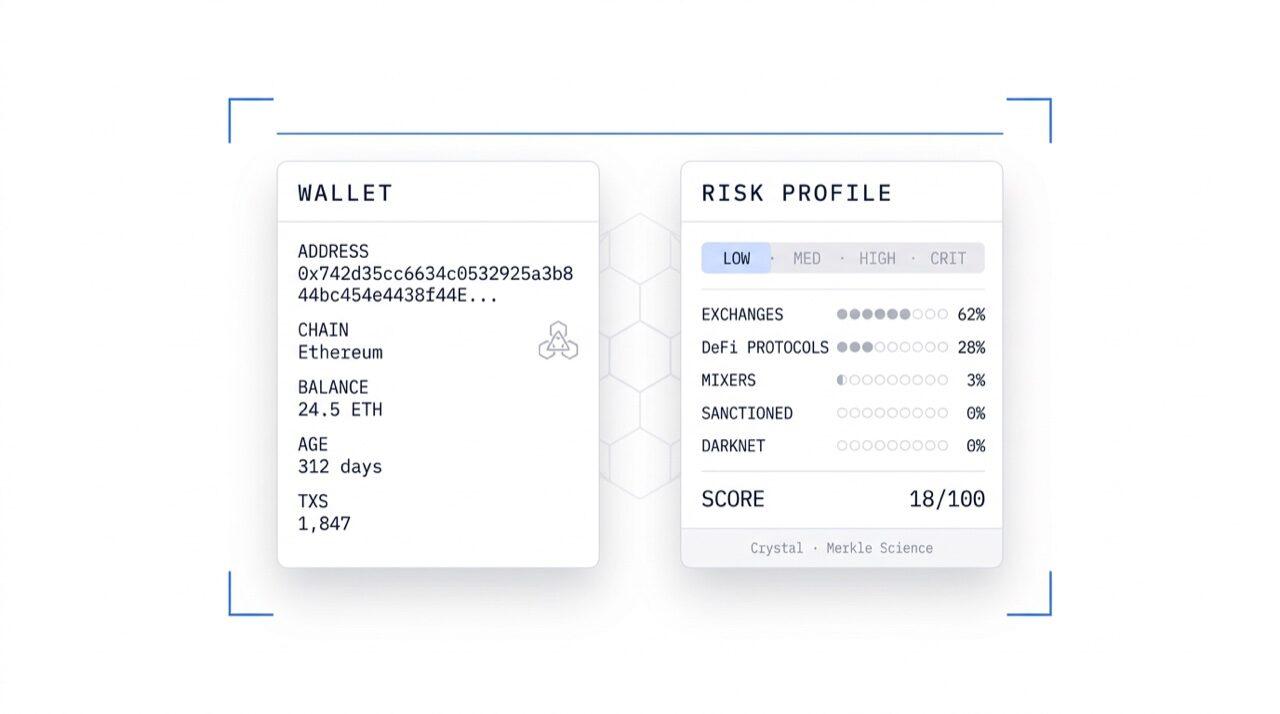
Periksa alamat wallet atau hash transaksi apa pun untuk risiko on-chain, sanksi, mixer, paparan darknet, sumber dana. $0.15 per pemeriksaan, atau gunakan penyedia screening Anda sendiri.
Dipercaya oleh 2.000+ organisasi di seluruh dunia.
$0.15 per check
Risiko wallet on-chain. Satu harga publik.
Saring wallet dengan biaya $0.15 per pemeriksaan, atau gunakan penyedia screening Anda sendiri dan
jalankan di dalam Didit, dengan satu antrean kasus dan satu jejak audit untuk keduanya.
Cara kerjanya
Dari pendaftaran hingga pengguna terverifikasi dalam empat langkah.
Langkah 01 / 04
01
Buat alur kerja
Pilih pemeriksaan yang Anda inginkan, ID, liveness, face match, sanksi, alamat, usia, telepon, email, pertanyaan kustom. Seret ke dalam alur di dashboard, atau posting alur yang sama ke API kami. Buat cabang berdasarkan kondisi, jalankan A/B test, tanpa perlu coding.
Integrasikan
Integrasikan secara native dengan SDK Web, iOS, Android, React Native, atau Flutter kami. Redirect ke halaman yang di-host. Atau cukup kirim tautan ke pengguna Anda, melalui email, SMS, WhatsApp, di mana saja. Pilih yang sesuai dengan stack Anda.
Pengguna melewati alur
Didit meng-host kamera, isyarat pencahayaan, hand-off seluler, dan aksesibilitas. Saat pengguna berada dalam alur, kami menilai 200+ sinyal penipuan secara real-time dan memverifikasi setiap bidang terhadap sumber data otoritatif. Hasilnya kurang dari dua detik.
Anda menerima hasilnya
Webhook yang ditandatangani secara real-time menjaga database Anda tetap sinkron saat pengguna disetujui, ditolak, atau dikirim untuk ditinjau. Lakukan polling API sesuai permintaan. Atau buka konsol untuk memeriksa setiap sesi, setiap sinyal, dan mengelola kasus sesuai keinginan Anda.
Dibangun untuk kepatuhan · Dibangun untuk melawan penipuan kripto · Desain terbuka
Enam kapabilitas. Satu modul. $0.15 per pemeriksaan.
Wallet Screening ada di dalam Transaction Monitoring tetapi juga dapat digunakan secara mandiri. Setiap kapabilitas adalah bagian dari modul yang sama, aktifkan per alur kerja atau teruskan secara inline pada panggilan API.
Pilih screening yang dikelola Didit dengan biaya $0.15 per pemeriksaan, atau hubungkan kontrak penyedia screening Anda yang sudah ada dan jalankan di dalam Didit, Anda tetap menjaga hubungan, kami menangani orkestrasinya. Konfigurasi penyedia aktif per workspace.
Preferensi penyediaBawa kunci Anda sendiri
Screening dikelola Didit
Terhubung · $0.15 / cek
Default
Penyedia screening Anda
Terhubung · kunci Anda
Tambah penyedia lain
Tersedia
02 · Harga
Satu harga publik per pemeriksaan.
$0.15 per pemeriksaan, atau gunakan penyedia screening Anda sendiri. Tanpa minimum, tanpa kontrak, bayar per keberhasilan. 500 verifikasi gratis/bulan. Diskon volume berlaku otomatis di atas 100.000 screening/bulan.
Harga per screeningTanpa minimum
Dikelola Didit
$0.15/ screening
Bayar per keberhasilan · tanpa kontrak
Bawa penyedia Anda sendiri
Kunci Anda
Jalankan di dalam Didit
Satu harga publik, tanpa minimum$0.15 / check
03 · Penilaian risiko
Risiko wallet real-time dalam hitungan detik.
Skor risiko 0–100, tingkat keparahan RENDAH/SEDANG/TINGGI/KRITIS, rincian sumber dana di lebih dari 14 kategori, wallet yang disanksi, ransomware, dana curian, pasar darknet, mixer, penipuan, bursa berisiko tinggi, perjudian, peer-to-peer. Bentuk yang sama, setiap penyedia.
Wallet · 0x9F2c...A41BKRITIS
87
Skor risiko 0-100
Tingkat keparahan berasal dari skor · sub-detik
Sumber dana
Wallet kena sanksi28%
Mixer (Tornado Cash)12%
Bursa teregulasi48%
P2P12%
04 · Travel Rule
Rekomendasi FATF 16 dan kepatuhan VASP.
Kirim blok Travel Rule dengan transaksi dan kami menangani pertukaran pesan terstruktur dengan VASP (virtual asset service providers) pihak lawan yang didukung. Detail originator dan penerima, jejak audit lengkap, selaras dengan Regulasi Transfer Dana UE.
Travel Rule · FATF R.16VASP ke VASP
Originator VASP
Acme Crypto · ESP
Beneficiary VASP
Coinbase · USA
originator.full_name · date_of_birth
beneficiary.full_name · wallet_address
amount · currency · chain
05 · TM terbundle
Langsung terhubung ke Transaction Monitoring.
Tandai transaksi sebagai kripto dan kami akan melakukan screening secara otomatis, wallet tujuan pra-transfer pada outbound, hash transaksi pasca-transfer pada inbound. Hasil berisiko tinggi akan masuk ke rule engine, antrean kasus, dan loop remediasi otomatis.
Transaksi · OUTBOUND0.25 ETH
1Aturan TM · cek kecepatanLULUS
2Wallet Screening · risiko on-chainTANDAI
3Rule engine · pembaruan statusMENUNGGU_PENGGUNA
Workflow yang sama. Satu panggilan transaksi./v3/transactions/
06 · Cakupan
Sanksi, OFAC, darknet, mixer, ransomware.
Setiap screening mencakup sanksi OFAC, UE, PBB, dan UK HM Treasury ditambah intelijen darknet, ransomware, mixer, dana curian, penipuan, dan pendanaan teroris dari penyedia yang mendasarinya. Wallet yang disanksi akan muncul sebagai flag terpisah sehingga aturan dapat menolak secara instan.
Sanksi dan sinyal merugikanTerus diperbarui
OFAC SDN
Departemen Keuangan AS
Aktif
Konsolidasi UE
Dewan Eropa
Aktif
Sanksi PBB
Perserikatan Bangsa-Bangsa
Aktif
Pasar darknet
Intelijen penyedia
Aktif
Wallet ransomware
Intelijen penyedia
Aktif
Integrasikan
Dua endpoint. Screening yang sama. Harga yang sama.
Pilih endpoint mandiri untuk pencarian wallet satu kali. Pilih endpoint transaksi saat Anda ingin screening memberi makan rule engine, antrean kasus, dan remediasi otomatis. Keduanya ditagih $0.15 per pemeriksaan.
// Your endpoint receives a signed wallet-screening resultconst crypto = require("node:crypto"); // ESM: import crypto from "node:crypto"// X-Signature-V2 = HMAC over the canonical JSON, never the raw bytes. Match the sender byte for// byte: keys sorted by code point, integers digit for digit, floats in Python's repr.class Num { constructor(src) { this.src = src; } } // a number as written on the wire, not a doubleconst num = (s) => { if (/^-?\d+$/.test(s)) return BigInt(s).toString(); const n = +s; // ints stay exactif (Number.isInteger(n)) return BigInt(n).toString(); const [m, e] = n.toExponential().split("e"); // 27.0 -> 27return +e >= -4 ? String(n) : `${m}e-${String(-e).padStart(2, "0")}`; }; // 1e-05, not 0.00001const byCodePoint = (a, b) => Buffer.compare(Buffer.from(a), Buffer.from(b)); // UTF-8 order = Python'sconst canon = (v) => Array.isArray(v) ? `[${v.map(canon)}]` : v instanceof Num ? num(v.src)
: v && typeof v === "object" ? `{${Object.keys(v).sort(byCodePoint).map((k) => `${JSON.stringify(k)}:${canon(v[k])}`)}}`
: JSON.stringify(v);
// Read the body as text: express.json() would round 1000000000000000129 to a double first.// Register this route ABOVE any global app.use(express.json()): the first parser to run// consumes the stream, and a body it already parsed has lost the digits the signature covers.
app.post("/webhooks/didit", express.text({ type: "application/json" }), (req, res) => {
const exact = JSON.parse(req.body, (k, v, c) => typeof v === "number" ? new Num(c.source) : v); // Node 21+const body = JSON.parse(req.body);
const mac = crypto.createHmac("sha256", SECRET).update(canon(exact), "utf8").digest("hex");
const sig = Buffer.from(String(req.headers["x-signature-v2"] ?? ""));
// Freshness comes from the signed body timestamp; the header alone is unsigned and replayable.const ts = body.timestamp, fresh = String(ts) === req.headers["x-timestamp"]
&& Math.abs(Date.now() / 1000 - ts) <= 300;
if (!fresh || sig.length !== mac.length
|| !crypto.timingSafeEqual(sig, Buffer.from(mac))) return res.sendStatus(401);
const { status, decision, txn_id } = body;
// status: APPROVED | IN_REVIEW | DECLINED | AWAITING_USER
res.sendStatus(200);
});
Tempel blok di bawah ini ke Claude Code, Cursor, Codex, Devin, Aider, atau Replit Agent. Isi stack Anda. Agent akan menyediakan Didit, mengonfigurasi wallet screening seharga $0.15 per pemeriksaan, memverifikasi webhook yang ditandatangani, dan memasukkan hit berisiko tinggi ke Transaction Monitoring.
didit-integration-prompt.md
# Didit Wallet Screening (KYT) — integrate in 5 minutes

You are integrating Didit's Wallet Screening / Know Your Transaction (KYT)
module into <my_stack>. Follow these steps exactly. Every URL, header,
and enum value below is canonical — do not paraphrase or "improve" them.

Wallet Screening produces a standardised risk payload regardless of
which underlying provider sits behind it:
  - Risk score 0-100 + severity (LOW, MEDIUM, HIGH, CRITICAL)
  - Source of funds breakdown across 14+ categories
  - Exposure table (counterparty entities, direct vs indirect hops)
  - Network graph metrics
  - Sanctions / darknet / mixer flags as discrete signals

## 1. Provision an account
- Sign up: https://business.didit.me (no credit card required).
- Or provision programmatically: POST https://apx.didit.me/auth/v2/programmatic/register/

## 2. Choose a screening source
- Wallet Screening runs at $0.15 per check on Didit's own on-chain
  risk data — nothing to configure, it works out of the box.
- Or bring your own screening provider and run it inside Didit: open
  Transactions > Settings > Provider Preferences in the Business
  Console (https://business.didit.me) and paste your existing
  provider API key. The screening result payload is identical
  whichever source you use.

## 3. Two integration paths — pick one

### Path A — Workflow / Transactions API (recommended)
Best when you want Wallet Screening chained into the Transaction
Monitoring rules engine so flagged transactions automatically generate
review cases.

POST https://verification.didit.me/v3/transactions/
Headers:
  x-api-key: <your-api-key>
  Content-Type: application/json
Body (outbound pre-transfer screen, screens the destination wallet):
  {
    "transaction_id": "withdrawal-001",
    "transaction_category": "finance",
    "include_crypto_screening": true,
    "transaction_details": {
      "direction": "OUTBOUND",
      "amount": "0.25",
      "currency": "ETH",
      "currency_kind": "crypto",
      "action_type": "withdrawal"
    },
    "subject": {
      "entity_type": "individual",
      "vendor_data": "user-123",
      "full_name": "John Doe"
    },
    "counterparty": {
      "entity_type": "unhosted_wallet",
      "full_name": "John Doe",
      "payment_method": {
        "method_type": "crypto_wallet",
        "account_id": "0xRecipientWallet..."
      }
    }
  }

Direction rules — required:
  - INBOUND  pre-transfer  -> screens counterparty.payment_method.account_id
  - INBOUND  post-transfer -> screens the tx hash scoped to subject.payment_method.account_id
  - OUTBOUND pre-transfer  -> screens counterparty.payment_method.account_id
  - OUTBOUND post-transfer -> screens the tx hash scoped to counterparty.payment_method.account_id

For post-transfer screening, also include
  transaction_details.payment_reference_id  -> the blockchain tx hash

### Path B — Standalone wallet-screening API
Best when you want a one-off wallet-risk lookup without writing a full
transaction. Same screening source, same $0.15 per check price.

POST https://verification.didit.me/v3/transactions/
Headers:
  x-api-key: <your-api-key>
  Content-Type: application/json
Body:
  {
    "wallet_address": "0xRecipientWallet...",
    "currency": "ETH",
    "direction": "OUTBOUND"
  }

Synchronous JSON response — no webhook required for the standalone call.
Use Path A whenever the screening result needs to flow into the rules
engine, case management, or the auto-remediation loop.

## 4. Webhooks
Register one webhook destination per workspace:

POST https://verification.didit.me/v3/webhook/destinations/
Body: { "url": "https://yourapp.com/didit/webhooks",
        "events": ["transaction.status.updated"] }

Every delivery carries an X-Signature-V2 Hash-based Message Authentication
Code (HMAC) header.  HMAC-SHA256 verification MUST run against the raw body bytes (the raw payload as Didit sent it) BEFORE any JSON parsing — re-serialising the parsed body changes whitespace and key order, which invalidates the signature.Verify it before trusting the payload:

  signature = hmac_sha256(secret, raw_body).hex()
  if signature != request.headers["X-Signature-V2"]:
      return 401

## 5. Reading the result
Every screening returns a standardised risk object:
  - risk_score (0-100, higher = more exposure)
  - severity ("LOW", "MEDIUM", "HIGH", "CRITICAL")
  - source_of_funds (array of { category, percentage })
  - exposure (array of { entity, hop_distance, received, sent, risk })
  - flags (array including "sanctioned", "darknet_market", "mixer",
           "ransomware", "child_exploitation", "scam", and others)
  - network_graph (nodes, edges, centrality, depth)

Feed flagged transactions into the Transaction Monitoring rules engine
so high-risk hits automatically generate cases at the published
$0.02 per transaction inspection rate.

## 6. Travel Rule (FATF Recommendation 16)
For Virtual Asset Service Provider (VASP) to VASP transfers, include
the Travel Rule payload alongside the transaction body:

  "travel_rule": {
    "originator_vasp": {...},
    "beneficiary_vasp": {...},
    "originator": { "full_name", "date_of_birth", ... },
    "beneficiary": { "full_name", "wallet_address" }
  }

Didit handles the structured-message exchange with supported counterparty
VASPs. Reference: https://docs.didit.me/transaction-monitoring/travel-rule

## 7. Hard rules — do not change
- Base URL stays  https://verification.didit.me  (NOT apx.didit.me).
- Auth header stays  x-api-key  (lowercase, hyphenated).
- Webhook signature header stays  X-Signature-V2  (NOT X-Signature).
- currency_kind is always  "crypto"  for wallet screening.
- direction is always UPPERCASE  ("INBOUND" or "OUTBOUND").
- severity casing stays UPPERCASE: LOW, MEDIUM, HIGH, CRITICAL.

## 8. Pricing reference
- $0.15 per wallet screening on Didit's own on-chain risk data — or
  bring your own screening provider and run it inside Didit.
- $0.02 per transaction inspected by the Transaction Monitoring rule
  engine. AML on flagged transactions at $0.20 per check.
- 500 free verifications every month on every account, forever.
- No minimums, no contracts. Volume discounts above 100k screenings
  per month — see https://didit.me/pricing.

## 9. Verify your integration
1. Create a sandbox API key at https://business.didit.me.
2. Post the example outbound transaction above against a known-flagged
   tutorial wallet — the response should have severity "CRITICAL" and
   carry a "sanctioned" flag.
3. Confirm the webhook fires with transaction.status.updated and the
   X-Signature-V2 header verifies cleanly.
4. Open Case Management in the console — the transaction should land
   in the queue with source PROVIDER and severity CRITICAL.

Done. Wallet Screening is live. Reach out to support@didit.me with the
workspace id if you hit a wall.
Dirancang untuk kepatuhan
Buka negara baru dengan satu klik. Kami yang mengerjakan bagian sulitnya.
Kami membuka anak perusahaan lokal, mengamankan lisensi, menjalankan pengujian penetrasi, mendapatkan sertifikasi, dan menyelaraskan dengan setiap regulasi baru. Untuk meluncurkan verifikasi di negara baru, cukup aktifkan tombol. 220+ negara sudah aktif, diaudit dan diuji penetrasi setiap kuartal, satu-satunya penyedia identitas yang secara formal disebut oleh pemerintah negara anggota Uni Eropa lebih aman daripada verifikasi langsung.
Gunakan penyedia screening Anda sendiri dan jalankan di dalam Didit.
14+
Kategori sumber dana pada setiap payload standar.
Sub-1s
Screening wallet on-chain, end-to-end.
Tiga tingkatan, satu daftar harga
Mulai gratis. Bayar sesuai pemakaian. Skalakan ke Enterprise.
500 verifikasi gratis setiap bulan, selamanya. Setelah itu, bayar hanya saat modul berjalan. Kontrak khusus, data residency, dan service level agreement (SLA) tersedia untuk Enterprise.
Gratis
$0/ bulan · tanpa kartu
Untuk membangun, menguji, dan pengguna pertamamu.
Semua yang kamu butuhkan untuk memulai:
500 verifikasi KYC lengkap setiap bulan
ID, liveness, face match, device & IP
200+ sinyal fraud, blocklist, duplikat
KYC yang bisa digunakan kembali di seluruh jaringan Didit
Workflow builder, case management, SDK
Dukungan AIAgen AI dalam konsol, dokumentasi, dan komunitas.