
에스토니아와 리투아니아의 Mobile-ID: 기업을 위한 가이드
기업이 에스토니아와 리투아니아의 SIM 기반 eID인 Mobile-ID를 수용하는 방법. 사용자 흐름, 반환되는 데이터, 보증 수준, 양국의 AML 규정, 공개 가격, 에스토니아의 2027년 SIM 교체, 대체 방안을 다룹니다.
 작성자: Alberto RosasDidit 공동 창립자 겸 CEO업데이트됨
요약
Mobile-ID는 에스토니아와 리투아니아의 SIM 기반 전자신분증입니다. 서명 키는 특수 SIM 카드에 저장되며, 사용자는 휴대전화에서 PIN을 입력해 로그인을 확인합니다.[2][5] 에스토니아에서는 EU에 통보된 에스토니아 전자신분증 제도의 일부로 High 수준입니다.[4] 리투아니아에서는 국가 차원에서 High로 평가되지만 EU에 통보되지는 않았습니다.[7][4]
- 에스토니아에서 220,000명 이상이 Mobile-ID를 사용합니다(2026년 8월).[1]
- 에스토니아 사용자는 2027년 5월 19일 이전에 Mobile-ID SIM을 교체해야 합니다.[1]
- SK는 거래당 요금표를 공개합니다.[6]
Mobile-ID를 사용하면 에스토니아 또는 리투아니아의 고객이 전화번호, 개인 식별 코드, 휴대전화에서 입력하는 PIN으로 본인임을 증명할 수 있습니다. 기업이 Mobile-ID 로그인을 받으면 서명된 이름과 개인 식별 코드가 반환되며, 보증 수준(LoA)은 High입니다.
Didit은 Smart-ID와 함께 Mobile-ID 로그인을 운영합니다.
Mobile-ID란 무엇인가
에스토니아 정보시스템청(RIA)은 이를 "공개 키와 비밀 키가 담긴 휴대전화 SIM 카드"로서 "ID 카드와 유사한 문서로 기능한다"고 설명합니다. 신청하려면 ID 카드가 필요하며, Mobile-ID로는 문서를 암호화할 수 없습니다.[2] RIA는 ID 카드와 Mobile-ID를 "국가가 보증하는 전자신원 솔루션"이라고 부릅니다.[1]
Mobile-ID
에스토니아와 리투아니아의 SIM 기반 전자신원확인
도입 현황: Mobile-ID 사용자 수
출처: RIA, 리투아니아 규제기관 RRT를 인용한 SK ID Solutions.[1][2][8]
리투아니아 수치는 사람이 아니라 인증서를 센 것으로, 2024년 말 457,117건에서 증가했습니다. 리투아니아 사용자 수에 대한 공개 자료는 찾지 못했습니다.[8] ERR News(2026년 1월 29일)에 따르면 에스토니아의 인증에서 Smart-ID는 "거의 60퍼센트의 시장 점유율"을, ID 카드는 "23퍼센트 가까이"를 차지하며, Mobile-ID가 "나머지를 차지"합니다. 성인 인구 대비 비율이나 월간 거래 건수를 제시하는 1차 출처는 없습니다.
Mobile-ID 로그인에서 사용자가 보는 화면
에스토니아의 국가 로그인 게이트웨이 TARA는 흐름을 다음과 같이 문서화합니다. 먼저 전화번호와 개인 식별 코드를 입력하고, 이어서 "모바일 기기에 표시된 코드와 일치해야 하는" 인증 코드를 확인한 뒤, PIN1을 입력합니다.[5]
인증 방법 선택
이미 보유한 전자신분증을 사용하세요.
Mobile-ID
대신 신분증 사용
1사용자가 가입 화면에서 Mobile-ID를 선택합니다.
전화번호와 개인 식별 코드
Mobile-ID SIM의 번호와 개인 식별 코드입니다.
계속
2사용자가 전화번호와 개인 식별 코드를 입력합니다.[5]
인증 코드
4821
휴대폰에 같은 코드가 표시되는지 확인하세요.
3페이지에 인증 코드가 표시됩니다.[5]
로그인 확인
4821
같은 코드 확인 후 PIN1 입력.
4휴대폰에 같은 코드가 표시되고, 사용자가 PIN1을 입력합니다.[5]
인증이 완료되었습니다
- 성명공유됨
- 개인 식별 코드공유됨
- 주소공유 안 됨
- 사진공유 안 됨
5서명된 결과와 함께 서비스로 돌아옵니다.[5]
TARA는 단계를 문서화할 뿐 휴대폰 화면은 문서화하지 않습니다. 위의 휴대폰 화면은 예시입니다. 2026년 10월 5일 기준으로 QR 방식이나 앱 간 전환 방식은 확인되지 않았으므로, 어떤 기기에서든 단계는 동일합니다. Smart-ID는 다릅니다. Smart-ID 연동 가이드를 참조하십시오.
일치하는 코드로 휴대폰에서 확인한 로그인.
기업이 Mobile-ID로부터 받는 정보
TARA의 신원 토큰을 보면 에스토니아 Mobile-ID 로그인에 어떤 정보가 담기는지 알 수 있습니다.[5]
| 속성 | 제공 여부 | 비고 |
|---|---|---|
| 이름 및 성 | 항상 | 인증서에서 가져옴[5] |
| 개인 식별 코드 | 항상 | 국가 코드가 앞에 붙음. 예: EE60001019906[5] |
| 생년월일 | 항상(에스토니아 코드) | TARA의 프로필 속성[5] |
| 인증 방식 및 수준 | 항상 | 방식 mID, 수준 high[5] |
| 전화번호 | 선택 | phone 스코프 사용 시 제공. E.164 형식이며 항상 검증된 번호[5] |
| 이메일 주소 | Mobile-ID에서는 제공되지 않음 | TARA는 ID 카드 로그인에 한해서만 발급[5] |
| 주소, 국적 | 제공되지 않음 | 토큰에 포함되지 않음[5] |
| 얼굴 사진 | 제공되지 않음 | Mobile-ID 로그인에 포함되지 않음[18] |
TARA는 Mobile-ID를 사용한 경우에 "한해서만" phone_number를 발급합니다.[5] 2026년 10월 5일 기준으로 리투아니아의 속성 구성은 1차 자료로 확인되지 않았습니다.
Mobile-ID의 보증 수준과 법적 지위
| 국가 | 지위 | 출처 |
|---|---|---|
| 에스토니아 | 통보된 "Estonian eID scheme"의 일부, 보증 수준 높음(High), 2018년 11월 7일 통보(OJ 2018/C 401/08) | 유럽연합 집행위원회 목록[4] |
| 에스토니아 | 국가 로그인 게이트웨이에서 Mobile-ID는 높음(high) | TARA 사양[5] |
| 리투아니아 | 통신 규제기관인 RRT가 2024년 12월 높음(High) 보증 수준을 부여함. EU에 통보되지 않음 | SK ID Solutions. 유럽연합 집행위원회 목록[7][4] |
에스토니아에서는 경찰국경수비청이 "신분증명서법에 따라" 이 수단을 발급합니다.[2] 리투아니아는 국가 신분증만 통보했습니다.[4]
에스토니아의 고객확인
에스토니아의 자금세탁방지(AML)법인 RahaPTS는 신용기관과 금융기관이 사용할 수 있는 비대면 경로를 열거합니다.[10]
§ 31(3)RahaPTS
"1) e-identimise süsteemi, millest on teatatud ... (EL) nr 910/2014 ... artikli 9 kohaselt ja mis vastab ... artikli 8 lõike 2 punktis b või c sätestatud usaldusväärsuse tasemele" ... "2) kvalifitseeritud usaldusteenust"
출처: Riigi Teataja, RahaPTS[10]
번역하면, 상당(Substantial) 또는 높음(High) 수준의 통보된 전자신원확인 체계, 또는 적격 신뢰서비스를 뜻합니다. 에스토니아 Mobile-ID는 높음 수준으로 통보된 체계에 포함되어 있으므로, 문언상 제1호에 해당합니다.[4][10] § 31(1)은 유럽경제지역 밖에 거주하는 고객, 또는 월 €15,000(자연인)나 €25,000(법인)를 초과하여 송금하는 고객에 대해 이러한 경로(또는 § 31(31)을 충족하는 화상 도구)를 요구합니다.[10]
리투아니아의 고객확인
리투아니아 AML법 제11조는 EU에서 발급된 높음 또는 상당 수준의 전자신원확인 수단, 또는 적격 인증서에 기반한 적격 전자서명을 이용한 비대면 신원확인을 허용합니다. 단, 해당 수단 발급 시 본인의 신원이 확인되었어야 합니다.[12] RRT의 2025년 말 데이터에 대한 SK의 요약은 Mobile-ID 인증서를 유효한 적격 전자서명 인증서 수와 함께 열거합니다.[8] 저희는 이를 서명 경로를 가리키는 것으로 해석합니다. 법률 자문가와 확인하시기 바랍니다.
2027년부터: AMLR 제22조(6)
EU 자금세탁방지규정(AMLR, Regulation (EU) 2024/1624)은 2027년 7월 10일부터 적용됩니다.[14]
제22조(6)(b)Regulation (EU) 2024/1624
"보증 수준 '상당' 또는 '높음'에 관하여 Regulation (EU) No 910/2014의 요건을 충족하는 전자신원확인 수단, 그리고 같은 규정에서 정한 관련 적격 신뢰서비스의 이용."
자금세탁방지청(AMLA)은 2026년 9월 30일 고객확인 기준 최종 초안을 집행위원회에 제출했습니다. 아직 법적 효력은 없습니다. 전문 제11항은 전자신원확인 수단이 "제9조에 따라 통보되었는지 여부와 관계없이 [...] '상당' 또는 '높음' 보증 수준의 요건을 충족하는 한" 인정되며, "가능한 경우 언제나 사용되어야 한다"고 명시합니다. 대신 신분증 검증을 사용하는 기업은 "그 이유를 정당화할 수 있어야 한다".[15] EU 디지털 신원 지갑은 또 하나의 전자신원확인 경로입니다. EUDI Wallet 가이드를 참고하십시오.
기업이 Mobile-ID에 연동하는 방법
SK ID Solutions는 리투아니아와 에스토니아에서 의존 당사자(RP)를 위한 Mobile-ID 서비스를 운영합니다.[6] 국가 게이트웨이 TARA는 공공기관용입니다. 민간 기업은 국경 간 eIDAS 로그인에 한해서만 이를 사용할 수 있습니다.[5]
자체 계약
SK와 직접 계약
- SK의 Mobile-ID REST API 및 가격표
- Mobile-ID만 해당, 신분증 확인은 별도
2026년 6월 1일부터 적용되는 SK 가격표
계약 하나로 여러 eID
중개업체 또는 제공업체
- 제공업체가 SK 계약을 보유
- Mobile-ID, Smart-ID, 신분증 확인을 하나의 흐름으로
가격은 제공업체별로 책정
공공 부문 전용
TARA(국가 게이트웨이)
- RIA 등록 후 데모, 이어서 운영 환경
- 민간 기업: 국경 간 로그인만 가능
TARA 기술 사양
Mobile-ID에 연결하는 방법은 세 가지입니다. 이 중 국내 민간 기업이 쓸 수 있는 것은 처음 두 가지뿐입니다.[5][6]
기업이 부담하는 Mobile-ID 비용
SK의 Mobile-ID 가격표는 2026년 6월 1일부터 적용됩니다. 거래 건당 요금이며 월 최소 금액이 있습니다.[6] 요금표를 참조하십시오.
| 가격표 항목 | 월 거래 건수 | 요금 방식 |
|---|---|---|
| 플랜 I | 300 | 최고 수수료, 월 최소 금액 |
| 가격표 최상위 | 1,000,000 | 최저 수수료 |
SK Mobile-ID 가격표의 양 끝 구간.[6]
2026년 10월 5일 기준으로 공개된 Mobile-ID 온보딩 소요 기간은 찾지 못했습니다. SK의 코드 측면은 Smart-ID API 가이드에서 다룹니다.
활용 사례와 업종별 규정
- KYC 및 AML 온보딩. 은행과 결제 기업의 고객확인(KYC) 절차입니다. 에스토니아에서는 RahaPTS § 31, 리투아니아에서는 제11조에 따릅니다.[10][12]
- 도박 및 연령 확인. 에스토니아 도박법은 21세 미만의 사행성 게임 및 원격 사행성 게임 참여를 금지하며(§ 34(2)), § 53(1)은 원격 운영자가 모든 플레이어의 신원을 확인하고 개인 식별 코드를 기록하도록 요구합니다.[11] 리투아니아 운영자는 원격 도박 계약 전에 신원 데이터를 수집해야 합니다.[13] 연령은 서명된 생년월일로 판단합니다. 연령만 확인하는 Mobile-ID 클레임은 찾지 못했습니다.[5]
- 서명. Mobile-ID는 로그인뿐 아니라 서명에도 사용됩니다. RIA는 에스토니아 사용자에게 새 SIM이 없으면 2027년 5월 19일부터 "디지털 서명이나 인증에 사용할 수 없다"고 경고합니다.[1]
통신 분야에서는 SIM 등록에 Mobile-ID를 명시한 에스토니아 또는 리투아니아 규정을 찾지 못했습니다.
한계와 대체 수단
- 외국인 및 비거주자. 신청하려면 에스토니아 ID 카드가 필요합니다. 따라서 카드가 없는 사람은 에스토니아 Mobile-ID를 발급받을 수 없습니다.[2]
- 미성년자. 각 통신사는 "연령 제한 등 mobile-ID 발급에 관한 자체 규칙"을 정합니다.[3] Smart-ID FAQ는 에스토니아에서 Mobile-ID를 통해 Smart-ID를 등록할 수 있는 연령을 15세로 정하고 있습니다.[17]
- 번호 변경. 번호의 소유자가 바뀌면 해당 번호의 Mobile-ID는 효력을 잃습니다.[3]
- SIM 교체(에스토니아만 해당). 에스토니아 사용자는 2027년 5월 19일 이전에 SIM을 교체해야 합니다.[1] 2026년 10월 5일 기준으로 리투아니아 SIM에 대해 확인된 기한은 찾지 못했습니다. mobile-id.lt는 같은 날짜를 에스토니아 통신사에 관한 문장에서 언급합니다.[9]
- 사기. RIA와 mobile-id.lt는 SIM 교체를 사칭한 가짜 전화와 메시지를 경고합니다.[1][9] 2019년에는 피싱으로 탈취한 Mobile-ID 로그인이 Smart-ID 계정 개설에 악용되었습니다. 2019년 7월 1일부터는 코드가 먼저 Mobile-ID 기기로 전송됩니다.[16]
- 2019년 7월 1일완화 조치Mobile-ID 휴대폰으로 전송되는 코드가 신규 Smart-ID 계정을 보호합니다.
- 2022년 7월 2일명칭 변경EU 목록에서 "Mobiil-ID"가 "Mobile-ID"로 대체됩니다.
- 2024년 12월리투아니아에서 HighRRT가 Mobile-ID를 High 수준으로 인정합니다.
- 2027년 5월 19일에스토니아 SIM 기한기존 에스토니아 SIM의 작동이 중단됩니다.
- 2027년 7월 10일AMLR 적용제22(6)조는 Substantial 또는 High 수준의 eID를 명시합니다.
신뢰 당사자(relying party)에 영향을 주는 Mobile-ID 주요 일정.[16][4][7][1][14]
두 번째 경로를 유지하십시오. 칩(NFC, 근거리 무선 통신) 판독, 라이브니스 확인, 얼굴 대조를 포함한 신분증 확인입니다. NFC 칩 인증을 참조하십시오.
1Smart-ID와 함께 Mobile-ID 제공
에스토니아와 리투아니아 사용자 대상.
사용자가 Mobile-ID 로그인을 완료함
Mobile-ID 결과 수락
서명된 이름, 개인 식별 코드, 수준.
신분증으로 확인
칩 판독, 라이브니스 확인, 얼굴 대조.
2Mobile-ID에 없는 항목 보완
주소 출처, 제재 및 PEP 스크리닝.
3결정 및 기록
증빙과 대체 수단을 사용한 사유를 보관하십시오.
eID 우선, 신분증 대체. 사유를 기록해 두면 AMLA 초안의 정당화 규칙에 대비할 수 있습니다.[15]
Mobile-ID 도입 체크리스트
- 국가별 AML 적용 방식은 법률 자문을 통해 확인하십시오.[10][12]
- SK와 직접 계약을 맺거나, 해당 계약을 보유한 제공업체를 선택하십시오.[6]
- 양식에서 전화번호와 개인식별코드를 수집하십시오.[5]
- 에스토니아 사용자에게 2027년 5월 19일 SIM 교체를 안내하십시오.[1]
- 신분증 기반 대체 경로를 구축하십시오.
- 각 대체 경로마다 보증 수준과 사유를 기록하십시오.
Didit이 Mobile-ID 도입을 지원하는 방법
Mobile-ID는 에스토니아와 리투아니아에서 Didit의 eID 인증으로 운영 중이며, Smart-ID, MitID, BankID Sweden, Finnish Trust Network와 함께 제공되고 같은 워크플로 안에 신분증 경로도 갖추고 있습니다. 자체 SK 계약은 필요하지 않습니다.
콘솔에서 Workflows, ID Verification 단계, Countries로 이동해 에스토니아 또는 리투아니아를 선택하고 "Wallets accepted"에서 Mobile-ID를 체크하십시오. API에서는 methods.EST.wallet 또는 methods.LTU.wallet을 설정합니다. 사용자는 Mobile-ID 전화번호를 입력하고 휴대폰에서 비교 코드를 승인합니다. Didit은 PIN을 절대 요구하지 않습니다.
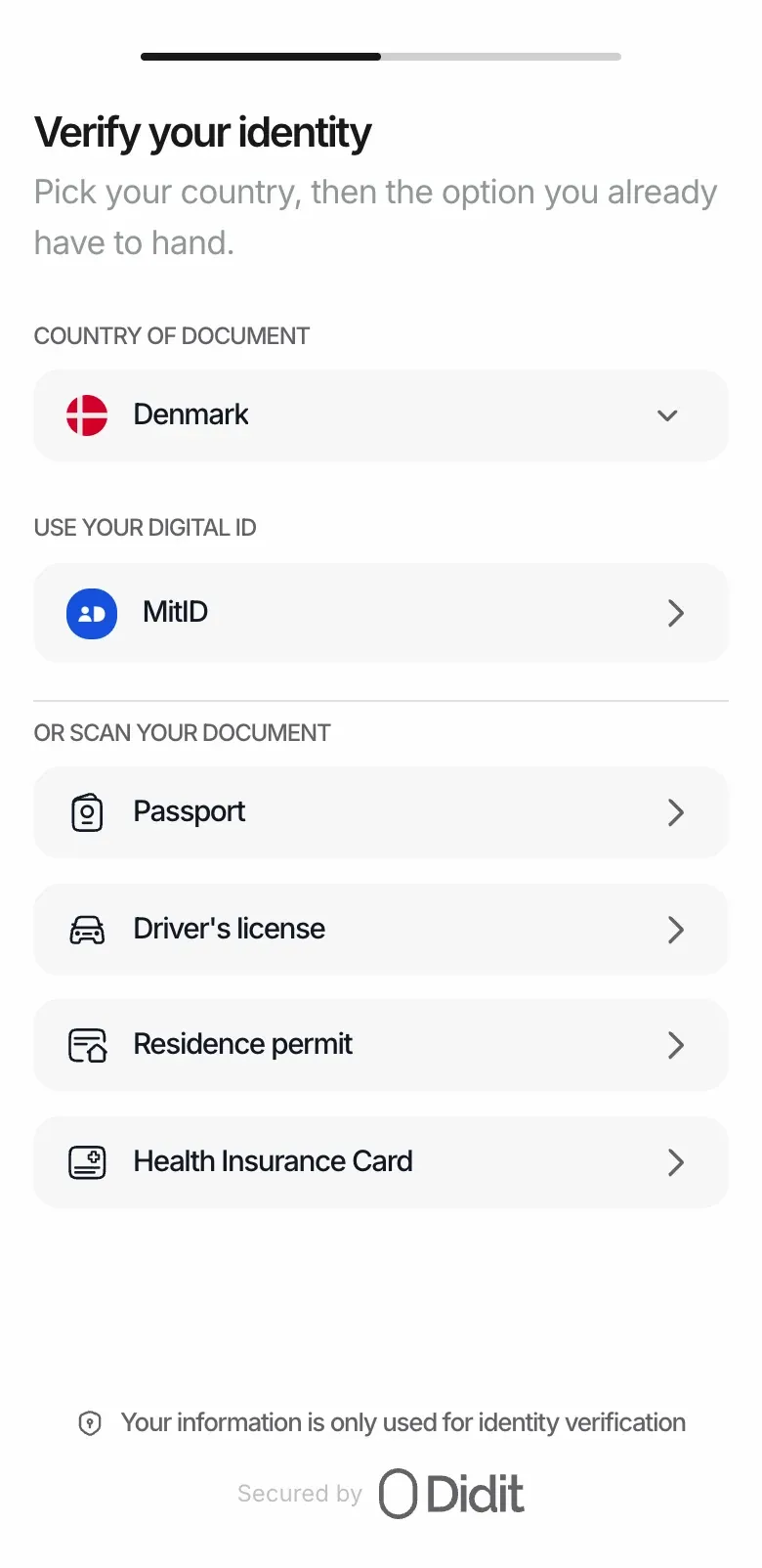
Didit 호스팅 플로우의 인증 방법 선택 화면.
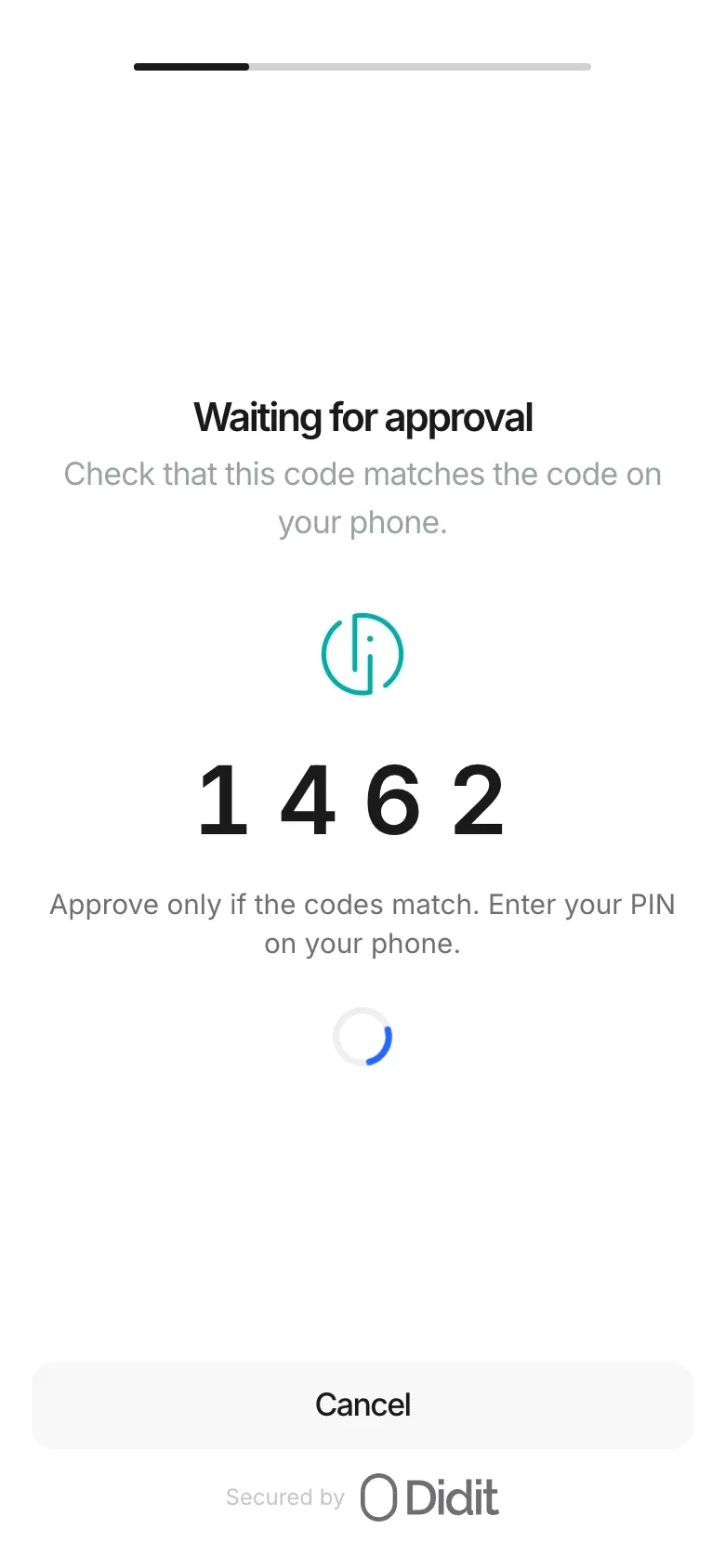
사용자가 휴대폰에서 대조하는 비교 코드.
로그인이 완료되면 성명, 생년월일, 발트 국가 개인식별코드, 보증 수준(Didit 자체 표기: High), 서명 검증 결과가 반환됩니다. 주소와 얼굴 사진은 포함되지 않습니다. 결과는 eID 연동 문서에 따라 웹훅 또는 API로 전달됩니다.[18]
그 외 사용자는 신분증 인증으로 대체되며, 여기에는 NFC 칩 판독($0.15), 라이브니스, 얼굴 대조가 포함됩니다. 전체 KYC 확인은 $0.33입니다. AML 스크리닝은 $0.20에 추가할 수 있습니다. 완료된 eID 로그인만 과금되며, Mobile-ID는 $0.20입니다(요금 페이지). 모든 eID는 eID 연동 페이지에서 확인할 수 있습니다.
Didit 제공 범위
- 에스토니아와 리투아니아의 Mobile-ID 연동
- 칩 판독, 라이브니스, 얼굴 대조를 포함한 신분증 경로
- AML 스크리닝 및 모든 확인의 증적
고객사 책임 범위
- 위험 평가 및 국가 AML 법률에 대한 귀사의 해석
- 강화된 고객확인과 온보딩 결정
- 각 대체 경로에 대해 기록하는 사유
오늘부터 가입 절차에 Mobile-ID를 도입하십시오
하나의 워크플로에서 Mobile-ID, Smart-ID, 신분증 경로를 제공합니다. 완료된 확인에 대해서만 비용을 지불합니다.
핵심 요약
- Mobile-ID는 키를 SIM 카드에 보관하며, 사용자는 코드를 대조한 후 PIN1으로 확인합니다.
- 에스토니아에서는 EU에 통보된 에스토니아 eID 제도의 일부이며 High 수준입니다. 리투아니아에서는 국내 기준으로만 High입니다.
- 에스토니아 사용자는 2027년 5월 19일 전에 SIM을 교체해야 합니다.
- 에스토니아에서는 신청에 에스토니아 신분증이 필요합니다. 신분증 문서 기반 대체 경로를 유지하세요.
자주 묻는 질문
기업이 Mobile-ID를 쓰는 데 드는 비용은 얼마입니까?
SK는 월 최소 금액을 두고 거래 건별로 요금을 부과하며, 거래량이 늘면 요금이 낮아집니다.[6] 이는 직접 계약 시 SK의 표준 가격입니다. 중개 사업자는 자체 가격을 정합니다. 각 사업자에게 제도 수수료와 자체 마진을 나누어 제시하도록 요청하세요. Didit는 완료된 로그인 1건당 $0.20를 부과합니다.
Mobile-ID 로그인은 어떤 데이터를 반환합니까?
이름, 국가 접두어가 붙은 개인 식별 코드, 그리고 에스토니아 코드의 경우 생년월일을 반환합니다. phone 스코프를 사용하면 TARA는 검증된 전화번호도 반환합니다.[5] 주소, 국적, 사진은 반환하지 않습니다.
Mobile-ID는 eIDAS High 수준입니까?
에스토니아에서는 그렇습니다. 에스토니아에서는 EU에 통보된 에스토니아 eID 제도의 일부이며 High 수준입니다.[4] 리투아니아에서는 RRT가 High로 평가하지만 EU에 통보되지는 않았습니다.[7]
에스토니아에서 AML 확인에 Mobile-ID만으로 충분합니까?
RahaPTS § 31(3)은 Substantial 또는 High 수준의 통보된 eID 제도를 명시하며, 에스토니아 Mobile-ID는 그중 하나입니다.[10][4] 법률 자문을 통해 확인하세요.
미성년자도 Mobile-ID를 사용할 수 있습니까?
이동통신사에 따라 다르며, 각 통신사가 자체 연령 제한을 정합니다.[3] 결과에 포함된 생년월일을 자사 연령 기준과 대조하세요.
외국인도 Mobile-ID를 사용할 수 있습니까?
에스토니아에서는 에스토니아 신분증이 있는 경우에만 가능합니다. 신청에 신분증이 필요하기 때문입니다.[2] 리투아니아의 외국인 관련 규정은 2026년 10월 5일 기준으로 확인되지 않았습니다. 그 밖의 모든 사용자를 위해 문서 기반 경로를 마련하세요.
Mobile-ID 서비스가 종료됩니까?
아닙니다. 에스토니아 사용자는 2027년 5월 19일 전에 Mobile-ID SIM을 교체해야 하며, 교체하지 않으면 서명과 로그인에 사용할 수 없게 됩니다.[1] 리투아니아 SIM에 대해서는 확인된 기한을 찾지 못했습니다.
Mobile-ID는 라트비아에서 사용할 수 있습니까?
아닙니다. SK의 가격표는 리투아니아와 에스토니아의 Mobile-ID 서비스만 다룹니다.[6] 라트비아 고객을 위해 문서 기반 경로를 마련하세요.
Mobile-ID 연동에는 얼마나 걸립니까?
2026년 10월 5일 기준으로 확인한 자료에서 SK는 Mobile-ID 도입 소요 기간을 공개하지 않습니다. 직접 연동하려면 SK의 Mobile-ID REST API를 기반으로 직접 개발해야 합니다.[6] 이미 Mobile-ID를 운영하는 제공업체를 통하면 워크플로 설정만으로 가능합니다.
운영 전환 전에 Mobile-ID를 어떻게 테스트합니까?
SK 또는 제공업체에 테스트 환경을 요청하세요. TARA는 운영 환경 이전에 데모 단계를 운영합니다.[5] 코드 흐름, 잘못된 PIN, 시간 초과, 대체 경로를 테스트하세요.
출처
- Mobile-ID 사용자는 서비스를 계속 이용하려면 SIM 카드를 교체해야 합니다, id.ee (RIA), 2026년 8월 6일.
- 전자신분증(eID), 정보시스템청(RIA).
- Mobile-ID 신청 및 활성화, id.ee (RIA).
- eIDAS에 따른 사전 통보 및 통보된 eID 제도 개요, 유럽연합 집행위원회, 2026년 10월 5일 열람.
- TARA 기술 명세, RIA.
- 가격표, SK ID Solutions, 2026년 6월 1일부터 적용.
- Smart-ID와 Mobile-ID, 리투아니아에서 국가 승인 수단으로 인정, SK ID Solutions, 2024년 12월 19일.
- SK ID Solutions, 2025년 리투아니아에서 인증서 거의 삼백만 건 발급, RRT를 인용한 SK ID Solutions, 2026년 5월 7일.
- Mobile-ID, mobile-id.lt.
- Rahapesu ja terrorismi rahastamise tõkestamise seadus (RahaPTS), § 31, Riigi Teataja.
- Hasartmänguseadus(도박법), § 34 및 § 53, Riigi Teataja.
- Pinigų plovimo ir teroristų finansavimo prevencijos įstatymas, 제11조, 통합본, INFOLEX.
- Dažniausiai užduodami klausimai(자주 묻는 질문), 리투아니아 도박감독청.
- 규정 (EU) 2024/1624 (AMLR), EUR-Lex, 2024년 6월 19일자 관보.
- 최종 보고서, AMLR 제28(1)조에 따른 RTS 초안, AMLA, 2026년 9월 30일.
- 범죄자가 본인 몰래 Smart-ID 계정을 만들기가 더 어려워졌다, id.ee (RIA), 2020년 3월 20일.
- Smart-ID 이용 연령 제한, Smart-ID 도움말.
- eID 연동, Didit 문서.
이 주제가 처음이라면 eID 인증이란 무엇인가, 국가별 eID 제도, 라트비아의 eID 인증, 그리고 eID 인증 페이지를 읽어 보십시오.