
Smart-ID API: RP API v3 개발자 가이드
개발자를 위한 Smart-ID API(RP API v3): 엔드포인트, 디바이스 링크 및 알림 플로우, 응답 검증, 데모 테스트, 수신하는 정보, 보증 수준, AML 규정, 요금.
 작성자: Alberto RosasDidit 공동 창립자 겸 CEO업데이트됨
요약
Smart-ID API는 SK ID Solutions가 Smart-ID 앱으로 사용자 로그인을 처리하고 서명을 받을 수 있도록 공개하는 신뢰 당사자(RP) API입니다. 버전 3은 푸시 알림에 더해 QR 코드와 동일 기기 링크를 추가합니다.[12]
- 에스토니아, 라트비아, 리투아니아에서 3,853,329명이 Smart-ID를 사용합니다(카운터 기준, 2026년 10월 5일).[1]
- API는 사용자의 이름과 국가 접두어가 붙은 개인 식별 코드가 담긴 서명된 인증서를 반환합니다. 주소와 얼굴 사진은 포함되지 않습니다.[15][5]
이 글은 코드 중심의 Smart-ID API 가이드입니다. 엔드포인트, 세션, 응답 검증, 데모 테스트, 법적 지위를 다룹니다. 국가별 계약과 AML 규정은 Smart-ID 연동 가이드를 참고하십시오.
Smart-ID 한눈에 보기
Smart-ID는 SK ID Solutions AS의 모바일 앱입니다. 서비스는 SK의 신뢰 당사자 API를 통해 이 앱으로 사용자를 로그인시키거나 서명을 받습니다.[13] 각 키의 일부는 SK 서버에 보관되며, 에스토니아 정보시스템청(RIA)은 이를 "Smart-ID 키 관리 서버 서비스"라고 부릅니다.[4]
Smart-ID
발트 3국과 벨기에의 앱 기반 전자신원확인(eID)
도입 현황: 사용자와 거래
smart-id.com의 실시간 카운터에 따르면 2026년 10월 5일 기준 Smart-ID 최대 시장은 사용자 1,857,471명의 리투아니아입니다. 그다음은 1,198,463명의 라트비아, 797,395명의 에스토니아입니다.[1] SK는 "매월 거의 1억 건의 거래"가 이루어진다고 밝히고 있습니다.[2]
ERR News에 따르면 에스토니아에서 Smart-ID는 인증 "시장 점유율이 거의 60퍼센트"에 달합니다. 카운터는 총계만 제공합니다. 각국 성인 인구 중 Smart-ID 사용 비율을 제시하는 1차 출처는 없습니다(2026년 10월 5일 기준).
사용자에게 보이는 화면
RP API v3는 세 가지 방식으로 앱에 연결됩니다. 기기 간 동적 QR 코드, 같은 휴대폰에서의 Web2App 또는 App2App 링크, 또는 푸시 알림입니다.[12] SK는 QR 및 앱 간 연동 경험을 Smart-ID+로 홍보하며, 이 방식은 "더 이상 웹사이트에 개인 식별 코드를 입력할 필요가 없다"고 설명합니다.[8]
Smart-ID로 로그인
Smart-ID 앱으로 코드를 스캔하십시오.
1사이트에 동적 QR 코드가 표시되며, 이 코드는 1초마다 새로 생성됩니다.[18]
스캔하여 로그인
화면의 코드에 카메라를 맞추십시오.
2앱은 Smart-ID 로그인 QR 코드만 스캔할 수 있으며, 사용자가 로그인을 시작한 경우에만 스캔할 수 있습니다.[9]
귀사 서비스
귀사 서비스에 로그인합니다. 본인이 시작한 경우에만 계속하십시오.
계속
3앱은 요청 문구와 함께 항상 귀사의 서비스 이름을 표시합니다.[36] 이 QR 흐름과 달리 알림 흐름에서는 PIN 입력 전에 4자리 코드 또는 선택할 코드 3개도 표시합니다.[17][10]
PIN1 입력
귀사 서비스 로그인을 확인하십시오.
확인
4그 후에야 사용자가 PIN1을 입력합니다. 입력은 앱에서 이루어지며, 귀사 사이트에서는 절대 이루어지지 않습니다.[8]
로그인되었습니다
- 성명공유됨
- 개인 식별 코드공유됨
- 주소공유되지 않음
- 얼굴 사진공유되지 않음
5귀사 백엔드는 인증서에서 이름과 개인 식별 코드를 읽습니다.[15]
확인 코드를 사용한 앱 로그인의 처음부터 끝까지.
Smart-ID API v3 작동 방식
API는 UTF-8 JSON을 사용하는 HTTPS 기반 REST입니다.[19] 네 가지 POST 엔드포인트 계열이 세션을 열고 sessionID를 반환하며, 하나의 GET이 결과를 반환합니다.[13]
| 엔드포인트 계열 | 기능 |
|---|---|
POST v3/authentication/device-link/anonymous | QR 코드 또는 동일 기기 링크로 로그인, 개인 식별 코드 입력 없음 |
POST v3/authentication/notification/etsi/{id} | 개인 식별 코드로 식별된 사용자에게 로그인 요청 푸시 |
POST v3/signature/... | 문서 다이제스트 서명(ASiC-E 또는 PAdES) |
POST v3/signature/certificate/{document-number} 및 certificate-choice | 서명 인증서를 먼저 조회 |
GET v3/session/{sessionID} | 상태 및 결과 조회 |
SK 개요에 따른 RP API v3 엔드포인트 계열.[13]
사용자가 PIN1을 입력
기기 링크를 이용한 교차 기기 로그인의 간략한 흐름.[12][18]
주의할 점:
- 모든 v3 최초 요청에는 귀사가 생성한 무작위
rpChallenge가 포함됩니다. 이 값은 재전송 공격 방지를 위해 v2의nonce를 대체했습니다.[20] sessionSecret은 절대 프런트엔드에 전달되어서는 안 됩니다. 또한 QR 코드와 링크를 함께 표시하더라도 하나의 흐름에는 하나의 세션 요청만 사용합니다.[18]- 알림 흐름에서는
rpChallenge의 SHA-256 값으로 4자리 코드를 계산합니다.[17] - SK는 출발지 IP와
relyingPartyUUID로 귀사를 인증하며, HTTPS 키 피닝을 요구합니다.[19] - SK 문서에 따르면 계정이 없는 사용자에 대해서는 HTTP 404가 반환됩니다. SK는 계정 열거 공격을 막기 위해 모든 오류 사례에 하나의 메시지를 표시하도록 요청합니다.[19]
기업이 Smart-ID API로부터 받는 정보
완료된 세션은 state, result.endResult, cert에 담긴 사용자 인증서, signature 객체를 반환합니다. 주체의 serialNumber에는 신원 코드가 들어 있습니다. 예를 들어 PNOEE-30001010004이며, 접두사가 국가를 나타냅니다.[15]
| 속성 | 반환 여부(세션 COMPLETE, 결과 OK) | 위치 |
|---|---|---|
| 국가 접두어가 붙은 개인 식별 코드 | 예 | 인증서 주체 serialNumber[15] |
| 이름과 성 | 인증서 주체에 포함 | SK의 인증서 프로파일에 기재된 주체 필드 기준 |
| 인증서 수준 | 예 | cert.certificateLevel, 예: ADVANCED 또는 QUALIFIED[15] |
| 귀사의 챌린지 또는 다이제스트에 대한 서명 | 예. 거부되거나 시간 초과 시 없음 | signature 객체[15] |
| 생년월일 | 코드에 따라 다름 | 에스토니아 코드에 대해서는 문서화되어 있습니다. 라트비아 테스트 계정은 날짜 필드가 있는 것과 없는 것이 모두 존재합니다[5][16] |
| 주소, 국적, 얼굴 사진 | 제공되지 않음 | 인증서와 응답 어디에도 없음[5] |
SK의 응답 검증 요건은 다음과 같습니다.[15]
state가COMPLETE인지,endResult가OK인지, 프로토콜이ACSP_V2(로그인) 또는RAW_DIGEST_SIGNATURE인지 확인합니다.- OCSP 또는 CRL을 사용해 SK의 CA에 대해서만 인증서 체인을 검증합니다.
- 모든 Smart-ID 정책 식별자를 요구하여 다른 SK 인증서는 실패하도록 합니다.
certificateLevel을 귀사가 요구하는 수준과 비교합니다.- 서명된 페이로드를 재구성하고 서명을 검증합니다.
- 동일 기기 흐름에서는 콜백 URL 값을 검증합니다.
보증 수준과 법적 지위
Smart-ID는 EU의 통보된 eID 체계 목록에 없습니다. 에스토니아의 통보된 체계(높음(High), 2018년 11월 7일)는 ID 카드와 Mobile-ID를 대상으로 합니다.[6]
| 국가 | 평가 | 출처 |
|---|---|---|
| 에스토니아 | 에스토니아 개인 식별 코드 보유자에 대해 "high"(높음) (RIA 전문가 그룹) | RIA[4] |
| 라트비아 | 적격 eID 제공자, 2023년 5월부터 국내 적격 지위 보유 | 국방부, SK[25][26] |
| 리투아니아 | 높음(High) 보증 수준 (2024년 12월 19일 SK 뉴스) | SK, RRT 인용[27] |
| 벨기에 | "높음(high) 보증 수준으로 공식 평가됨" | SK[2] |
주의: e-레지던트는 "거주자와 구별되지 않습니다".[5]
에스토니아 AML 고객확인(CDD)
에스토니아의 자금세탁 및 테러자금조달 방지법(RahaPTS)은 § 31(3)에서 비대면 경로를 정합니다.[23]
§ 31(3)RahaPTS (에스토니아)
"1) e-identimise süsteemi, millest on teatatud ... (EL) nr 910/2014 ... artikli 9 kohaselt ja mis vastab ... artikli 8 lõike 2 punktis b või c sätestatud usaldusväärsuse tasemele" 또는 "2) kvalifitseeritud usaldusteenust"
출처: Riigi Teataja, RahaPTS[23]
영어로 옮기면: 상당(substantial) 또는 높음(High) 수준으로 통보된 eID 체계, 또는 적격 신뢰 서비스입니다. 경로 1은 해당하지 않습니다. Smart-ID의 적격 인증서가 경로 2에 해당하는지에 대해서는 2026년 10월 5일 기준 공식 입장이 없습니다. Finantsinspektsioon 또는 법률 자문에 문의하십시오. 리투아니아 AML법(제11조)과 라트비아 내각 규칙 제392호(7.1호)는 여러 비대면 경로 중 하나로 적격 전자서명 또는 보안 전자서명을 열거합니다.[28][29]
2027년부터: AMLR 제22조(6)
자금세탁방지규정(AMLR)은 2027년 7월 10일부터 적용됩니다. 제22조(6)(b)는 "보증 수준 '상당(substantial)' 또는 '높음(high)'에 관하여 Regulation (EU) No 910/2014의 요건을 충족하는 전자식별수단 및 관련 적격 신뢰 서비스"를 인정합니다.[30] 자금세탁방지청(AMLA)의 2026년 9월 30일자 최종 기준안은 아직 법적 효력이 없으며, 상당 또는 높음(High) 수준의 eID를 "제9조에 따라 통지되었는지 여부와 관계없이" 인정합니다.[31] eIDAS 2 일정은 EUDI Wallet 페이지에서 다룹니다.
기업의 연결 방법: SK와 직접 RP 계약 또는 브로커 이용
SK의 절차는 다음과 같습니다. 무료로 테스트하고, 보안 조치를 선택하고, IP 주소와 서비스명을 보내고, 계약에 서명하고, RP UUID를 받은 뒤 "첫 문의 후 며칠 안에" 서비스를 개시합니다.[21] 인증된 브로커도 Smart-ID를 재판매하며, 에스토니아 공공기관은 RIA의 TARA 게이트웨이를 이용할 수 있습니다.[5]
직접
SK와 RP 계약
- RP API를 호출
- IP 허용 목록, RP UUID
- 인증 기능을 직접 구축
공개된 가격표
브로커를 통한 연동
애그리게이터 또는 eID 허브
- 하나의 API, 여러 eID
- 계약은 브로커가 체결
- 인증을 대신 처리
가격이 한곳에 공개되지 않음
공공 부문
TARA (에스토니아)
- OpenID Connect, RIA 운영
- 등록, 데모, 그다음 운영 환경
- 민간 기업: 국경 간 이용만 가능
국가 기관
Smart-ID에 연결하는 세 가지 방법.[21][5]
SK의 가격표(2026년 6월 1일부터 적용)는 "Smart-ID 인증 또는 서명 요청"마다 요금을 부과합니다. 요청당 €0.109이며 월 최저 요금은 €60입니다. 3백만 건 요금제에서는 €0.0106까지 내려가고, 5백만 건을 넘으면 개별 계약이 적용됩니다.[11] SK는 기존 RP에게 Smart-ID+가 "추가 비용 없이 제공된다"고 밝히고 있습니다.[7]
데모 환경에서 테스트하기
데모: https://sid.demo.sk.ee/smart-id-rp/v3/, relyingPartyUUID 00000000-0000-4000-8000-000000000000, 이름 DEMO. 운영 환경: https://rp-api.smart-id.com/v3/.[14] 결과별 테스트 계정:[16]
| 최종 결과 | 문서 번호 예시 (에스토니아) | 테스트 내용 |
|---|---|---|
OK | PNOEE-40504040001-DEM2-Q | 성공 |
USER_REFUSED | PNOEE-30403039917-MOCK-Q | 사용자가 취소함 |
WRONG_VC | PNOEE-30403039972-MOCK-Q | 잘못된 코드를 선택함 |
TIMEOUT | PNOEE-30403039983-MOCK-Q | 응답 없음 |
활용 사례와 업종별 규정
- KYC 및 AML 온보딩. 서명된 이름과 개인 식별 코드를 제공합니다. AML 요건 충족 여부는 국가마다 다릅니다.[23][28][29]
- 도박과 연령. 에스토니아 도박법은 21세 미만의 사행성 게임 참여를 금지하고(§ 34(2)), 원격 운영자에게 모든 플레이어를 확인하고 개인 식별 코드를 등록하도록 요구합니다(§ 53(1)).[24] API에서 연령만 확인하는 클레임은 찾지 못했습니다.
- 서명. 적격 계정은
v3/signature로 서명합니다. "2025년에 리투아니아인 10명 중 4명이 적격 전자서명을 사용했습니다".[13][33] - 통신. SIM 등록에 Smart-ID를 명시한 발트 3국 규정은 없습니다(2026년 10월 5일 기준).
한계와 대체 수단
"에스토니아와 라트비아에서 Smart-ID는 현재 에스토니아 또는 라트비아 국가 신분 번호를 가진 사람으로 제한됩니다". 리투아니아 비거주자는 2개 은행에서 Smart-ID Basic을 발급받을 수 있습니다.[22] Smart-ID 자체에는 연령 제한이 없지만 등록 경로에는 있습니다(라트비아 신분증은 14세부터). 18세 미만 계정은 부모의 승인이 필요합니다.[32]
2026년 10월 5일 기준으로 문서화된 장애 사례는 찾지 못했습니다. 위험 요소는 피싱입니다. ERR News에 따르면 2025년에 PIN 사기로 에스토니아 은행 계좌에서 €23 million 가까이 도난당했습니다. 2026년 4월 29일부터 에스토니아 등록 절차는 카드 리더기 대신 NFC로 신분증을 읽습니다.[34]
1Smart-ID를 먼저 제공
발트 3국 개인 식별 코드 보유자.
세션이 결과 OK와 함께 COMPLETE로 종료됨
결과 검증 및 저장
모든 확인 통과.
신분증 문서 인증으로 전환
NFC 칩 판독, 라이브니스 확인, 얼굴 대조.
2스크리닝 및 결정
AML 스크리닝 후 귀사가 결정합니다.
전자신분증을 먼저, 신분증 문서 인증을 대체 수단으로 사용하고, 각 대체 수단이 필요했던 이유를 기록합니다.[31]
Smart-ID API 구현 체크리스트
먼저 SK의 무료 데모로 개발하면 코드가 작동한 뒤에 계약을 진행할 수 있습니다.[21] 작업의 핵심은 응답 검증입니다.[15]
- 데모 URL과 공개된 테스트 계정으로 개발합니다.[14][16]
- 디바이스 링크 플로우를 우선 사용하고, 알림 방식은 알려진 기기에서만 허용합니다.[13]
- 로그인마다 새로운 무작위
rpChallenge를 생성합니다.[20] - SK의 HTTPS 키를 고정(pinning)하고
sessionSecret은 서버에 보관합니다.[19][18] - SK의 응답 검증 단계를 모두 수행합니다.[15]
- SK에 IP와 서비스 이름을 보낸 뒤 계약에 서명합니다.[21]
- 국가별로 AML 용도의 법적 근거를 문서화합니다.[23]
- Smart-ID가 없는 사용자를 위해 신분증 문서 인증 경로를 추가하십시오.
Didit의 Smart-ID 지원 방식
Smart-ID는 에스토니아, 라트비아, 리투아니아, 벨기에에서 Didit의 eID 인증에 적용되어 운영 중입니다. Smart-ID 연결은 Didit이 대신 처리하므로 RP 계약, IP 허용 목록, 인증서 관련 코드 작업이 필요 없습니다.
콘솔에서 Workflows, ID Verification 단계, Countries로 이동하여 국가를 선택한 뒤 "Wallets accepted"에서 Smart-ID를 체크하십시오. API로는 methods.EST.wallet을 설정하고 세션을 생성한 다음 GET /v3/session/{id}/decision/ 또는 웹훅을 확인합니다. eID 연동 문서에 따르면 verification_method 값은 "wallet"이며 wallet_verification 객체가 함께 제공됩니다.[35] 사용자는 Smart-ID 앱에서 확인 코드를 승인합니다. Didit은 PIN을 절대 요구하지 않습니다.
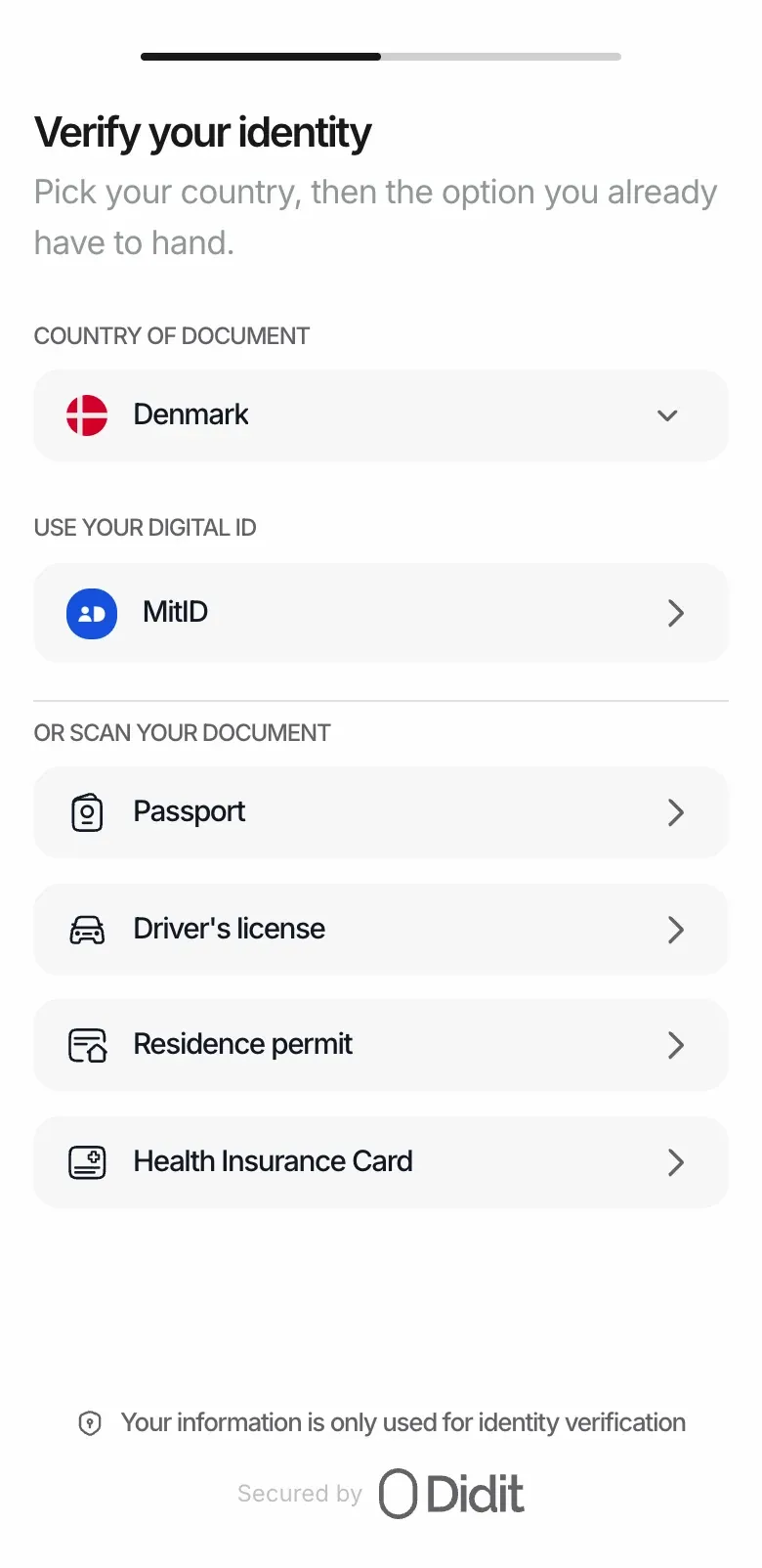
Didit 호스팅 플로우의 인증 방법 선택 화면.
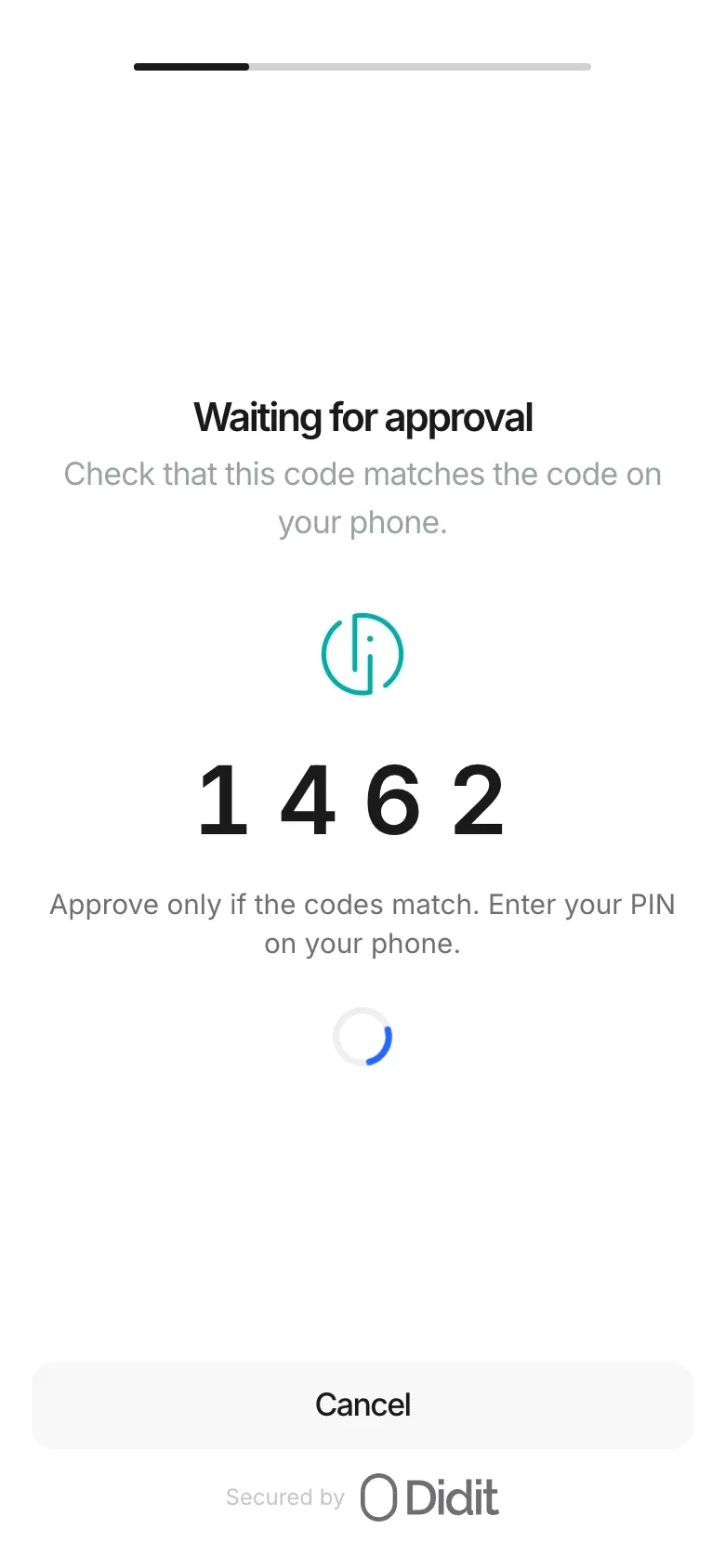
사용자가 Smart-ID 앱에서 대조하는 확인 코드.
제공되는 정보는 전체 이름, 생년월일, 발트 개인 식별 코드, 보증 수준(High로 표시), 서명 검증 결과입니다. 주소와 얼굴 사진은 제공되지 않습니다. Smart-ID가 없는 사용자는 신분증 인증으로 대체됩니다. 여기에는 NFC 칩 판독($0.15), 라이브니스, 얼굴 대조가 포함됩니다. 전체 KYC는 $0.33, AML 스크리닝은 $0.20입니다. 완료된 eID 로그인만 과금됩니다. 완료된 Smart-ID 인증 1건의 비용은 $0.20입니다(요금 페이지). 모든 eID는 eID 연동 페이지에서 확인할 수 있습니다.
Didit이 제공하는 것
- Smart-ID 연결 및 서명 검증
- 신분증 문서 인증 경로
- AML 스크리닝 및 모든 검사의 증거 자료
귀사가 담당하는 것
- 위험 평가 및 AML 해석
- 온보딩 결정
- 각 대체 경로 전환의 사유
RP 계약 없이 Smart-ID를 바로 도입하십시오
Smart-ID와 신분증 문서 인증 경로를 하나의 API로. 완료된 검사에 대해서만 비용을 지불합니다.
핵심 요약
- Smart-ID API(RP API v3)는
POST로 세션을 열고GET으로 세션을 조회합니다. - SK는 푸시 알림보다 기기 링크 플로우(QR 또는 동일 기기 링크)를 권장합니다.
- 성명과 개인 식별 코드가 담긴 인증서를 받으며, 주소나 얼굴 사진은 절대 제공되지 않습니다.
- 국가 차원에서는 높음(High) 등급이지만 EU에 통보된 제도는 아닙니다. AML 적합성은 국가마다 다릅니다.
자주 묻는 질문
공개된 Smart-ID API가 있습니까?
예. SK는 Relying Party API 문서를 공개하고 있으며 현재 버전은 3.2.3입니다.[20] 운영 환경 호출에는 계약, RP UUID, 허용된 IP 주소가 필요합니다.[21][19]
Smart-ID API 비용은 얼마입니까?
2026년 6월 1일부터 적용되는 SK의 요금표는 요청당 €0.109에서 시작하며 월 최소 이용료 €60가 적용됩니다. 300만 건 요금제에서는 €0.0106까지 낮아집니다.[11] 브로커 요금은 한곳에 공개되어 있지 않습니다. Didit에서 완료된 Smart-ID 인증 1건의 비용은 $0.20입니다.
Smart-ID API는 어떤 데이터를 반환합니까?
사용자 이름과 PNOEE-30001010004 같은 개인 식별 코드가 담긴 서명된 인증서, 그리고 서명을 반환합니다.[15] 주소, 국적, 얼굴 사진은 반환하지 않습니다.[5]
Smart-ID API는 어떻게 테스트합니까?
SK가 공개한 데모 RP UUID로 데모 환경을 사용하십시오. 무료이며 계약이 필요 없습니다.[14][21] 에스토니아, 라트비아, 리투아니아, 벨기에용 테스트 계정은 성공, 거부, 잘못된 코드, 시간 초과 결과를 반환합니다.[16]
Smart-ID RP API v3에서 무엇이 바뀌었습니까?
버전 3은 푸시 알림과 함께 별도 엔드포인트를 갖춘 디바이스 링크 흐름(QR, Web2App, App2App)을 추가합니다.[13][20] 또한 재전송 공격에 대비해 v2의 nonce를 대체하는 무작위 rpChallenge를 모든 최초 요청에 필수로 요구합니다.[20] 버전 3.2는 HTTP/1.1과 HTTP/2를 모두 지원하며 오류 세부 정보를 RFC 9457 형식으로 반환합니다.[20]
디바이스 링크 흐름과 알림 흐름 중 무엇을 사용해야 합니까?
모든 경우에 디바이스 링크를 사용하면 피싱 방어 효과가 가장 큽니다. 여러 기기를 쓰는 경우 새 기기에는 디바이스 링크, 알려진 기기에는 푸시를 사용하는 방식도 권장됩니다. 푸시만 사용하는 방식은 권장되지 않습니다.[12]
Smart-ID의 보증 수준은 어떻게 됩니까?
에스토니아, 라트비아, 리투아니아의 국가 평가에서 '높음(High)' 수준입니다.[4][25][27] EU의 통보된 eID 체계 목록에는 올라 있지 않습니다.[6]
에스토니아에서 Smart-ID만으로 AML 고객확인 의무를 충족할 수 있습니까?
RahaPTS § 31(3)은 상당(substantial) 또는 높음(High) 수준의 통보된 eID, 또는 적격 신뢰 서비스를 허용합니다.[23] Smart-ID가 후자에 해당하는지에 대한 공식 입장은 없습니다(2026년 10월 5일). Finantsinspektsioon 또는 법률 자문에 확인하십시오.
외국인도 Smart-ID를 사용할 수 있습니까?
에스토니아와 라트비아에서는 현지 개인 식별 코드 보유자만 등록할 수 있습니다. 리투아니아에서는 비거주자가 두 은행에서 Smart-ID Basic을 발급받을 수 있으며, 거주 허가 보유자와 전자영주권자(e-resident)는 시민과 같은 방식으로 등록합니다.[22]
미성년자도 Smart-ID를 사용할 수 있습니까?
Smart-ID 자체에는 연령 제한이 없으며, 등록 경로에 따라 연령이 정해집니다. 예를 들어 에스토니아에서는 여권으로 6세부터 등록할 수 있습니다.[32] 18세 미만 계정에는 부모의 승인이 필요하며, SK의 테스트 계정에는 미성년자 계정도 포함되어 있습니다.[32][16]
Smart-ID API 연동에는 얼마나 걸립니까?
SK는 "최초 문의 후 며칠 이내"라고 밝힙니다.[21] 개발 공수는 공개되어 있지 않습니다.
출처
- Smart-ID 홈페이지, 실시간 사용자 수 카운터, SK ID Solutions, 2026년 10월 5일 열람.
- 2025년: 국경을 넘어 디지털 신뢰를 발전시키다, SK ID Solutions, 2026년 1월 19일.
- 유럽 디지털 신원 분야의 신뢰와 경쟁, e-Estonia, 2026년.
- 전자 신원(eID), 정보시스템청(RIA).
- TARA 기술 사양, RIA.
- eIDAS에 따른 사전 통보 및 통보된 eID 체계 개요, 유럽연합 집행위원회, 2026년 10월 5일 열람.
- Smart-ID+, SK ID Solutions.
- 새 Smart-ID는 사기로부터 나를 어떻게 보호합니까, Smart-ID FAQ.
- 에스토니아 정부, 보안 강화를 위해 Smart-ID+ 도입, SK ID Solutions, 2026년 1월 28일.
- 확인 코드가 어떤 때는 1개, 어떤 때는 3개 표시되는 이유, Smart-ID FAQ.
- 가격표, SK ID Solutions, 2026년 6월 1일부터 유효.
- Relying Party API: 소개, SK ID Solutions, 버전 3.2.3.
- Relying Party API: API 엔드포인트 개요, SK ID Solutions.
- 환경 기술 파라미터, SK ID Solutions.
- Relying Party API: 응답 검증, SK ID Solutions.
- 자동화 테스트용 테스트 계정, SK ID Solutions.
- Relying Party API: 알림 기반 플로우, SK ID Solutions.
- Relying Party API: 디바이스 링크 플로우, SK ID Solutions.
- Relying Party API: API 기술 설명, SK ID Solutions.
- Relying Party API: 변경 이력, SK ID Solutions.
- 전자 서비스 제공자를 위한 연동 절차, Smart-ID.
- 외국인과 비거주자도 Smart-ID를 사용할 수 있는가, Smart-ID FAQ.
- Rahapesu ja terrorismi rahastamise tõkestamise seadus (RahaPTS), § 31, Riigi Teataja.
- Hasartmänguseadus (도박법), Riigi Teataja.
- Elektroniskā identifikācija, 라트비아 국방부.
- Smart-ID, 라트비아에서 인증용 국내 적격 지위 획득, SK ID Solutions, 2023년 5월 29일.
- Smart-ID와 Mobile-ID, 리투아니아에서 국가 승인 수단으로 인정, SK ID Solutions, 2024년 12월 19일.
- 자금세탁 및 테러자금조달 방지법 제11조, 리투아니아, INFOLEX 통합본.
- 내각 규정 제392호, 라트비아, likumi.lv.
- 규정 (EU) 2024/1624 (AMLR), EUR-Lex, 2024년 6월 19일자 관보.
- 최종 보고서, AMLR 제28(1)조에 따른 RTS 초안, AMLA, 2026년 9월 30일.
- Smart-ID 사용 연령 제한, Smart-ID FAQ.
- SK ID Solutions, 2025년 리투아니아에서 인증서 거의 삼백만 건 발급, SK ID Solutions, 2026년 5월 7일.
- 이제 NFC로 에스토니아 신분증을 이용한 Smart-ID 등록 가능, Smart-ID, 2026년 4월 29일.
- eID 연동, Didit 문서.
- Relying Party API: 인터랙션, SK ID Solutions.
Smart-ID는 Didit의 eID 인증에서 현재 제공되는 5개 eID 중 하나입니다. eID 인증이란 무엇인지와 BankID 스웨덴 API 가이드도 참고하십시오.