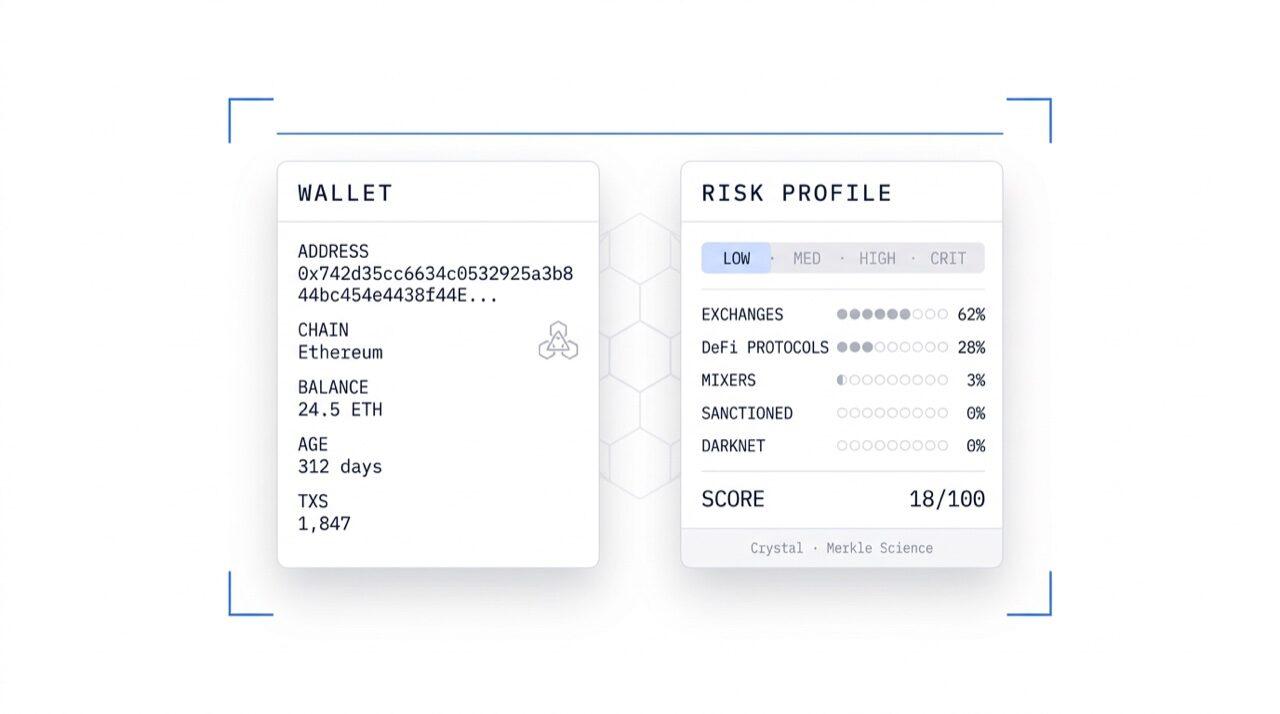
Angalia anwani yoyote ya wallet au hash ya muamala kwa hatari kwenye blockchain, vikwazo, mixers, mfiduo wa darknet, chanzo cha fedha. $0.15 kwa kila ukaguzi, au leta mtoa huduma wako wa uchunguzi.
Chunguza pochi kwa $0.15 kwa kila ukaguzi, au lete mtoa huduma wako wa uchunguzi na
uiendeshe ndani ya Didit, kwa foleni moja ya kesi na rekodi moja ya ukaguzi kwa zote mbili.
Jinsi inavyofanya kazi
Kuanzia kujisajili hadi mtumiaji aliyethibitishwa kwa hatua nne.
Hatua 01 / 04
01
Unda mtiririko wa kazi
Chagua ukaguzi unaotaka, ID, liveness, face match, vikwazo, anwani, umri, simu, barua pepe, maswali maalum. Ziburute kwenye mtiririko kwenye dashibodi, au tuma mtiririko huo huo kwenye API yetu. Gawanya kwa masharti, endesha majaribio ya A/B, hakuna code inayohitajika.
Unganisha
Pachika asili na SDK yetu ya Web, iOS, Android, React Native, au Flutter. Elekeza kwenye ukurasa uliopangishwa. Au tuma tu mtumiaji wako kiungo, kwa barua pepe, SMS, WhatsApp, popote. Chagua kinachofaa stack yako.
Mtumiaji anapitia mtiririko
Didit inasimamia kamera, ishara za mwanga, uhamishaji wa simu, na ufikiaji. Wakati mtumiaji yuko kwenye mtiririko, tunapima ishara 200+ za udanganyifu kwa wakati halisi na kuthibitisha kila sehemu dhidi ya vyanzo vya data vya kuaminika. Matokeo chini ya sekunde mbili.
Unapokea matokeo
Webhooks zilizosainiwa kwa wakati halisi huweka database yako sawa mara tu mtumiaji anapoidhinishwa, kukataliwa, au kutumwa kwa ukaguzi. Uliza API inapohitajika. Au fungua console kukagua kila session, kila ishara, na kudhibiti kesi zako mwenyewe.
Imejengwa kwa ajili ya kufuata sheria · Imejengwa dhidi ya udanganyifu wa crypto · Wazi kwa muundo
Uwezo sita. Moduli moja. $0.15 kwa kila ukaguzi.
Wallet Screening inakaa ndani ya Transaction Monitoring lakini pia inapatikana peke yake. Kila uwezo ni sehemu ya moduli moja, iwashe kwa kila mtiririko wa kazi au ipitishe moja kwa moja kwenye API call.
Chagua uchunguzi unaosimamiwa na Didit kwa $0.15 kwa kila ukaguzi, au unganisha mkataba wako wa mtoa huduma wa uchunguzi uliopo na uiendeshe ndani ya Didit, unadumisha uhusiano, sisi tunasimamia uratibu. Sanidi mtoa huduma anayefanya kazi kwa kila workspace.
Mapendeleo ya mtoa hudumaLeta ufunguo wako mwenyewe
Uchunguzi unaosimamiwa na Didit
Imeunganishwa · $0.15 / ukaguzi
Chaguo-msingi
Mtoa huduma wako wa uchunguzi
Imeunganishwa · ufunguo wako
Ongeza mtoa huduma mwingine
Inapatikana
02 · Bei
Bei moja ya wazi kwa kila ukaguzi.
$0.15 kwa kila ukaguzi, au lete mtoa huduma wako wa uchunguzi. Hakuna kiwango cha chini, hakuna mikataba, lipa-kwa-mafanikio. Ukaguzi 500 wa bure/mwezi. Punguzo la wingi linatumika kiotomatiki juu ya ukaguzi 100,000/mwezi.
Bei kwa kila uchunguziHakuna viwango vya chini
Inasimamiwa na Didit
$0.15/ uchunguzi
Lipa kwa mafanikio · hakuna mkataba
Leta mtoa huduma wako mwenyewe
Ufunguo wako
Endesha ndani ya Didit
Bei moja ya umma, hakuna viwango vya chini$0.15 / check
03 · Upimaji wa hatari
Hatari ya pochi kwa wakati halisi chini ya sekunde.
Alama ya hatari 0–100, ukali LOW/MEDIUM/HIGH/CRITICAL, uchambuzi wa chanzo cha fedha katika kategoria 14+, pochi zilizowekewa vikwazo, ransomware, fedha zilizoibiwa, masoko ya darknet, mixers, ulaghai, kubadilishana hatari kubwa, kamari, peer-to-peer. Muundo uleule, kila mtoa huduma.
Wallet · 0x9F2c...A41BMUHIMU
87
Alama ya hatari 0-100
Ukali unaotokana na alama · chini ya sekunde
Chanzo cha fedha
Wallet iliyowekewa vikwazo28%
Mixer (Tornado Cash)12%
Soko la kubadilishana lililodhibitiwa48%
P2P12%
04 · Travel Rule
FATF Recommendation 16 na kufuata sheria za VASP.
Tuma block ya Travel Rule na muamala na sisi tunashughulikia ubadilishanaji wa ujumbe uliopangwa na VASPs (virtual asset service providers) zinazoungwa mkono. Maelezo ya mwanzilishi na mnufaika, rekodi kamili ya ukaguzi, iliyolingana na Kanuni ya Uhamishaji Fedha ya EU.
Travel Rule · FATF R.16VASP kwa VASP
VASP Muanzilishi
Acme Crypto · ESP
VASP Mnufaika
Coinbase · USA
originator.full_name · date_of_birth
beneficiary.full_name · wallet_address
amount · currency · chain
05 · TM imejumuishwa
Inajiunga moja kwa moja na Transaction Monitoring.
Weka alama ya muamala kama crypto na tunachunguza kiotomatiki, pochi ya marudio kabla ya uhamishaji kwa outbound, transaction hash baada ya uhamishaji kwa inbound. Hits za hatari kubwa zinalisha injini ya sheria, foleni ya kesi, na mzunguko wa urejeshaji wa kiotomatiki.
Muamala · UNAOTOKA0.25 ETH
1Sheria ya TM · ukaguzi wa kasiIMEFAULU
2Uchunguzi wa Wallet · hatari ya mnyororoWEKA_ALAMA
3Injini ya sheria · sasisho la haliINAMSUBIRI_MTUMIAJI
Mtiririko wa kazi uleule. Simu moja ya muamala./v3/transactions/
06 · Ufikiaji
Vikwazo, OFAC, darknet, mixers, ransomware.
Kila uchunguzi unajumuisha vikwazo vya OFAC, EU, UN, na UK HM Treasury pamoja na akili ya mtoa huduma kuhusu darknet, ransomware, mixer, fedha zilizoibiwa, ulaghai, na ufadhili wa ugaidi. Pochi zilizowekewa vikwazo zinaonekana kama bendera tofauti ili sheria iweze kukataa mara moja.
Vikwazo na ishara mbayaInaburudishwa mfululizo
OFAC SDN
Hazina ya Marekani
Inatumika
EU iliyounganishwa
Baraza la Ulaya
Inatumika
Vikwazo vya UN
Umoja wa Mataifa
Inatumika
Masoko ya Darknet
Taarifa za mtoa huduma
Inatumika
Wallets za Ransomware
Taarifa za mtoa huduma
Inatumika
Unganisha
Endpoints mbili. Uchunguzi uleule. Bei ileile.
Chagua endpoint ya pekee kwa utafutaji wa pochi wa mara moja. Chagua endpoint ya miamala unapotaka uchunguzi ulishie injini ya sheria, foleni ya kesi, na urejeshaji wa kiotomatiki. Zote mbili zinalipishwa $0.15 kwa kila ukaguzi.
// Your endpoint receives a signed wallet-screening resultconst crypto = require("node:crypto"); // ESM: import crypto from "node:crypto"// X-Signature-V2 = HMAC over the canonical JSON, never the raw bytes. Match the sender byte for// byte: keys sorted by code point, integers digit for digit, floats in Python's repr.class Num { constructor(src) { this.src = src; } } // a number as written on the wire, not a doubleconst num = (s) => { if (/^-?\d+$/.test(s)) return BigInt(s).toString(); const n = +s; // ints stay exactif (Number.isInteger(n)) return BigInt(n).toString(); const [m, e] = n.toExponential().split("e"); // 27.0 -> 27return +e >= -4 ? String(n) : `${m}e-${String(-e).padStart(2, "0")}`; }; // 1e-05, not 0.00001const byCodePoint = (a, b) => Buffer.compare(Buffer.from(a), Buffer.from(b)); // UTF-8 order = Python'sconst canon = (v) => Array.isArray(v) ? `[${v.map(canon)}]` : v instanceof Num ? num(v.src)
: v && typeof v === "object" ? `{${Object.keys(v).sort(byCodePoint).map((k) => `${JSON.stringify(k)}:${canon(v[k])}`)}}`
: JSON.stringify(v);
// Read the body as text: express.json() would round 1000000000000000129 to a double first.// Register this route ABOVE any global app.use(express.json()): the first parser to run// consumes the stream, and a body it already parsed has lost the digits the signature covers.
app.post("/webhooks/didit", express.text({ type: "application/json" }), (req, res) => {
const exact = JSON.parse(req.body, (k, v, c) => typeof v === "number" ? new Num(c.source) : v); // Node 21+const body = JSON.parse(req.body);
const mac = crypto.createHmac("sha256", SECRET).update(canon(exact), "utf8").digest("hex");
const sig = Buffer.from(String(req.headers["x-signature-v2"] ?? ""));
// Freshness comes from the signed body timestamp; the header alone is unsigned and replayable.const ts = body.timestamp, fresh = String(ts) === req.headers["x-timestamp"]
&& Math.abs(Date.now() / 1000 - ts) <= 300;
if (!fresh || sig.length !== mac.length
|| !crypto.timingSafeEqual(sig, Buffer.from(mac))) return res.sendStatus(401);
const { status, decision, txn_id } = body;
// status: APPROVED | IN_REVIEW | DECLINED | AWAITING_USER
res.sendStatus(200);
});
Bandika kizuizi hapa chini kwenye Claude Code, Cursor, Codex, Devin, Aider, au Replit Agent. Jaza stack yako. Agent itaweka Didit, itasanidi uchunguzi wa wallet kwa $0.15 kwa kila ukaguzi, itathibitisha webhooks zilizosainiwa, na kuingiza matukio hatarishi kwenye Transaction Monitoring.
didit-integration-prompt.md
# Didit Wallet Screening (KYT) — integrate in 5 minutes

You are integrating Didit's Wallet Screening / Know Your Transaction (KYT)
module into <my_stack>. Follow these steps exactly. Every URL, header,
and enum value below is canonical — do not paraphrase or "improve" them.

Wallet Screening produces a standardised risk payload regardless of
which underlying provider sits behind it:
  - Risk score 0-100 + severity (LOW, MEDIUM, HIGH, CRITICAL)
  - Source of funds breakdown across 14+ categories
  - Exposure table (counterparty entities, direct vs indirect hops)
  - Network graph metrics
  - Sanctions / darknet / mixer flags as discrete signals

## 1. Provision an account
- Sign up: https://business.didit.me (no credit card required).
- Or provision programmatically: POST https://apx.didit.me/auth/v2/programmatic/register/

## 2. Choose a screening source
- Wallet Screening runs at $0.15 per check on Didit's own on-chain
  risk data — nothing to configure, it works out of the box.
- Or bring your own screening provider and run it inside Didit: open
  Transactions > Settings > Provider Preferences in the Business
  Console (https://business.didit.me) and paste your existing
  provider API key. The screening result payload is identical
  whichever source you use.

## 3. Two integration paths — pick one

### Path A — Workflow / Transactions API (recommended)
Best when you want Wallet Screening chained into the Transaction
Monitoring rules engine so flagged transactions automatically generate
review cases.

POST https://verification.didit.me/v3/transactions/
Headers:
  x-api-key: <your-api-key>
  Content-Type: application/json
Body (outbound pre-transfer screen, screens the destination wallet):
  {
    "transaction_id": "withdrawal-001",
    "transaction_category": "finance",
    "include_crypto_screening": true,
    "transaction_details": {
      "direction": "OUTBOUND",
      "amount": "0.25",
      "currency": "ETH",
      "currency_kind": "crypto",
      "action_type": "withdrawal"
    },
    "subject": {
      "entity_type": "individual",
      "vendor_data": "user-123",
      "full_name": "John Doe"
    },
    "counterparty": {
      "entity_type": "unhosted_wallet",
      "full_name": "John Doe",
      "payment_method": {
        "method_type": "crypto_wallet",
        "account_id": "0xRecipientWallet..."
      }
    }
  }

Direction rules — required:
  - INBOUND  pre-transfer  -> screens counterparty.payment_method.account_id
  - INBOUND  post-transfer -> screens the tx hash scoped to subject.payment_method.account_id
  - OUTBOUND pre-transfer  -> screens counterparty.payment_method.account_id
  - OUTBOUND post-transfer -> screens the tx hash scoped to counterparty.payment_method.account_id

For post-transfer screening, also include
  transaction_details.payment_reference_id  -> the blockchain tx hash

### Path B — Standalone wallet-screening API
Best when you want a one-off wallet-risk lookup without writing a full
transaction. Same screening source, same $0.15 per check price.

POST https://verification.didit.me/v3/transactions/
Headers:
  x-api-key: <your-api-key>
  Content-Type: application/json
Body:
  {
    "wallet_address": "0xRecipientWallet...",
    "currency": "ETH",
    "direction": "OUTBOUND"
  }

Synchronous JSON response — no webhook required for the standalone call.
Use Path A whenever the screening result needs to flow into the rules
engine, case management, or the auto-remediation loop.

## 4. Webhooks
Register one webhook destination per workspace:

POST https://verification.didit.me/v3/webhook/destinations/
Body: { "url": "https://yourapp.com/didit/webhooks",
        "events": ["transaction.status.updated"] }

Every delivery carries an X-Signature-V2 Hash-based Message Authentication
Code (HMAC) header.  HMAC-SHA256 verification MUST run against the raw body bytes (the raw payload as Didit sent it) BEFORE any JSON parsing — re-serialising the parsed body changes whitespace and key order, which invalidates the signature.Verify it before trusting the payload:

  signature = hmac_sha256(secret, raw_body).hex()
  if signature != request.headers["X-Signature-V2"]:
      return 401

## 5. Reading the result
Every screening returns a standardised risk object:
  - risk_score (0-100, higher = more exposure)
  - severity ("LOW", "MEDIUM", "HIGH", "CRITICAL")
  - source_of_funds (array of { category, percentage })
  - exposure (array of { entity, hop_distance, received, sent, risk })
  - flags (array including "sanctioned", "darknet_market", "mixer",
           "ransomware", "child_exploitation", "scam", and others)
  - network_graph (nodes, edges, centrality, depth)

Feed flagged transactions into the Transaction Monitoring rules engine
so high-risk hits automatically generate cases at the published
$0.02 per transaction inspection rate.

## 6. Travel Rule (FATF Recommendation 16)
For Virtual Asset Service Provider (VASP) to VASP transfers, include
the Travel Rule payload alongside the transaction body:

  "travel_rule": {
    "originator_vasp": {...},
    "beneficiary_vasp": {...},
    "originator": { "full_name", "date_of_birth", ... },
    "beneficiary": { "full_name", "wallet_address" }
  }

Didit handles the structured-message exchange with supported counterparty
VASPs. Reference: https://docs.didit.me/transaction-monitoring/travel-rule

## 7. Hard rules — do not change
- Base URL stays  https://verification.didit.me  (NOT apx.didit.me).
- Auth header stays  x-api-key  (lowercase, hyphenated).
- Webhook signature header stays  X-Signature-V2  (NOT X-Signature).
- currency_kind is always  "crypto"  for wallet screening.
- direction is always UPPERCASE  ("INBOUND" or "OUTBOUND").
- severity casing stays UPPERCASE: LOW, MEDIUM, HIGH, CRITICAL.

## 8. Pricing reference
- $0.15 per wallet screening on Didit's own on-chain risk data — or
  bring your own screening provider and run it inside Didit.
- $0.02 per transaction inspected by the Transaction Monitoring rule
  engine. AML on flagged transactions at $0.20 per check.
- 500 free verifications every month on every account, forever.
- No minimums, no contracts. Volume discounts above 100k screenings
  per month — see https://didit.me/pricing.

## 9. Verify your integration
1. Create a sandbox API key at https://business.didit.me.
2. Post the example outbound transaction above against a known-flagged
   tutorial wallet — the response should have severity "CRITICAL" and
   carry a "sanctioned" flag.
3. Confirm the webhook fires with transaction.status.updated and the
   X-Signature-V2 header verifies cleanly.
4. Open Case Management in the console — the transaction should land
   in the queue with source PROVIDER and severity CRITICAL.

Done. Wallet Screening is live. Reach out to support@didit.me with the
workspace id if you hit a wall.
Inatii kwa muundo
Fungua nchi mpya kwa kubofya mara moja. Tunafanya kazi ngumu.
Tunafungua kampuni tanzu za ndani, tunapata leseni, tunafanya majaribio ya kupenya, tunapata vyeti, na tunalingana na kila kanuni mpya. Ili kusafirisha uthibitishaji katika nchi mpya, geuza swichi. Nchi 220+ ziko hewani, zinakaguliwa na kupimwa kila robo mwaka, mtoa huduma pekee wa utambulisho ambaye serikali ya nchi mwanachama wa EU imemwita rasmi kuwa salama zaidi kuliko uthibitishaji wa ana kwa ana.
Kwa kila ukaguzi. Bei ya wazi, hakuna kiwango cha chini.
BYO key
Leta mtoa huduma wako wa uchunguzi na uendeshe ndani ya Didit.
14+
Aina za vyanzo vya fedha kwenye kila payload sanifu.
Sub-1s
Uchunguzi wa wallet kwenye blockchain, mwanzo hadi mwisho.
Ngazi tatu, orodha moja ya bei
Anza bure. Lipa kadri unavyotumia. Kuza hadi Enterprise.
Uthibitishaji 500 bila malipo kila mwezi, milele. Kisha lipa tu moduli inapofanya kazi. Mikataba maalum, uhifadhi wa data, na makubaliano ya kiwango cha huduma (SLAs) kwenye Enterprise.
Bure
$0/ mwezi · hakuna kadi
Kwa ajili ya kuunda, kujaribu, na watumiaji wako wa kwanza.
Kila kitu unachohitaji kuanzia:
Uthibitishaji kamili wa KYC 500 kila mwezi
Kitambulisho, uhai, kulinganisha uso, kifaa & IP
Ishara za udanganyifu 200+, orodha nyeusi, marudio
KYC inayoweza kutumika tena kwenye mtandao wa Didit
Mjenzi wa mtiririko wa kazi, usimamizi wa kesi, SDKs
Usaidizi wa AIAI agent ndani ya console, docs, na jumuiya.