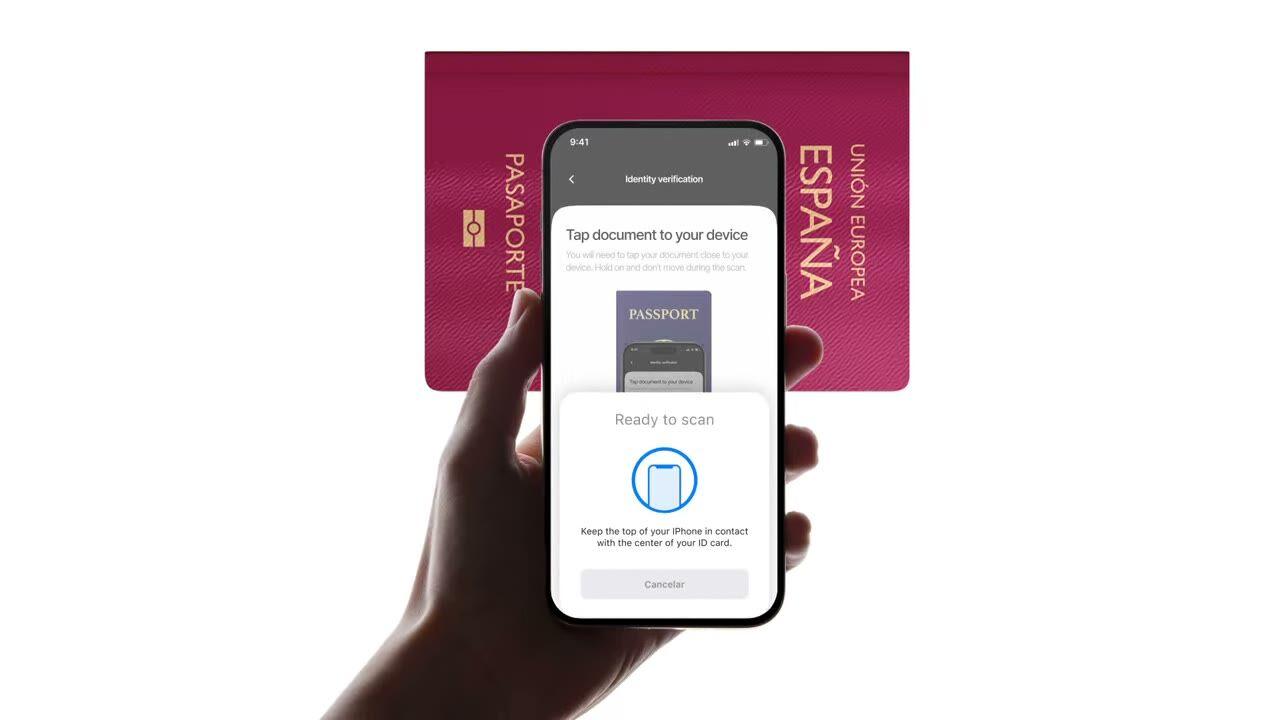
مرر جواز سفر إلكتروني أو بطاقة هوية إلكترونية على الهاتف. يقرأ الشريحة، ويتحقق من توقيع الحكومة، ويكشف التزوير الذي تفوته فحوصات الصور العادية. 0.15 دولار لكل قراءة، 500 مجانًا شهريًا.
مرر جواز السفر. تعيد الشريحة نفس البيانات التي قدمتها الصورة, إلا أنها هذه
المرة موقعة من قبل البلد المصدر. 0.15 دولار، في أقل من ثانيتين.
كيف يعمل
من التسجيل إلى مستخدم موثق في أربع خطوات.
الخطوة 01 / 04
01
أنشئ سير العمل
اختر الفحوصات التي تريدها, الهوية، الحيوية، مطابقة الوجه، العقوبات، العنوان، العمر، الهاتف، البريد الإلكتروني، الأسئلة المخصصة. اسحبها إلى سير عمل في لوحة التحكم، أو انشر نفس سير العمل إلى واجهة برمجة التطبيقات (API) الخاصة بنا. قم بالتفرع بناءً على الشروط، وقم بإجراء اختبارات A/B، لا يتطلب أي كود.
ادمج
ادمج بشكل أصلي باستخدام SDK الخاص بنا للويب، iOS، Android، React Native، أو Flutter. أعد التوجيه إلى صفحة مستضافة. أو ببساطة أرسل لمستخدمك رابطًا, عبر البريد الإلكتروني، الرسائل القصيرة، واتساب، أي مكان. اختر ما يناسب نظامك.
يمر المستخدم عبر سير العمل
تستضيف Didit الكاميرا، إشارات الإضاءة، التسليم عبر الهاتف المحمول، وإمكانية الوصول. بينما يكون المستخدم في سير العمل، نقوم بتقييم أكثر من 200 إشارة احتيال في الوقت الفعلي والتحقق من كل حقل مقابل مصادر البيانات الموثوقة. النتيجة في أقل من ثانيتين.
تتلقى النتائج
تُبقي الـ webhooks الموقعة في الوقت الفعلي قاعدة بياناتك متزامنة لحظة الموافقة على المستخدم، أو رفضه، أو إرساله للمراجعة. استعلم من الـ API عند الطلب. أو افتح وحدة التحكم لفحص كل جلسة، كل إشارة، وإدارة الحالات بطريقتك.
مصمم للمطورين · مصمم لمكافحة الاحتيال · مفتوح التصميم
ست قدرات. علامة ميزة واحدة. NFC.
كل ميزة أدناه هي مفتاح تشغيل/إيقاف في نفس الوحدة. لا توجد مستويات بيع إضافية، ولا وحدات SKU منفصلة، ولا مكالمات إضافية. قم بتشغيلها لكل سير عمل، أو قم بتضمين وحدة NFC عند إنشاء سير عمل عبر الـ API.
تحقق من التوقيع على كل شريحة, وليس الطباعة على الصفحة.
كل جواز سفر إلكتروني وبطاقة هوية إلكترونية حديثة تحمل شريحة لا تلامسية موقعة من الحكومة المصدرة. نقوم بقراءتها عبر NFC (الاتصال قريب المدى)، ونتحقق من التوقيع الرقمي، ونعيد حكمًا مقاومًا للتلاعب. يكشف هجمات التزييف، واستبدال الصور، والتزوير الذي يمر بالفحص البصري.
SPAINe-Passport
P<ESPROY<<OLIVIA<<<<<<<
Chip readICAO 9303
Passive AuthenticationSOD signature valid
Active AuthenticationChip challenge OK
Chip AuthenticationSession key derived
Signed by issuerAuthentic
02 · مجموعات بيانات ICAO 9303
محتويات الشريحة الكاملة مستخرجة، منظمة، وموقعة.
يتم قراءة كل مجموعة بيانات ICAO 9303 على الشريحة, كائن الأمان الموقع، البيانات الشخصية، MRZ (المنطقة المقروءة آليًا)، صورة الوجه عالية الدقة، صورة التوقيع، بالإضافة إلى أي بيانات بيومترية إضافية تخزنها الدولة المصدرة. تحصل على JSON نظيف لـ `chip_data` بالإضافة إلى عناوين URL موقعة للصورة الشخصية والتوقيع.
Document chipSOD · signed data groups
Signed
First nameDG1
Olivia
Last nameDG1
Roy
Date of birthDG1
12 Mar 1992
Document numberDG1
XAB204731
Facial imageDG2
High-res portrait
Signed at issuance · not OCR5 fields verified
03 · ثقة ICAO PKD
الثقة مرتكزة على دليل المفاتيح العامة لـ ICAO.
تتبع كل قراءة شريحة سلسلة الشهادات الكاملة, موقع الوثيقة ← سلطة التوقيع القطرية ← جذر دليل المفاتيح العامة لـ ICAO, وتتحقق من قائمة الإلغاء الخاصة بالبلد في الوقت الفعلي. تظهر الشهادات الملغاة والمنتهية الصلاحية كتحذيرات قابلة للتكوين؛ والباقي يمر كقيم منطقية للأصالة في التقرير.
Document SignerDSC · eID Spain
Country Signing CACSCA · CRL current
ICAO PKD RootPublic Key Directory
Root
Integrity
SOD integrity
DG integrity
DSC not revoked
DSC not expired
Verified · ICAO PKDChain valid
04 · الصورة مقابل الشريحة
تحقق من كل حقل. رفض تلقائي عند عدم التطابق.
يجب أن تتطابق بيانات الصورة مع بيانات الشريحة. عندما تختلف، يتم رفض الجلسة تلقائيًا, لا يمكن إيقاف هذا المحفز. إنها أوضح إشارة إلى منطقة صور تم التلاعب بها، أو شريحة تم تبديلها، أو وثيقة مزورة ذات طباعة تبدو حقيقية.
Data source
Camera OCRChip read
Document number
XAB2O4731XAB204731≈ 91.4%Signed
First name
0LIVIAOLIVIA≈ 96.7%Signed
Expiry date
03 / 203103 / 2031≈ 99.1%Signed
Best-effort read · fonts, glare, wearExact values · signed by the issuer2 mismatchesSource of truth
05 · Mobile SDK أولاً
iOS، Android، React Native، Flutter, قراءة الشريحة مدمجة.
تقوم حزم الـ SDK الأصلية بتوصيل قارئ NFC بالجهاز، والصلاحيات، وواجهة المستخدم لقراءة الشريحة نيابة عنك. يستخدم iOS Core NFC؛ ويستخدم Android IsoDep على NfcAdapter؛ ويقوم React Native و Flutter بتغليف كليهما. تتراجع المتصفحات التي لا تحتوي على NFC تلقائيًا إلى الهوية القياسية + صورة السيلفي, يتم إطلاق تحذير تخطي وتستمر الجلسة.
React Native · FlutterBridges the native SDKsBridgedidit.nfc.read()One call · native under the hood
Web browserNo NFC · falls back to OCRFallbackdidit.ocr.scan()Camera capture · OCR fields
One call · NFC when the device supports itAuto-fallback · session continues with OCR
06 · تغطية عالمية
كل دولة مصدرة لـ ICAO، وتتزايد كل ربع سنة.
معظم جوازات السفر الصادرة بعد عام 2006 تحتوي على شريحة، بالإضافة إلى قائمة متزايدة من بطاقات الهوية الإلكترونية الوطنية, DNIe الإسبانية، Personalausweis الألمانية، CIE الإيطالية، بطاقة الهوية الإستونية، Cartão de Cidadão البرتغالية، eID البلجيكية، eID الهولندية. يتم تحديث شهادات الدول تلقائيًا؛ وتصبح الدول الجديدة قابلة للقراءة في اليوم الذي نقوم فيه بدمجها.
DNIeSpain
PersonalausweisGermany
Carta CIEItaly
Cartão de CidadãoPortugal
ID-kaartEstonia
2006e-Passports since
30+National e-IDs
9303ICAO standard
CSCA certificates refreshed automaticallyReadable via NFC
ادمج
سير عمل واحد. طريقتان لبدء قراءة الشريحة.
لا تحتوي NFC على نقطة نهاية مستقلة من خادم إلى خادم, تتطلب الشريحة جهازًا مزودًا بـ NFC. كلا المسارين أدناه يتشاركان نفس استدعاء إنشاء الجلسة؛ يختلفان فقط فيما إذا كان المستخدم يقرأ الشريحة في واجهة المستخدم المستضافة لدينا أو داخل تطبيقك الخاص عبر الـ SDK الأصلي.
// iOS · Swift
import DiditSdk
let result = try await DiditSdk.shared.startVerification(
مع: sessionId,
configuration: config)
donein-app{ "status": "Approved" }
تكامل جاهز للوكيل
أطلق التحقق عبر NFC بتعليمات واحدة.
الصق الكتلة أدناه في Claude Code أو Cursor أو Codex أو Devin أو Aider أو Replit Agent. املأ خانة my_stack بإطار العمل واللغة وحالة الاستخدام الخاصة بك. سيقوم الوكيل بتوفير Didit، وبناء سير العمل مع تمكين NFC، وربط الـ webhook، ثم إطلاق المنتج.
didit-integration-prompt.md
# Didit NFC Verification — integrate in 5 minutes

You are integrating Didit's NFC Verification (cryptographic e-passport
and e-ID chip reading) module into <my_stack>. Follow these steps exactly.
Every URL, header, and enum value below is canonical — do not paraphrase
or "improve" them.

## 1. Provision an account
- Sign up: https://business.didit.me (no credit card required).
- Or provision programmatically: POST https://apx.didit.me/auth/v2/programmatic/register/
  (returns an API key bound to the workspace + application).

## 2. What NFC Verification actually does
NFC Verification reads the secure contact-less chip embedded in modern
e-passports and e-IDs (the small chip-and-antenna sticker symbol on the
cover) and runs four cryptographic checks against the data it extracts:

1. Passive Authentication — every Data Group (DG1 personal data, DG2
   facial image, etc.) is hashed and compared against the signed hash
   stored in the Document Security Object (SOD). Catches any single-bit
   tampering of the chip contents.
2. Certificate chain validation — Document Signer Certificate (DSC) →
   Country Signing Certificate Authority (CSCA) → ICAO Public Key
   Directory (PKD) root. Proves the chip was signed by the issuing
   government, not a clone.
3. Certificate Revocation List (CRL) check — DSCs revoked by the issuing
   country are caught and flagged.
4. Chip Authentication — where the document supports it, prevents chip
   cloning by challenging the chip with a key-pair handshake.

PACE (Password Authenticated Connection Establishment) or BAC (Basic
Access Control) is used to derive the session key from the Machine-Readable Zone (MRZ); Didit
handles that automatically. All of this is ICAO 9303 standard.

## 3. Two integration paths — pick one

### Path A — Workflow Builder (hosted UI, REQUIRED for NFC)
NFC Verification has no server-to-server standalone endpoint. The chip
has to be read by a device with NFC hardware, so you always integrate
through the Workflow + native SDK (or hosted mobile web that falls back).

1. Create a workflow that contains the NFC feature:
   POST https://verification.didit.me/v3/workflows/
   Authorization header:  x-api-key: <your-api-key>
   Body: workflow_label, features array with the entries
         { feature: "OCR" }
         { feature: "NFC" }
         (UPPERCASE — strict enum)
   You should always pair NFC with OCR (ID Verification) so the MRZ is captured
   for the chip handshake AND so an OCR cross-validation is available.

2. Create a verification session for an end user:
   POST https://verification.didit.me/v3/session/
   Body: workflow_id (from step 1), vendor_data (your own user id).
   Response: url (the hosted verification link) — redirect the user to
   it (or open it in the native SDK with
   shared.startVerification(with: sessionId)).

3. Listen for webhook callbacks (see "Webhooks" below).

### Path B — Native SDKs (drop-in, recommended for mobile apps)
Same workflow + session above, but launch the verification flow in your
own iOS or Android app via the Didit SDK. The SDK wires the NFC reader,
the entitlements, and the chip-reading UI for you.

- iOS: DiditSdk.shared.startVerification(with: sessionId, configuration:)
  Required entitlements (handled by the SDK):
    - com.apple.developer.nfc.readersession.formats = ["TAG"]
    - ISO7816 application identifiers for ePassports
- Android: DiditSdk.startVerification(sessionId, config) — uses
  IsoDep (android.nfc.tech.IsoDep) under the hood.
- React Native / Flutter: the same SDK, exposed through the cross-
  platform module — see docs.didit.me/integration/native-sdks/.

### Web browsers — NFC is unavailable
Web NFC API is not generally available. Chrome on Android has an
experimental Web NFC that is unstable and requires explicit permissions;
Safari on iOS has no support. For web integrations, NFC is automatically
skipped and the user proceeds with standard ID + selfie. If you require
NFC, deep-link the user into the Didit App or your own native app.

## 4. Webhooks
- Register a webhook destination once via
  POST https://verification.didit.me/v3/webhook/destinations/
  Body: url, subscribed_events: ["session.verified", "session.review_started",
                                  "session.declined"]
- Response includes secret_shared_key — store it.
- Every webhook delivery carries an X-Signature-V2 header you MUST verify
  before trusting the payload.  HMAC-SHA256 verification MUST run against the raw body bytes (the raw payload as Didit sent it) BEFORE any JSON parsing — re-serialising the parsed body changes whitespace and key order, which invalidates the signature.Algorithm:
    1. sortKeys(payload) recursively
    2. shortenFloats (truncate trailing zeros after the decimal point)
    3. JSON.stringify the result
    4. HMAC-SHA256 with the secret_shared_key
    5. Hex-encode, compare to the X-Signature-V2 header.

## 5. Reading the report
The session decision includes an nfc_verifications[] array alongside
id_verifications[] — one entry per workflow node, each with its own node_id.
Fields on each nfc_verifications entry:

- status: "Approved" | "Declined" | "In Review" | "Not Finished"
- portrait_image: signed URL to the chip-extracted DG2 facial image
- signature_image: signed URL to the chip-extracted DG7 signature
- chip_data:
    document_type, issuing_country (ISO 3166-1 alpha-3),
    document_number, expiration_date (YYYY-MM-DD),
    first_name, last_name, birth_date, gender ("M" | "F" | "U"),
    nationality (ISO 3166-1 alpha-3), address, place_of_birth.
- authenticity:
    sod_integrity (boolean — every Data Group hash matched the SOD)
    dg_integrity (boolean — Data Group binary integrity check passed)
- certificate_summary:
    issuer (CSCA Common Name + serial + organization + country)
    subject (DSC Common Name)
    serial_number
    not_valid_after (YYYY-MM-DD HH:MM:SS)
    not_valid_before (YYYY-MM-DD HH:MM:SS)
- warnings: Array of { risk, additional_data, log_type,
                       short_description, long_description }

### Auto-decline (always enforced, never configurable)
- NFC_AND_OCR_DATA_NOT_SAME — Optical Character Recognition (OCR) data
  and chip data differ. Indicates document tampering or fake chip.

### Configurable warnings (per-workflow action: Decline / Review / Approve)
- SKIPPED_NFC_VALIDATION       — chip not read (no NFC hardware, no
                                  permissions, document has no chip)
- NFC_CHIP_NOT_VERIFIED        — chip read but signature could not be
                                  verified (missing CSCA, older document)
- DSC_CERTIFICATE_REVOKED      — Document Signer Certificate listed on
                                  the issuing country's CRL
- DSC_CERTIFICATE_EXPIRED      — Document Signer Certificate past its
                                  validity period

## 6. Hard rules — do not change
- Base URL for /v3/* endpoints is verification.didit.me (NOT apx.didit.me).
- Feature enum is UPPERCASE: NFC, OCR, LIVENESS, FACE_MATCH.
- Auth header is x-api-key (lowercase, hyphenated).
- Webhook signature header is X-Signature-V2 (NOT X-Signature).
- Always verify webhook signatures before trusting payload data.
- Always pair NFC with OCR (ID Verification) in the workflow — NFC alone
  cannot derive the chip key without the MRZ from the document photo.
- Status casing matches exactly: "Approved", "Declined", "In Review",
  "Not Finished" (title-cased, space-separated).
- Treat NFC as an additive confidence boost, not a hard gate, unless
  your risk policy explicitly requires it (regulated remote
  onboarding under PSD3, AMLD6 high-risk customer flows, etc.).

## 7. Pricing reference (public)
- NFC Verification: $0.15 per chip read (standalone module).
- Bundled inside a full Know Your Customer (KYC) workflow (ID + Liveness + Face Match + NFC):
  priced as the underlying KYC bundle ($0.33) + $0.15 NFC if enabled.
- 500 free checks every month, forever, on every account.

## 8. Verify your integration
- Sandbox starts on signup at https://business.didit.me — no separate flag.
- Test documents: use the Didit App on a real iOS or Android device with
  any ICAO 9303 e-passport issued after 2006 (most modern passports).
- Sandbox webhook events fire the same shape as production; verify the
  X-Signature-V2 header in dev too.
- Switch to live: flip the application's environment toggle in console.

When in doubt: https://docs.didit.me/core-technology/nfc-verification/overview
متوافق حسب التصميم
افتح دولة جديدة بنقرة واحدة. نحن نقوم بالعمل الشاق.
نحن نفتح الشركات التابعة المحلية، ونؤمن التراخيص، ونجري اختبارات الاختراق، ونحصل على الشهادات، ونتوافق مع كل لائحة جديدة. لنشر عمليات التحقق في بلد جديد، ما عليك سوى تفعيل مفتاح. أكثر من 220 دولة تعمل، يتم تدقيقها واختبار اختراقها كل ربع سنة, المزود الوحيد للهوية الذي وصفته حكومة دولة عضو في الاتحاد الأوروبي رسميًا بأنه أكثر أمانًا من التحقق الشخصي.