KBA vs. Biometrics: Which Authentication Method Wins?
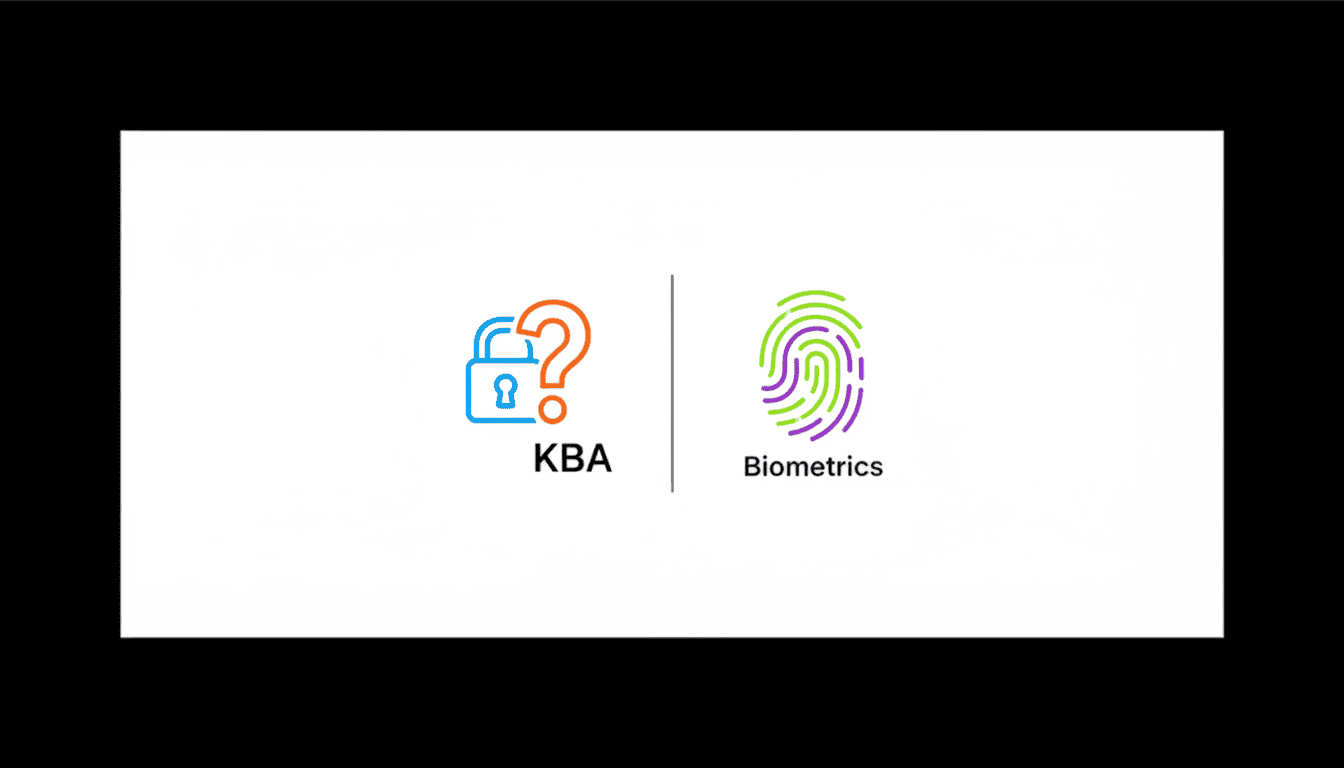
Knowledge-Based Authentication (KBA) and biometrics both aim to verify user identity, but differ significantly in security, user experience, and fraud prevention capabilities.
 Alberto RosasCo-founder and CEO
Contents
In this guide
Jump to the part you need.
Key Takeaway 1Knowledge-Based Authentication (KBA) relies on information a user should know, but this data is increasingly compromised, making it less secure.
Key Takeaway 2Biometric authentication leverages unique biological traits, offering stronger security but raising privacy considerations.
Key Takeaway 3A layered approach, combining KBA with biometrics and other factors, provides the most robust authentication system.
Key Takeaway 4Modern biometric solutions, like passive liveness detection, minimize friction and maximize security.
Understanding Knowledge-Based Authentication (KBA)
Knowledge-Based Authentication (KBA) is a traditional authentication method that verifies a user's identity by asking them questions based on personal information. These questions typically revolve around data from public records or credit history, such as “What was the name of your first pet?” or “What city were you born in?” While seemingly straightforward, KBA’s effectiveness has waned significantly in recent years. The core issue lies in the accessibility of this information.
Data breaches are rampant. The sheer volume of compromised personal data available on the dark web makes it increasingly easy for fraudsters to guess the answers to KBA questions. Furthermore, social engineering tactics can elicit this information directly from individuals. Success rates for fraudsters exploiting KBA are alarmingly high; studies suggest that over 60% of fraudulent transactions utilize successfully answered KBA challenges. Modern KBA systems attempt to mitigate this by using more obscure questions or drawing from a broader range of data sources, but these efforts are often insufficient.
How KBA Works Under the Hood: KBA systems typically rely on databases compiled from public records, credit bureaus, and other data aggregators. When a user attempts to authenticate, the system randomly selects questions from this database. The user’s answers are then compared to the stored data. A matching answer confirms the user’s identity (or, unfortunately, a fraudster’s successful guess).
The Rise of Biometric Authentication
Biometric authentication, in contrast to KBA, relies on unique biological traits to verify a user’s identity. These traits can include fingerprints, facial features, voice patterns, and even behavioral patterns like typing speed. The inherent uniqueness of these characteristics makes biometrics significantly more secure than KBA. Unlike passwords or personal information, biometric data is difficult (though not impossible) to forge or steal.
Several types of biometric authentication exist:
- Fingerprint Scanning: A long-standing biometric method, though susceptible to spoofing with fabricated fingerprints.
- Facial Recognition: Analyzes facial features to verify identity. Advances in liveness detection (discussed below) are crucial to prevent spoofing with photos or videos.
- Voice Recognition: Identifies users based on their unique voice patterns.
- Iris Scanning: Analyzes the unique patterns in the iris of the eye; considered highly secure but requires specialized hardware.
How Biometrics Works Under the Hood: Biometric systems typically involve three key stages: enrollment, storage, and matching. During enrollment, the user’s biometric data is captured and converted into a digital template. This template is then securely stored. When the user attempts to authenticate, their biometric data is captured again and compared to the stored template. A matching score determines whether the authentication is successful.
KBA vs. Biometrics: A Head-to-Head Comparison
| Feature | KBA | Biometrics |
|---|---|---|
| Security | Low (highly susceptible to fraud) | High (difficult to forge) |
| User Experience | Generally good (familiar process) | Can vary (potential for friction with enrollment/capture) |
| Cost | Low (relatively inexpensive to implement) | Moderate to High (depending on technology and infrastructure) |
| Privacy Concerns | Relatively low (data is often publicly available) | High (requires careful handling of sensitive biometric data) |
| Scalability | High | High |
| Fraud Prevention | Poor | Excellent |
The Importance of Liveness Detection
A critical component of modern biometric authentication is liveness detection. This technology verifies that the biometric data being presented is from a live person, not a spoofed image, video, or mask. There are two main types of liveness detection:
- Passive Liveness: Analyzes subtle cues in the video stream, such as micro-movements and skin texture, to determine if the presented face is real. This is the least intrusive method and offers a seamless user experience.
- Active Liveness: Requires the user to perform specific actions, such as blinking, smiling, or turning their head, to demonstrate that they are a live person. This is more secure but can be more disruptive to the user experience.
Without robust liveness detection, even the most sophisticated facial recognition system can be easily bypassed.
How Didit Helps
Didit combines the best of both worlds by offering a comprehensive identity platform that leverages both KBA and biometric authentication, along with other fraud prevention tools. We provide:
- Modular Architecture: Choose the authentication methods that best suit your risk profile and user needs.
- Passive Liveness Detection: Ensure the user is a real, live person without adding friction.
- Robust Fraud Signals: Analyze IP address, device data, and behavioral patterns to identify suspicious activity.
- Workflow Orchestration: Build custom authentication flows that adapt to changing risk levels.
- Reusable KYC: Allow users to verify once and reuse their identity across multiple platforms.
Ready to Get Started?
Don't leave your authentication to chance. Explore Didit's identity verification platform and see how we can help you protect your business and your customers from fraud.
Try it
Try this in the sandbox
Run the check this guide describes, free.
The product this post is about, taken from its topic. Run it free in the sandbox.
Author
Alberto Rosas
Co-founder and CEO

Keep reading
Other guides in the same topic.
 Play Age Signals vs Apple Declared Age Range: full comparison
Google Play Age Signals and Apple's Declared Age Range API side by side: ranges, tiers, nulls, automatic sharing and terms, plus one age state for your backend and when to add your own check.
Alberto RosasNov 22, 2026 Play Age Signals API integration guide: v0.0.6 for Android apps
The three calls of Play Age Signals 0.0.6 in Kotlin, a decision table for every status, tier and bound, errors, migration from 0.0.3 and 0.0.4, testing, and how to start your own age check.
Alberto RosasNov 22, 2026 Age verification API: which one works on apps, web and stores
Five kinds of age verification API and where each one answers: Play apps, App Store apps, sideloads, web and desktop. With the selfie call, the hosted session, webhook checks, cost and data.
Alberto RosasNov 22, 2026Questions
Blog questions
Who writes the Didit blog?
Which topics does the blog cover?
Is the blog available in my language?
Where do I find product updates?
Are these posts legal advice?
How do I find posts on one topic?
Are posts dated?
Do posts link to the docs?
Is the blog the same as the docs?
Compliance built in
Audited, certified and attested.
We hold the certifications and build each country's rules into your flows, so you can launch anywhere without worrying. Security and Compliance center
- Regulation encoded into your flows
Tell us what you do and where. Didit lists the rules that apply to you, with sources, and builds the checks each country needs into one workflow.
- Ready for AMLR
Every requirement of the new EU anti-money laundering rules, from checking customers to human review, is already covered by a Didit check.
- Tested in Spain's Treasury sandbox
Spain's Treasury published its supervised sandbox report on Didit's NFC plus active liveness onboarding; SEPBLAC took part and valued the added measures positively.
- Audited, not self-declared
iBeta Level 1 and Level 2. Liveness tested under ISO/IEC 30107-3.
Your obligations · 3 regions
 SOC 2 Type 2
 ISO 27001
 iBeta Level 1 and Level 2
 EU regulator attestation
 FSM youth protection
 GDPR
 EBA remote onboarding
 MiCA compatible
 FIDO Alliance member
- AMLREU AML Regulation ready
Integration · Didit MCP
Run Didit from your own AI agent
Connect Didit to Claude, Cursor, VS Code or ChatGPT and just ask in plain words. Your agent can do anything you can do in the console, with the same permissions you have.
 Add to Claude
 ChatGPT
 Cursor
- Build workflowsDescribe the checks you need. The agent creates and publishes the flow.
- Run investigationsAsk why a session was declined, review cases, search people and companies.
- Change rulesCreate payment rules, test them on past data and switch them on.
- Pull reportsAsk for numbers, exports or the audit log.
Didit Academy


