Проверяйте любые email-адреса. Отсекайте фейковые адреса при регистрации.
Отсеивайте фейковые, одноразовые и скомпрометированные email-адреса до того, как они попадут в вашу базу данных. Один вызов API проверяет синтаксис, доставляемость, данные о провайдере и отправляет шестизначный OTP (одноразовый пароль). $0.03 за проверку, 500 бесплатных в месяц.
Нам доверяют более 2000 организаций по всему миру.
Не только синтаксис
MX, одноразовые, ролевые и оценка риска.
Мы проверяем доставляемость в реальном времени, выявляем одноразовые и ролевые адреса, а также возвращаем
оценку риска, на основе которой можно строить логику вашего рабочего процесса. $0.03 за проверку.
Как это работает
От регистрации до верифицированного пользователя за четыре шага.
Шаг 01 / 04
01
Создайте рабочий процесс
Выберите нужные проверки, ID, liveness, сравнение лиц, санкции, адрес, возраст, телефон, email, кастомные вопросы. Перетащите их в рабочий процесс на дашборде или отправьте тот же процесс через наш API. Разветвляйте по условиям, проводите A/B-тесты, код не требуется.
Интегрируйте
Встраивайте нативно с помощью наших SDK для Web, iOS, Android, React Native или Flutter. Перенаправляйте на размещенную страницу. Или просто отправьте пользователю ссылку, по email, SMS, WhatsApp, куда угодно. Выберите то, что подходит вашему стеку.
Пользователь проходит проверку
Didit обеспечивает работу камеры, подсказки по освещению, мобильную передачу и доступность. Пока пользователь проходит проверку, мы оцениваем более 200 сигналов мошенничества в реальном времени и верифицируем каждое поле по авторитетным источникам данных. Результат менее чем за две секунды.
Вы получаете результаты
Подписанные вебхуки в реальном времени синхронизируют вашу базу данных в момент одобрения, отклонения или отправки пользователя на проверку. Опрашивайте API по запросу. Или откройте консоль, чтобы просмотреть каждую сессию, каждый сигнал и управлять кейсами по-своему.
Создано для разработчиков · Защита от мошенничества · Открытый дизайн
Шесть возможностей. Один фича-флаг. EMAIL_VERIFICATION.
Каждая функция, это переключатель в одном модуле. Никаких дополнительных тарифов, отдельных планов или надстроек. Включайте их для каждого рабочего процесса в консоли или передавайте напрямую в вызове API.
Синтаксис, почтовые записи и живая проверка, в каждом вызове.
Мы анализируем синтаксис, ищем MX-записи (mail exchange) и устанавливаем соединение с целевым сервером, чтобы подтвердить доступность адреса. Ответ включает чистый булевский флаг, на основе которого можно строить логику вашего рабочего процесса.
Стек доставляемостиalex.sample@flytap.com
Синтаксис RFC 5322Разобран локальный адрес + домен
MX-запись1 запись · 10 мс
SMTP-проверка250 OK · принимает почту
недоставляемоfalse
02 · Анализ провайдеров
Одноразовые. Бесплатные. Отсекайте их на входе.
Актуальный каталог одноразовых сервисов (10minutemail, mailinator, guerrilla), бесплатных провайдеров (Gmail, Outlook, Yahoo, ProtonMail) и новых сервисов маскировки. Каждый тег соответствует действию (отклонить, проверить, одобрить), которое вы настраиваете для каждого приложения.
03 · Утечки данных
Узнайте, был ли скомпрометирован почтовый ящик. До того, как примете его.
Каждый адрес проверяется по агрегированной базе данных утечек. Ответ содержит список всех утечек, в которых фигурирует адрес, имя, дата утечки, скомпрометированные категории данных, чтобы ваша команда по комплаенсу имела доказательную базу для ведения учета AML (борьба с отмыванием денег).
04 · Подтверждение OTP
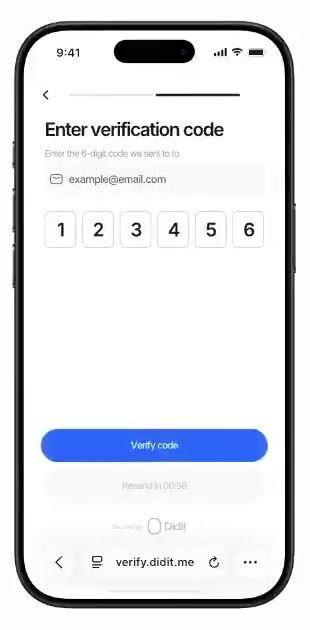
Шестизначный код. Действителен 5 минут. Локализованный шаблон.
Используйте наш размещенный экран ввода или свою собственную форму. Две попытки за сессию, две повторные отправки в течение 24 часов, пятиминутный срок действия, все лимиты соблюдаются автоматически. Шаблон автоматически локализуется на предпочитаемый язык пользователя.
05 · Защита от злоупотреблений
Обнаружение catch-all. Фильтрация по ролям. Дубликаты между сессиями.
Настраиваемые предупреждения выявляют все паттерны злоупотреблений: скомпрометированные, одноразовые, дублирующиеся между сессиями или заблокированные. Два автоматических отклонения (слишком много попыток, недоставляемый адрес) действуют независимо от политики. Catch-all и ролевые адреса выявляются еще до отправки кода.
$0.03 за проверку. 500 бесплатных каждый месяц. Навсегда.
Единая цена $0.03 как для размещенного потока, так и для автономного API. Без комиссии платформы, без ежемесячного минимума, без неожиданных переплат. Включите Email Verification перед полной проверкой KYC (знай своего клиента) за $0.33, чтобы отфильтровать нежелательные регистрации до того, как они потратят ваш кредит.
ТарификацияПубличный · за проверку
За проверку
$0.03
Путь А или Путь Б
Бесплатный тариф
500/mo
Навсегда, без карты
Без минимумаОплата за успех
Интеграция с KYC+$0.33 в пакете
Интеграция
Две конечные точки. Один JSON. Одна цена.
Выбирайте размещенный поток, когда хотите, чтобы мы обрабатывали ввод кода и связывали его с более широким рабочим процессом. Выбирайте автономный API, когда вы управляете UI. Оба возвращают одинаковый отчет.
Вставьте блок ниже в Claude Code, Cursor, Codex, Devin, Aider или Replit Agent. Укажите ваш стек. Агент настроит Didit, создаст рабочий процесс проверки email, подключит вебхук и запустит всё в работу.
didit-integration-prompt.md
# Didit Email Verification — integrate in 5 minutes

You are integrating Didit's Email Verification module into <my_stack>.
Follow these steps exactly. Every URL, header, and enum value below is
canonical — do not paraphrase or "improve" them. The module covers:
syntax validation, MX (Mail Exchange) lookup, SMTP (Simple Mail Transfer
Protocol) deliverability probe, disposable-provider detection,
free-provider detection, breach exposure lookup (HaveIBeenPwned-style),
catch-all + role-based anti-abuse signals, OTP (one-time password)
confirmation, and a configurable risk policy that can chain straight
into a Know Your Customer (KYC) (know your customer) workflow.

## 1. Provision an account
- Sign up: https://business.didit.me (no credit card required).
- Or provision programmatically: POST https://apx.didit.me/auth/v2/programmatic/register/
  (returns an API key bound to the workspace + application).

## 2. Two integration paths — pick one

### Path A — Workflow Builder (hosted UI)
Best when you want Didit to host the OTP entry screen, localize the
email template, handle resend cool-downs, and chain Email Verification
into a wider KYC / KYB workflow.

1. Create a workflow that contains the EMAIL_VERIFICATION feature:
   POST https://verification.didit.me/v3/workflows/
   Authorization header:  x-api-key: <your-api-key>
   Body: workflow_label, features array with the single entry
         { feature: "EMAIL_VERIFICATION" }   (UPPERCASE — strict enum)
   Optional config: per-warning action overrides (Decline / Review /
   Approve) for BREACHED_EMAIL_DETECTED, DISPOSABLE_EMAIL_DETECTED,
   DUPLICATED_EMAIL, and EMAIL_IN_BLOCKLIST.

2. Create a verification session for an end user:
   POST https://verification.didit.me/v3/session/
   Body: workflow_id (from step 1), vendor_data (your own user id),
   optional contact_details.email (pre-fills the OTP step).
   Response: url (the hosted verification link) — redirect the user to it.

3. Listen for webhook callbacks (see "Webhooks" below).

### Path B — Standalone server-to-server API
Best when you already own the OTP UI and just want Didit to send and
validate the code plus return the risk signals.

Two endpoints, both authenticated with x-api-key:

POST https://verification.didit.me/v3/email/send/
Body (application/json):
  - email        (required, string — RFC 5322 address)
  - language     (optional, ISO 639-1 code — picks the email template)
  - vendor_data  (optional string, your user id)
Returns: { reference_id }

POST https://verification.didit.me/v3/email/check/
Body (application/json):
  - reference_id (required, from /email/send/)
  - code         (required, 6-digit string the user typed)
Returns: the full email-verification report (see Section 4).

Use the same vendor_data on retries so cross-session matches work.

## 3. Webhooks (Path A only — Path B returns synchronously)
- Register a webhook destination once via
  POST https://verification.didit.me/v3/webhook/destinations/
  Body: url, subscribed_events: ["session.verified",
                                  "session.review_started",
                                  "session.declined"]
- Response includes secret_shared_key — store it.
- Every webhook delivery carries an X-Signature-V2 header you MUST verify
  before trusting the payload.  HMAC-SHA256 verification MUST run against the raw body bytes (the raw payload as Didit sent it) BEFORE any JSON parsing — re-serialising the parsed body changes whitespace and key order, which invalidates the signature.Algorithm:
    1. sortKeys(payload) recursively
    2. shortenFloats (truncate trailing zeros after the decimal point)
    3. JSON.stringify the result
    4. HMAC-SHA256 with the secret_shared_key
    5. Hex-encode, compare to the X-Signature-V2 header.

Two module-level event types fire alongside the session events above:
- EMAIL_VERIFICATION_MESSAGE_SENT — OTP was dispatched
- EMAIL_VERIFICATION_DECLINED      — verification finished with a
                                     Declined status (caller should
                                     surface the warning to the user)

## 4. Reading the report (both paths return the same shape)
The email object includes:
- status: "Approved" | "Declined" | "In Review" | "Not Finished"
- email: the address that was verified
- is_breached: boolean — true when the address appears in known breaches
- breaches: array of { name, domain, logo_path, breach_date,
                       description, is_verified, data_classes,
                       breach_emails_count }
- is_disposable: boolean — true for throwaway providers
- is_undeliverable: boolean — true when MX + SMTP probe failed
- verification_attempts: number — OTP attempts used (max 2)
- verified_at: ISO 8601 timestamp
- matches: array of cross-session hits, each carrying session_id,
           session_number, vendor_data, verification_date, email,
           status, is_blocklisted
- warnings: Array<{ risk, additional_data, log_type,
                    short_description, long_description }>

Auto-decline risks (always enforced by Didit, not configurable):
- EMAIL_CODE_ATTEMPTS_EXCEEDED
- EMAIL_IN_BLOCKLIST
- UNDELIVERABLE_EMAIL_DETECTED

Configurable risks (action per workflow — Decline, Review, or Approve):
- BREACHED_EMAIL_DETECTED       (exposure / breach intelligence)
- DISPOSABLE_EMAIL_DETECTED     (temporary / throwaway provider)
- DUPLICATED_EMAIL              (cross-session match on another user)

Anti-abuse limits (enforced server-side):
- Code Entry Attempts: max 2 tries to type the right OTP
- Code Resend Requests: max 2 resends per 24 hours
- Code Validity: 5 minutes from delivery

## 5. Chaining Email Verification into a KYC flow
EMAIL_VERIFICATION is a regular feature inside the Workflow Builder, so
it composes with any of the 25+ other modules. The canonical patterns:

- Cheap pre-filter: gate KYC behind Email Verification so disposable +
  breached + undeliverable signups never burn a $0.33 KYC bundle. Use a
  conditional branch — if status is Declined on email, skip
  OCR + LIVENESS + FACE_MATCH.
- Compliance log: keep Email Verification in the flow even when KYC is
  the primary check, so the verified email is timestamped and signed
  alongside the ID Verification report for Anti-Money Laundering (AML) (anti-money laundering)
  recordkeeping.
- Step-up auth: rerun Email Verification at a sensitive action (large
  withdrawal, password reset) using the same workflow + vendor_data
  for closed-loop continuity.

## 6. Hard rules — do not change
- Base URL for /v3/* endpoints is verification.didit.me (NOT apx.didit.me).
- Feature enum is UPPERCASE: EMAIL_VERIFICATION, OCR,
  LIVENESS, FACE_MATCH, AML, IP_ANALYSIS, PHONE_VERIFICATION.
- Auth header is x-api-key (lowercase, hyphenated).
- Webhook signature header is X-Signature-V2 (NOT X-Signature).
- Always verify webhook signatures before trusting payload data.
- Status casing matches exactly: "Approved", "Declined", "In Review",
  "Not Finished" (title-cased, space-separated).

## 7. Pricing reference (public)
- Email Verification: $0.03 per check (Path A or Path B).
- Bundled inside a full KYC workflow: same $0.03 add-on — the $0.33
  full-KYC bundle does not include EMAIL_VERIFICATION by default.
- 500 free checks every month, forever, on every account.

## 8. Verify your integration
- Sandbox starts on signup at https://business.didit.me — no separate flag.
- Test emails: deterministic synthetic addresses returned in sandbox
  (Approved by default; trigger Declined by sending the canonical
  disposable / breached test addresses listed in the docs).
- Switch to live: flip the application's environment toggle in console.

When in doubt: https://docs.didit.me/core-technology/email-verification/overview
Соответствие по умолчанию
Откройте новую страну в один клик. Мы берем на себя сложную работу.
Мы открываем местные дочерние компании, получаем лицензии, проводим пентесты, получаем сертификаты и адаптируемся к каждому новому регулированию. Чтобы запустить верификацию в новой стране, просто переключите тумблер. Более 220 стран в работе, ежеквартальные аудиты и пентесты, единственный провайдер идентификации, который правительство страны-члена ЕС официально назвало более безопасным, чем личная верификация.
За каждую проверку, одинаковая цена для хостингового потока или отдельного API.
500
Бесплатные проверки email каждый месяц, навсегда, для каждого аккаунта.
5 min
Срок действия одноразового кода, все ограничения применяются автоматически.
6
Настраиваемые коды предупреждений и 3 автоматических отклонения.
Три тарифа, один прайс-лист
Начните бесплатно. Платите по мере использования. Масштабируйтесь до Enterprise.
500 бесплатных верификаций каждый месяц, навсегда. Затем платите только за фактически использованные модули. Для тарифа Enterprise доступны индивидуальные контракты, размещение данных и соглашения об уровне обслуживания (SLA).
Бесплатно
$0/ месяц · без карты
Для разработки, тестирования и первых пользователей.
Всё, что нужно для старта:
500 полных KYC-проверок ежемесячно
Проверка ID, Liveness, Face Match, устройства и IP
Более 200 сигналов мошенничества, чёрный список, дубликаты
Повторное использование KYC в сети Didit
Конструктор рабочих процессов, управление кейсами, SDK
AI-поддержкаAI-агент в консоли, документация и сообщество.