Verifica cualquier email. Detecta direcciones falsas al registrarse.
Detecta correos electrónicos falsos, desechables y comprometidos antes de que lleguen a tu base de datos. Una sola llamada cubre sintaxis, entregabilidad, inteligencia del proveedor y un código OTP (contraseña de un solo uso) de seis dígitos. $0.03 por verificación, 500 gratis/mes.
Con la confianza de más de 2.000 organizaciones en todo el mundo.
Más allá de la sintaxis
MX, desechable, rol, y puntuación de riesgo.
Comprobamos la entregabilidad en tiempo real, marcamos direcciones temporales y de rol, y devolvemos una
puntuación de riesgo para tu flujo de trabajo. $0.03 por verificación.
Cómo funciona
Del registro al usuario verificado en cuatro pasos.
Paso 01 / 04
01
Crea el flujo de trabajo
Elige las verificaciones que necesites: identidad, prueba de vida, coincidencia facial, sanciones, dirección, edad, teléfono, email, preguntas personalizadas. Arrástralas a un flujo en el panel de control, o publica el mismo flujo en nuestra API. Crea ramificaciones condicionales, haz pruebas A/B, sin código.
Integra
Intégralo de forma nativa con nuestro SDK para Web, iOS, Android, React Native o Flutter. Redirige a una página alojada. O simplemente envía a tu usuario un enlace: por email, SMS, WhatsApp, donde quieras. Elige lo que mejor se adapte a tu stack.
El usuario completa el flujo
Didit gestiona la cámara, las indicaciones de iluminación, la transferencia móvil y la accesibilidad. Mientras el usuario está en el flujo, puntuamos más de 200 señales de fraude en tiempo real y verificamos cada campo con fuentes de datos autorizadas. Resultados en menos de dos segundos.
Recibes los resultados
Los webhooks firmados en tiempo real mantienen tu base de datos sincronizada en el momento en que un usuario es aprobado, rechazado o enviado a revisión. Consulta la API bajo demanda. O abre la consola para inspeccionar cada sesión, cada señal y gestionar los casos a tu manera.
Diseñado para desarrolladores · Creado contra el fraude · Abierto por diseño
Seis funcionalidades. Una feature flag. EMAIL_VERIFICATION.
Cada funcionalidad es un interruptor en el mismo módulo. Sin niveles de venta adicionales, sin planes separados, sin llamadas complementarias. Actívalas por flujo de trabajo en la consola o pásalas directamente en la llamada a la API.
Sintaxis, registros de correo y sondeo en vivo: cada llamada.
Analizamos la sintaxis, consultamos los registros MX (mail exchange) y abrimos una conexión con el servidor de destino para confirmar que la dirección es accesible. La respuesta incluye un booleano claro para que tu flujo de trabajo pueda tomar decisiones.
Stack de entregabilidadalex.sample@flytap.com
Sintaxis RFC 5322Parte local + dominio analizado
Búsqueda MX1 registro · 10 ms
Sondeo SMTP250 OK · acepta correo
no_entregablefalse
02 · Inteligencia de proveedores
Desechables. Proveedores gratuitos. Atájalos en la puerta.
Catálogo actualizado de servicios de email temporal (10minutemail, mailinator, guerrilla), proveedores gratuitos (Gmail, Outlook, Yahoo, ProtonMail) y servicios de enmascaramiento emergentes. Cada etiqueta se asigna a una acción de rechazo, revisión o aprobación que puedes configurar por aplicación.
03 · Exposición a filtraciones
Descubre si la bandeja de entrada se filtró. Antes de darle acceso.
Cada dirección se verifica con una base de datos agregada de filtraciones. La respuesta enumera cada filtración en la que aparece la dirección,nombre, fecha de la filtración, clases de datos expuestos, para que tu equipo de cumplimiento tenga el rastro de evidencia para los registros AML (anti-money laundering).
04 · Confirmación OTP
Código de seis dígitos. Validez de cinco minutos. Plantilla localizada.
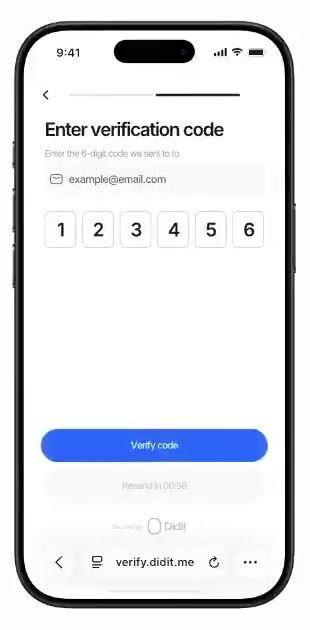
Usa nuestra pantalla de entrada alojada o tu propio formulario. Dos intentos por sesión, dos reenvíos cada 24 horas, cinco minutos de validez; todos los límites se aplican automáticamente. La plantilla se localiza automáticamente al idioma preferido del usuario.
05 · Antifraude
Detección de catch-all. Filtrado por rol. Duplicados entre sesiones.
Las advertencias configurables muestran cada patrón de abuso: filtrado, temporal, duplicado entre sesiones o en lista negra. Dos rechazos automáticos (demasiados intentos, dirección no entregable) se aplican independientemente de la política. Las direcciones catch-all y basadas en roles se detectan antes de que se envíe el código.
Política de riesgo5 advertencias · 3 acciones
EMAIL_CODE_ATTEMPTS_EXCEEDEDRechazo automático
EMAIL_IN_BLOCKLISTRechazo automático
DISPOSABLE_EMAIL_DETECTEDRechazar
BREACHED_EMAIL_DETECTEDRevisar
DUPLICATED_EMAILRevisar
06 · Precios
$0.03 por verificación. 500 gratis cada mes. Para siempre.
El mismo precio de $0.03 para el flujo alojado y la API independiente. Sin tarifas de plataforma, sin mínimo mensual, sin sorpresas por exceso de uso. Encadena la verificación de email antes de una verificación completa de conocimiento del cliente (KYC) de $0.33 para filtrar registros basura antes de que consuman un crédito.
FacturaciónPúblico · por verificación
Por verificación
$0.03
Ruta A o Ruta B
Capa gratuita
500/mo
Para siempre, sin tarjeta
Sin mínimoPaga por éxito
Se encadena con KYC+$0.33 el paquete
Integra
Dos endpoints. El mismo JSON. El mismo precio.
Elige el flujo alojado cuando quieras que nos encarguemos de la entrada de código y lo encadenemos a un flujo de trabajo más amplio. Elige la API independiente cuando tú controles la interfaz de usuario. Ambos devuelven el mismo informe.
Lanza la verificación de email con una sola instrucción.
Pega el siguiente bloque en Claude Code, Cursor, Codex, Devin, Aider o Replit Agent. Rellena tu stack. El agente provisiona Didit, crea el flujo de trabajo de verificación de email, conecta el webhook y lo lanza.
didit-integration-prompt.md
# Didit Email Verification — integrate in 5 minutes

You are integrating Didit's Email Verification module into <my_stack>.
Follow these steps exactly. Every URL, header, and enum value below is
canonical — do not paraphrase or "improve" them. The module covers:
syntax validation, MX (Mail Exchange) lookup, SMTP (Simple Mail Transfer
Protocol) deliverability probe, disposable-provider detection,
free-provider detection, breach exposure lookup (HaveIBeenPwned-style),
catch-all + role-based anti-abuse signals, OTP (one-time password)
confirmation, and a configurable risk policy that can chain straight
into a Know Your Customer (KYC) (know your customer) workflow.

## 1. Provision an account
- Sign up: https://business.didit.me (no credit card required).
- Or provision programmatically: POST https://apx.didit.me/auth/v2/programmatic/register/
  (returns an API key bound to the workspace + application).

## 2. Two integration paths — pick one

### Path A — Workflow Builder (hosted UI)
Best when you want Didit to host the OTP entry screen, localize the
email template, handle resend cool-downs, and chain Email Verification
into a wider KYC / KYB workflow.

1. Create a workflow that contains the EMAIL_VERIFICATION feature:
   POST https://verification.didit.me/v3/workflows/
   Authorization header:  x-api-key: <your-api-key>
   Body: workflow_label, features array with the single entry
         { feature: "EMAIL_VERIFICATION" }   (UPPERCASE — strict enum)
   Optional config: per-warning action overrides (Decline / Review /
   Approve) for BREACHED_EMAIL_DETECTED, DISPOSABLE_EMAIL_DETECTED,
   DUPLICATED_EMAIL, and EMAIL_IN_BLOCKLIST.

2. Create a verification session for an end user:
   POST https://verification.didit.me/v3/session/
   Body: workflow_id (from step 1), vendor_data (your own user id),
   optional contact_details.email (pre-fills the OTP step).
   Response: url (the hosted verification link) — redirect the user to it.

3. Listen for webhook callbacks (see "Webhooks" below).

### Path B — Standalone server-to-server API
Best when you already own the OTP UI and just want Didit to send and
validate the code plus return the risk signals.

Two endpoints, both authenticated with x-api-key:

POST https://verification.didit.me/v3/email/send/
Body (application/json):
  - email        (required, string — RFC 5322 address)
  - language     (optional, ISO 639-1 code — picks the email template)
  - vendor_data  (optional string, your user id)
Returns: { reference_id }

POST https://verification.didit.me/v3/email/check/
Body (application/json):
  - reference_id (required, from /email/send/)
  - code         (required, 6-digit string the user typed)
Returns: the full email-verification report (see Section 4).

Use the same vendor_data on retries so cross-session matches work.

## 3. Webhooks (Path A only — Path B returns synchronously)
- Register a webhook destination once via
  POST https://verification.didit.me/v3/webhook/destinations/
  Body: url, subscribed_events: ["session.verified",
                                  "session.review_started",
                                  "session.declined"]
- Response includes secret_shared_key — store it.
- Every webhook delivery carries an X-Signature-V2 header you MUST verify
  before trusting the payload.  HMAC-SHA256 verification MUST run against the raw body bytes (the raw payload as Didit sent it) BEFORE any JSON parsing — re-serialising the parsed body changes whitespace and key order, which invalidates the signature.Algorithm:
    1. sortKeys(payload) recursively
    2. shortenFloats (truncate trailing zeros after the decimal point)
    3. JSON.stringify the result
    4. HMAC-SHA256 with the secret_shared_key
    5. Hex-encode, compare to the X-Signature-V2 header.

Two module-level event types fire alongside the session events above:
- EMAIL_VERIFICATION_MESSAGE_SENT — OTP was dispatched
- EMAIL_VERIFICATION_DECLINED      — verification finished with a
                                     Declined status (caller should
                                     surface the warning to the user)

## 4. Reading the report (both paths return the same shape)
The email object includes:
- status: "Approved" | "Declined" | "In Review" | "Not Finished"
- email: the address that was verified
- is_breached: boolean — true when the address appears in known breaches
- breaches: array of { name, domain, logo_path, breach_date,
                       description, is_verified, data_classes,
                       breach_emails_count }
- is_disposable: boolean — true for throwaway providers
- is_undeliverable: boolean — true when MX + SMTP probe failed
- verification_attempts: number — OTP attempts used (max 2)
- verified_at: ISO 8601 timestamp
- matches: array of cross-session hits, each carrying session_id,
           session_number, vendor_data, verification_date, email,
           status, is_blocklisted
- warnings: Array<{ risk, additional_data, log_type,
                    short_description, long_description }>

Auto-decline risks (always enforced by Didit, not configurable):
- EMAIL_CODE_ATTEMPTS_EXCEEDED
- EMAIL_IN_BLOCKLIST
- UNDELIVERABLE_EMAIL_DETECTED

Configurable risks (action per workflow — Decline, Review, or Approve):
- BREACHED_EMAIL_DETECTED       (exposure / breach intelligence)
- DISPOSABLE_EMAIL_DETECTED     (temporary / throwaway provider)
- DUPLICATED_EMAIL              (cross-session match on another user)

Anti-abuse limits (enforced server-side):
- Code Entry Attempts: max 2 tries to type the right OTP
- Code Resend Requests: max 2 resends per 24 hours
- Code Validity: 5 minutes from delivery

## 5. Chaining Email Verification into a KYC flow
EMAIL_VERIFICATION is a regular feature inside the Workflow Builder, so
it composes with any of the 25+ other modules. The canonical patterns:

- Cheap pre-filter: gate KYC behind Email Verification so disposable +
  breached + undeliverable signups never burn a $0.33 KYC bundle. Use a
  conditional branch — if status is Declined on email, skip
  OCR + LIVENESS + FACE_MATCH.
- Compliance log: keep Email Verification in the flow even when KYC is
  the primary check, so the verified email is timestamped and signed
  alongside the ID Verification report for Anti-Money Laundering (AML) (anti-money laundering)
  recordkeeping.
- Step-up auth: rerun Email Verification at a sensitive action (large
  withdrawal, password reset) using the same workflow + vendor_data
  for closed-loop continuity.

## 6. Hard rules — do not change
- Base URL for /v3/* endpoints is verification.didit.me (NOT apx.didit.me).
- Feature enum is UPPERCASE: EMAIL_VERIFICATION, OCR,
  LIVENESS, FACE_MATCH, AML, IP_ANALYSIS, PHONE_VERIFICATION.
- Auth header is x-api-key (lowercase, hyphenated).
- Webhook signature header is X-Signature-V2 (NOT X-Signature).
- Always verify webhook signatures before trusting payload data.
- Status casing matches exactly: "Approved", "Declined", "In Review",
  "Not Finished" (title-cased, space-separated).

## 7. Pricing reference (public)
- Email Verification: $0.03 per check (Path A or Path B).
- Bundled inside a full KYC workflow: same $0.03 add-on — the $0.33
  full-KYC bundle does not include EMAIL_VERIFICATION by default.
- 500 free checks every month, forever, on every account.

## 8. Verify your integration
- Sandbox starts on signup at https://business.didit.me — no separate flag.
- Test emails: deterministic synthetic addresses returned in sandbox
  (Approved by default; trigger Declined by sending the canonical
  disposable / breached test addresses listed in the docs).
- Switch to live: flip the application's environment toggle in console.

When in doubt: https://docs.didit.me/core-technology/email-verification/overview
Cumplimiento por diseño
Abre un nuevo país en un clic. Nosotros hacemos el trabajo duro.
Abrimos las filiales locales, aseguramos las licencias, realizamos las pruebas de penetración, obtenemos las certificaciones y nos alineamos con cada nueva regulación. Para lanzar verificaciones en un nuevo país, activa un interruptor. Más de 220 países en vivo, auditados y probados trimestralmente, el único proveedor de identidad que un gobierno de un estado miembro de la UE ha calificado formalmente como más seguro que la verificación presencial.
Por verificación, mismo precio en flujo alojado o API independiente.
500
Verificaciones de email gratuitas cada mes, para siempre, en cada cuenta.
5 min
Validez del código de un solo uso: todos los límites aplicados por ti.
6
Códigos de advertencia configurables y 3 rechazos automáticos obligatorios.
Tres niveles, una lista de precios
Empieza gratis. Paga por uso. Escala a Enterprise.
500 verificaciones gratis cada mes, para siempre. Después, paga solo cuando se ejecute un módulo. Contratos personalizados, residencia de datos y acuerdos de nivel de servicio (SLA) en Enterprise.
Gratis
$0/ mes · sin tarjeta
Para construir, probar y tus primeros usuarios.
Todo lo que necesitas para empezar:
500 verificaciones KYC completas cada mes
ID, prueba de vida, coincidencia facial, dispositivo e IP
Más de 200 señales de fraude, lista de bloqueo, duplicados
KYC reutilizable en toda la red Didit
Constructor de flujos de trabajo, gestión de casos, SDKs
Soporte con IAAgente de IA en consola, documentación y comunidad.