Didit recapta 7,5M $ per construir la infraestructura per a identitat i frau
Didit
Face Match 1:1

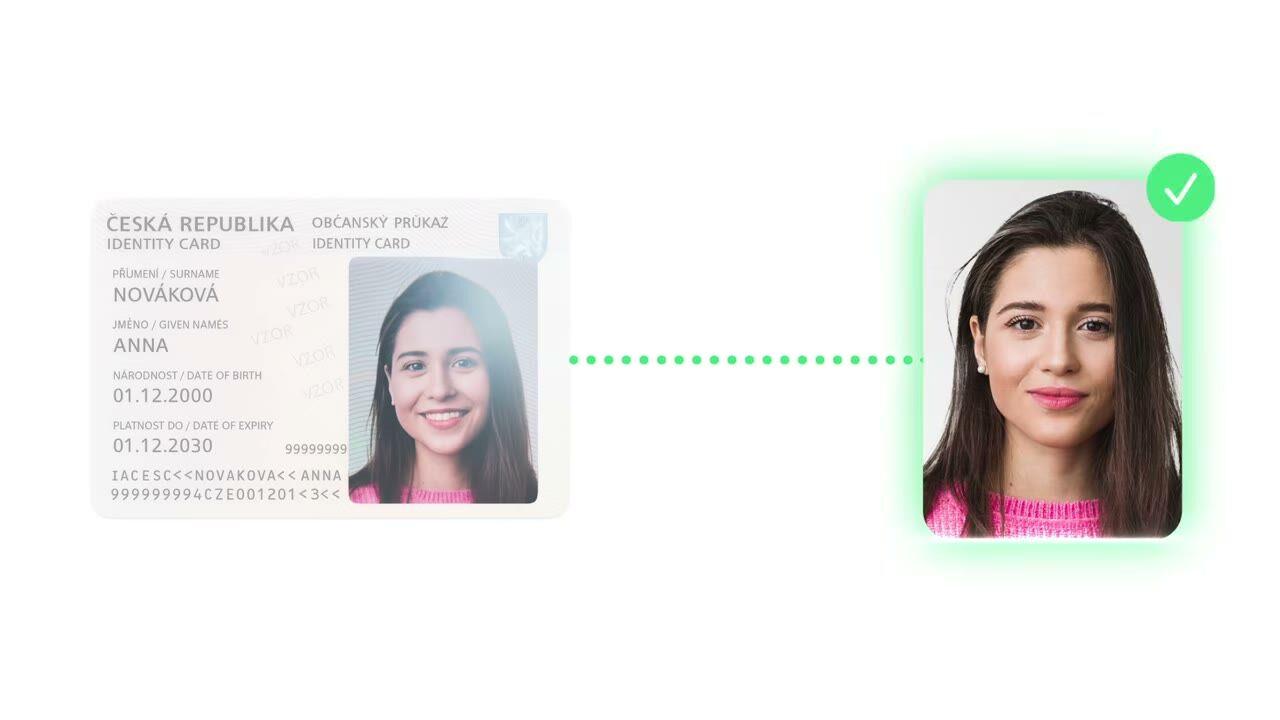
Vincula una cara a un document d'identitat.
En mig segon.

Confirma que la persona davant la càmera coincideix amb la foto del seu document d'identitat. Veredicte en menys d'un segon. 0,05 $ per comprovació, 500 gratuïtes/mes, o inclòs en un KYC (Know Your Customer) complet per 0,33 $.

Amb el suport de
Y CombinatorRobinhood Ventures
GBTC Finance
Bondex
Crnogorski Telekom
UCSF Neuroscape
Shiply
Adelantos

Confiat per més de 2.000 organitzacions a tot el món.

Didit Face Match 1:1, selfie comparat amb la foto del document d'identitat amb una puntuació de similitud en menys de 2 segons.

Comprovació de la mateixa persona

Compara la selfie
amb la foto del DNI.

Puntuació de similitud en menys de 2 segons amb mecanisme anti-spoofing. 0,05 $ per comprovació, la comparació de reconeixement facial més barata del mercat.

Com funciona

De l'alta a l'usuari verificat en quatre passos.

  1. Pas 01

    Crea el flux de treball

    Tria les comprovacions que vulguis: document d'identitat, prova de vida, reconeixement facial, sancions, adreça, edat, telèfon, correu electrònic, preguntes personalitzades. Arrossega-les a un flux al panell de control, o publica el mateix flux a la nostra API. Crea ramificacions segons condicions, fes proves A/B, sense necessitat de codi.

  2. Pas 02

    Integra

    Integra de forma nativa amb els nostres SDK per a Web, iOS, Android, React Native o Flutter. Redirigeix a una pàgina allotjada. O simplement envia a l'usuari un enllaç, per correu electrònic, SMS, WhatsApp, on vulguis. Tria el que millor s'adapti al teu stack.

  3. Pas 03

    L'usuari segueix el flux

    Didit gestiona la càmera, les indicacions d'il·luminació, el traspàs mòbil i l'accessibilitat. Mentre l'usuari està en el flux, puntuam més de 200 senyals de frau en temps real i verifiquem cada camp amb fonts de dades autoritzades. Resultat en menys de dos segons.

  4. Pas 04

    Rep els resultats

    Els webhooks signats en temps real mantenen la teva base de dades sincronitzada en el moment en què un usuari és aprovat, rebutjat o enviat a revisió. Consulta l'API sota demanda. O obre la consola per inspeccionar cada sessió, cada senyal i gestionar els casos a la teva manera.

Creat per a desenvolupadors · Dissenyat contra el frau · Obert per disseny

Sis funcionalitats. Una feature flag. FACE_MATCH.

Cada funcionalitat a continuació és un interruptor al mateix mòdul. Sense nivells de venda addicional, sense SKU separats, sense trucades addicionals. Activa Face Match per flux de treball, o truca directament a l'endpoint independent.
01 · La vinculació

Selfie en viu. Retrat del document. Una identitat.

Face Match tanca el cercle entre el document que un usuari ha pujat i la persona davant la càmera. Dins d'una sessió KYC (Know Your Customer), s'executa automàticament contra la foto del document d'identitat. De forma independent, passes dues imatges,origen i destí, i et retornem una puntuació de similitud.
02 · Puntuació de similitud

Una puntuació. De zero a cent.

Cada coincidència retorna una puntuació de similitud de 0 a 100, les dues URL de les imatges i una referència de sessió que vincula el resultat a la verificació que va produir el selfie. Guarda la puntuació i l'estat; les URL de les imatges caduquen després de 60 minuts, de manera que només emmagatzemes el que requereix la teva política d'auditoria.
03 · Inferència en menys d'un segon

Menys d'un segon en hardware estàndard.

Model d'incrustació facial servit des de l'edge. Sense descàrrega de models, sense suposicions d'acceleració al dispositiu, sense experiència degradada en Android de gamma baixa. El mateix motor i latència tant si passes per la interfície d'usuari del flux de treball allotjat com per l'endpoint independent. Robust a la postura, la il·luminació, el pentinat, les ulleres i l'envelliment normal.
04 · Llindars ajustables

Decideix. Revisa. Aprova. Per rang de puntuació.

L'únic avís configurable,similitud baixa, es basa en dos llindars que tu defineixes per a cada aplicació. Per sota del llindar de rebuig, es rebutja automàticament; entremig, es deriva a revisió manual; per sobre del llindar de revisió, s'aprova automàticament. L'únic disparador de rebuig automàtic (sense imatge de referència) el mantenim nosaltres, passi el que passi.
05 · Disseny modular

Activa-ho en qualsevol flux de treball. Sense reescriure la captura.

Face Match és una *feature flag* al mateix constructor de fluxos de treball que la Verificació d'Identitat, la Prova de Vida i l'AML (anti-blanqueig de capitals). Afegeix-lo a un flux d'onboarding existent i la següent sessió ja el tindrà,sense actualitzar l'SDK, sense una nova pantalla de captura, sense un webhook separat. Elimina-lo i la resta del flux seguirà funcionant.
06 · Preus transparents

$0.05 per match. 500 free every month. No SKU.

0,05 $ per cada trucada de Face Match independent. Inclòs en un flux de treball KYC complet amb Verificació d'Identitat, Prova de Vida i Anàlisi de Dispositius i IP, la sessió té un preu fix de 0,33 $,Face Match inclòs. Les primeres 500 verificacions/mes són gratuïtes en cada compte, per sempre. Sense mínim mensual, sense comissions de plataforma, sense SKU a negociar.
Integra

Dos endpoints. El mateix JSON. El mateix preu.

Crea una sessió quan vulguis que la nostra interfície d'usuari allotjada capture el selfie i extregui la foto de referència del document d'identitat de la mateixa sessió. Truca a l'endpoint independent quan ja tinguis ambdues imatges. Ambdós retornen el mateix informe `face_match`.
POST /v3/session/UI allotjada
$ curl -X POST https://verification.didit.me/v3/session/ \
  -H "x-api-key: $DIDIT_API_KEY" \
  -H "Content-Type: application/json" \
  -d '{
    "workflow_id": "wf_face_match_kyc",
    "vendor_data": "user-42"
  }'
201Creat{ "session_url": "verify.didit.me/..." }
Nosaltres allotgem la captura. El retrat del DNI es converteix automàticament en la target_image.docs →
POST /v3/face-match/De servidor a servidor
$ curl -X POST https://verification.didit.me/v3/face-match/ \
  -H "x-api-key: $DIDIT_API_KEY" \
  -F "source_image=@selfie.jpg" \
  -F "target_image=@portrait.jpg"
200D'acord{ "status": "Approved", "score": 87 }
Tu passes el parell. Nosaltres retornem la puntuació en línia.docs →
Integració preparada per a agents

Desplega Face Match amb una sola indicació.

Enganxa el bloc següent a Claude Code, Cursor, Codex, Devin, Aider o Replit Agent. Omple el marcador de posició `my_stack` amb el teu *framework*, llenguatge i cas d'ús. L'agent aprovisiona Didit, construeix el flux de treball amb Face Match activat, connecta el *webhook* i el desplega.
didit-integration-prompt.md
# Didit Face Match 1:1 — integrate in 5 minutes

You are integrating Didit's Face Match 1:1 (selfie vs. reference image)
module into <my_stack>. Follow these steps exactly. Every URL, header,
and enum value below is canonical — do not paraphrase or "improve" them.

## 1. Provision an account
- Sign up: https://business.didit.me (no credit card required).
- Or provision programmatically: POST https://apx.didit.me/auth/v2/programmatic/register/
  (returns an API key bound to the workspace + application).

## 2. Two integration paths — pick one

### Path A — Workflow Builder (hosted UI)
Best when you want Didit to handle selfie capture, real-time framing,
mobile handoff, and accessibility for you. Inside a Know Your Customer (KYC) workflow,
Face Match runs automatically against the portrait extracted from the
ID document the user uploads in the same session.

1. Create a workflow that contains the FACE_MATCH feature:
   POST https://verification.didit.me/v3/workflows/
   Authorization header:  x-api-key: <your-api-key>
   Body: workflow_label, features array with FACE_MATCH plus any
         other features the same session needs (typically
         ID_VERIFICATION and LIVENESS for full KYC). Feature names
         are UPPERCASE — strict enum.
   Optional config: review_threshold and decline_threshold for the
         LOW_FACE_MATCH_SIMILARITY warning (numbers 0–100).

2. Create a verification session for an end user:
   POST https://verification.didit.me/v3/session/
   Body: workflow_id (from step 1), vendor_data (your own user id).
   Response: session_url — redirect the user to it.

3. Listen for webhook callbacks (see "Webhooks" below).

### Path B — Standalone server-to-server API
Best when you already have two face images and just need a similarity
score (re-auth at sensitive actions, employee badge access, cross-app
identity binding, periodic re-verification).

POST https://verification.didit.me/v3/face-match/
Content-Type: multipart/form-data
Body fields:
  - source_image  (required, file — the live selfie)
  - target_image  (required, file — the reference image, e.g. ID portrait
                   or a stored enrollment frame)
  - vendor_data   (optional string, your user id)

Response: synchronous JSON report with the similarity score and warnings
array. No webhook needed.

## 3. Webhooks (Path A only — Path B returns synchronously)
- Register a webhook destination once via
  POST https://verification.didit.me/v3/webhook/destinations/
  Body: url, subscribed_events: ["session.verified",
                                  "session.review_started",
                                  "session.declined"]
- Response includes secret_shared_key — store it.
- Every webhook delivery carries an X-Signature-V2 header you MUST verify
  before trusting the payload.  HMAC-SHA256 verification MUST run against the raw body bytes (the raw payload as Didit sent it) BEFORE any JSON parsing — re-serialising the parsed body changes whitespace and key order, which invalidates the signature.Algorithm:
    1. sortKeys(payload) recursively
    2. shortenFloats (truncate trailing zeros after the decimal point)
    3. JSON.stringify the result
    4. HMAC-SHA256 with the secret_shared_key
    5. Hex-encode, compare to the X-Signature-V2 header.

## 4. Reading the report (both paths return the same shape)
The face_match object includes:
- status: "Approved" | "Declined" | "In Review" | "Not Finished"
- score: number 0-100 (normalized similarity score)
- source_image_session_id: the verification session that produced the
  live selfie (Path A) or null (Path B)
- source_image: signed URL to the live selfie (expires in 1 hour)
- target_image: signed URL to the reference image (expires in 1 hour)
- warnings: Array<{ risk, log_type, short_description, long_description }>

Auto-decline risks (always enforced by Didit, not configurable):
- NO_REFERENCE_IMAGE   (no reference image available to compare against)

Configurable risks (action per workflow — Decline, Review, or Approve):
- LOW_FACE_MATCH_SIMILARITY
    Tune two thresholds per application:
      review_threshold  → score below this goes to "In Review"
      decline_threshold → score below this is auto-declined

## 5. Hard rules — do not change
- Base URL for /v3/* endpoints is verification.didit.me (NOT apx.didit.me).
- Feature enum is UPPERCASE: FACE_MATCH, ID_VERIFICATION, LIVENESS, AML, IP_ANALYSIS.
- Auth header is x-api-key (lowercase, hyphenated).
- Webhook signature header is X-Signature-V2 (NOT X-Signature).
- Always verify webhook signatures before trusting payload data.
- Status casing matches exactly: "Approved", "Declined", "In Review",
  "Not Finished" (title-cased, space-separated).
- Reference and source image URLs in the response expire in 60 minutes.
  Persist only the score and status; re-fetch images on demand if your
  audit policy needs them.

## 6. Pricing reference (public)
- Standalone POST /v3/face-match/: $0.05 per match.
- Bundled inside a full KYC workflow with ID Verification + Passive
  Liveness + Device & IP Analysis: $0.33 per session (Face Match included).
- 500 free checks every month, forever, on every account.

## 7. Verify your integration
- Sandbox starts on signup at https://business.didit.me — no separate flag.
- Test images: deterministic synthetic faces returned in sandbox
  (Approved by default; trigger Declined by sending a mismatched pair).
- Switch to live: flip the application's environment toggle in console.

When in doubt: https://docs.didit.me/core-technology/face-match/overview
Necessites més context? Consulta la documentació completa del mòdul.docs.didit.me →
Compliment per disseny

Obre un nou país amb un clic. Nosaltres fem la feina difícil.

Obrim les filials locals, assegurem les llicències, realitzem les proves de penetració, obtenim les certificacions i ens alineem amb cada nova regulació. Per desplegar verificacions en un nou país, només has d'activar un interruptor. Més de 220 països en funcionament, auditats i provats trimestralment, l'únic proveïdor d'identitat que un govern d'un estat membre de la UE ha qualificat formalment com més segur que la verificació presencial.
Llegeix el dossier de seguretat i compliment
Sandbox financer de la UE
Tesoro · SEPBLAC · BdE
ISO/IEC 27001
Seguretat de la informació · 2026
SOC 2 · Type I
AICPA · 2026
iBeta Level 1 PAD
NIST / NIAP · 2026
GDPR
EU 2016/679
DORA
EU 2022/2554
MiCA
EU 2023/1114
AMLD6 · eIDAS 2.0
Alineat amb la UE per disseny

Xifres que ho demostren

Xifres que ho demostren
  • 0 – 100
    Puntuació de similitud retornada en cada coincidència.
  • <0s
    Inferència de punta a punta per cada coincidència facial.
  • $0.00
    Per cada trucada de Face Match independent.
  • 0
    Verificacions gratuïtes cada mes, per sempre, en cada compte.
Tres nivells, una llista de preus

Comença gratis. Paga per ús. Escala a Enterprise.

500 verificacions gratuïtes cada mes, per sempre. Pagament per ús per a producció. Contractes personalitzats, residència de dades i SLA (Acords de Nivell de Servei) a Enterprise.
Gratuït

Gratuït

0 $ / mes. No es requereix targeta de crèdit.

  • Paquet KYC gratuït (Verificació d'identitat + Prova de vida passiva + Coincidència facial + Anàlisi de dispositius i IP), 500 / mes, cada mes
  • Usuaris bloquejats
  • Detecció de duplicats
  • Més de 200 senyals de frau en cada sessió
  • KYC reutilitzable a tota la xarxa Didit
  • Plataforma de gestió de casos
  • Constructor de fluxos de treball
  • Documentació pública, sandbox, SDKs, servidor MCP (Model Context Protocol)
  • Suport de la comunitat
Més popular
Paga per ús

Basat en l'ús

Paga només pel que utilitzes. Més de 25 mòduls. Preus públics per mòdul, sense quota mínima mensual.

  • KYC complet per 0,33 $ (ID + Biometria + IP / Dispositiu)
  • Més de 10.000 conjunts de dades AML, sancions, PEPs, mitjans adversos
  • Més de 1.000 fonts de dades governamentals per a la validació de bases de dades
  • Monitorització de transaccions per 0,02 $ per transacció
  • KYB en viu per 2,00 $ per empresa
  • Screening de carteres per 0,15 $ per comprovació
  • Flux de verificació de marca blanca, la teva marca, la nostra infraestructura
Empreses

Empreses

MSA i SLA personalitzats. Per a grans volums i programes regulats.

  • Contractes anuals
  • MSA, DPA i SLA personalitzats
  • Canal dedicat a Slack i WhatsApp
  • Revisors manuals sota demanda
  • Condicions de revenda i marca blanca
  • Funcionalitats exclusives i integracions amb partners
  • CSM assignat, revisió de seguretat, suport de compliment

Comença gratis → paga només quan s'executa una comprovació → desbloqueja Enterprise per a un contracte personalitzat, SLA o residència de dades.

FAQ

Preguntes freqüents

What is Didit?

Didit is infrastructure for identity and fraud, the platform we wished existed when we were building products ourselves: open, flexible, and developer-friendly, so it works as a real part of your stack instead of a black box you integrate around.

One API covers verifying people (KYC, know your customer), verifying businesses (KYB, know your business), screening crypto wallets (KYT, know your transaction), and monitoring transactions in real time, on a stack built to be:

  • Fast, sub-2-second p99 on every session
  • Reliable, in production with 1,500+ companies across 220+ countries
  • Secure, SOC 2 Type 1, ISO 27001, GDPR-native, and formally attested by Spain's financial regulator as safer than verifying someone in person

The footprint underneath: 14,000+ document types in 48+ languages, 1,000+ data sources, and 200+ fraud signals on every session. The Didit infrastructure dynamically learns from every session and gets better every day.

What inputs does Face Match 1:1 accept?
Two face images. Path A, Workflow Builder: the source image is the live selfie our hosted UI captures, the target image is the portrait we extracted from the ID (identification) document the user uploaded in the same session, both sides come for free. Path B, Standalone API: you pass both images yourself as source_image and target_image on a multipart POST /v3/face-match/. Accepted formats: JPG, JPEG, PNG, up to 5 MB per image. Both paths return the same face_match JSON shape.
What is the response shape?
A root-level face_match object with status (Approved, Declined, In Review, or Not Finished), a 0-100 score, a source_image_session_id that ties the result back to the verification session that produced the live selfie, signed source_image and target_image URLs that expire after 60 minutes, and a warnings array. Each warning has risk, log_type (information, warning, or error), short_description, and long_description. Same shape whether you called the Workflow Builder or the standalone API.
How fast is the verification for my end user?

The full flow normally takes under 30 seconds end-to-end, pick up the ID, snap the document, snap the selfie, done. That is the fastest in the market. Legacy KYC providers usually take more than 90 seconds for the same flow.

On the back end, Didit returns the result in under two seconds at p99, measured from the moment the user finishes the selfie to the moment your webhook fires. Mobile capture is tuned for slow phones and slow networks: progressive image compression, lazy software development kit load, and a one-tap hand-off from desktop to phone via QR code if the user starts on web.

How does Didit defeat face-match fraud?
Face Match never runs alone in a KYC flow, it pairs with LIVENESS so the source image is always a verified-live human, not a presentation attack. Liveness is iBeta Level 1 Presentation Attack Detection (PAD) certified against printed photos, screen replays, masks, morph attacks, and AI deepfakes. On top of that, the face embedding model is trained to be resilient to pose, lighting, hairstyle, glasses, and ageing within a normal window, so a real face still matches even when the document portrait is years old.
What happens if a user fails, abandons, or expires?

Every session lands on one of seven clear statuses, so your code always knows what to do:

  • Approved, every check passed. Move the user forward.
  • Declined, one or more checks failed. You can allow the user to resubmit the specific failed step (for example, re-take the selfie) without re-running the whole flow.
  • In Review, flagged for compliance review. Open the case in the console, see every signal, decide approve or decline.
  • In Progress, user is mid-flow.
  • Not Started, link sent, user has not opened it yet. Send a reminder if it sits too long.
  • Abandoned, user opened the link but did not finish in time. Re-engage or expire.
  • Expired, the session link aged out. Create a new session.

A signed webhook fires on every status change, so your database always stays in sync. Abandoned and declined sessions are free.

Where does my customer data live and how is it protected?

Production data is processed and stored in the European Union by default, on Amazon Web Services. Enterprise contracts can request alternative regions for jurisdictions whose regulators require it.

Encryption everywhere. AES-256 at rest across every database, object store, and backup. Transport Layer Security 1.3 in transit on every API call, webhook, and Business Console session. Biometric data is encrypted under a separate Customer Master Key.

Retention is yours to control. Default retention is indefinite (unlimited) unless you configure shorter, between 30 days and 10 years per application, and you can delete any individual session at any time from the dashboard or the API.

Certifications: SOC 2 Type 1 (Type 2 audit in progress), ISO/IEC 27001:2022, iBeta Level 1 PAD, and a public attestation from Spain''s Tesoro / SEPBLAC / CNMV that Didit''s remote identity verification is safer than verifying someone in person. Full report at /security-compliance.
Is Didit compliant for my industry?

Didit ships compliant by default for the regulators that matter to identity infrastructure:

  • GDPR + UK GDPR, controller / processor split, full Data Processing Agreement published, lead supervisory authority named (Spain''s AEPD).
  • AMLD6 + EU AML Single Rulebook, 1,300+ sanctions, politically exposed person, and adverse-media lists screened in real time.
  • eIDAS 2.0, EU Digital Identity Wallet aligned; reusable-identity ready.
  • MiCA (Markets in Crypto-Assets), ready for crypto on-ramps, exchanges, and custodians.
  • DORA, Digital Operational Resilience Act, EU financial-services operational resilience.
  • BIPA, CUBI, Washington HB 1493, CCPA / CPRA, US biometric privacy (Illinois, Texas, Washington) and California consumer privacy.
  • UK Online Safety Act, age-gating and child-safety obligations.
  • FATF Travel Rule, originator and beneficiary data on crypto transfers, IVMS-101 interoperable.

Detailed memo, every certificate, every regulator letter: /security-compliance.

How fast can I integrate and start verifying users?
  • 60 seconds to a sandbox account at business.didit.me, no credit card.
  • 5 minutes to a working verification through Claude Code, Cursor, or any coding agent via our Model Context Protocol (MCP) server.
  • A weekend to a production-ready integration with signed-webhook verification, retries, and a remediation flow when a user is declined.

Three integration paths, pick whichever fits your stack:

  • Embed natively with our Web, iOS, Android, React Native, or Flutter SDK.
  • Redirect the user to the hosted verification page, zero SDK.
  • Send a link by email, SMS, WhatsApp, or any channel, zero front-end work.

Same dashboard, same billing, same pay-per-success price for all three. Step-by-step guide at docs.didit.me/integration/integration-prompt.

Infraestructura per a identitat i frau.

Una API per a KYC, KYB, monitorització de transaccions i anàlisi de carteres. Integra-la en 5 minuts.

Demana a una IA que resumeixi aquesta pàgina