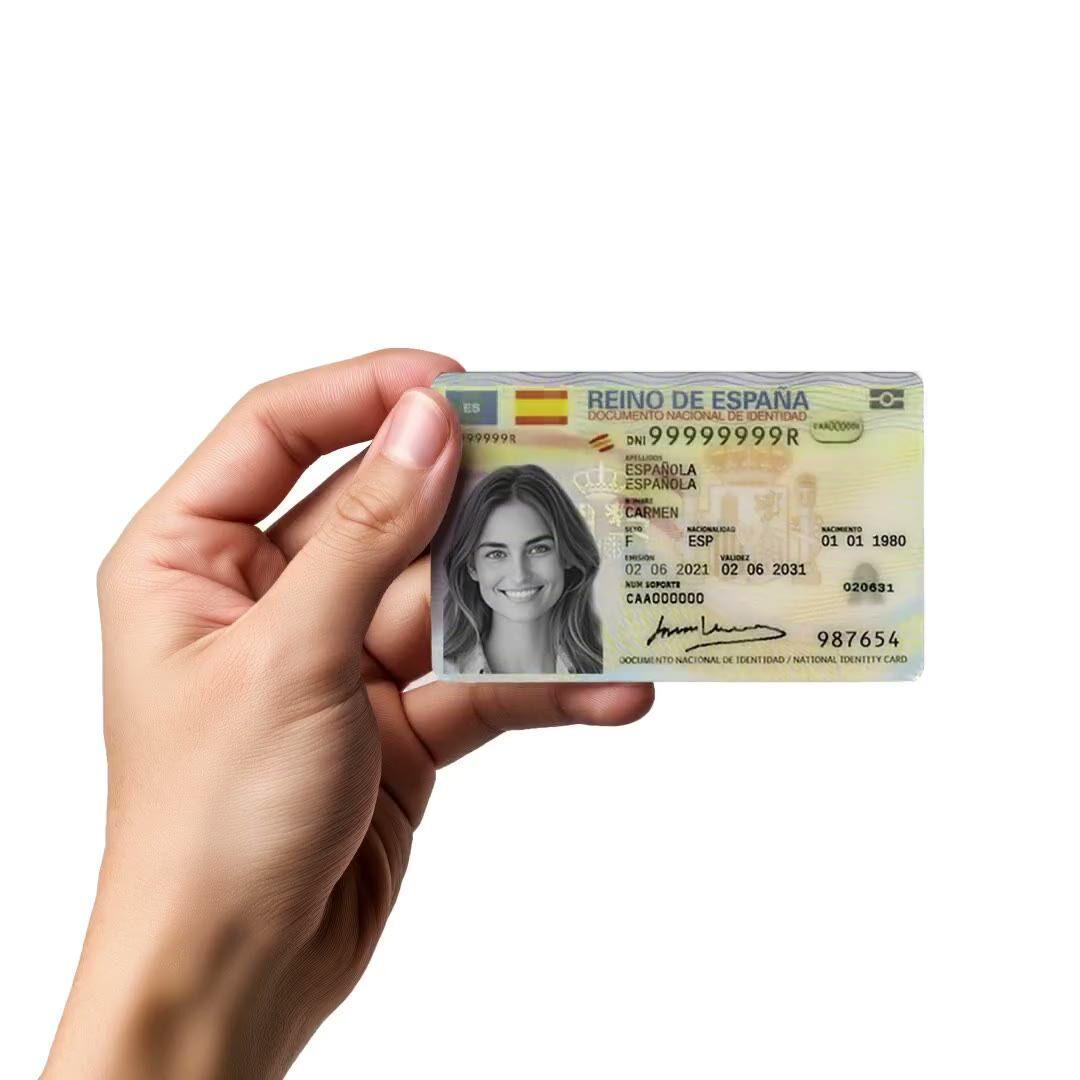
Verifiziere einen Reisepass, Personalausweis, Führerschein oder eine Aufenthaltsgenehmigung aus jedem Land. 14.000+ Dokumente, Ergebnis in unter 2 Sekunden, $0.15 pro Prüfung, 500 kostenlos/Monat.
Spanischer DNI, japanische My Number, britischer Reisepass. Jeden Monat kommen neue Dokumente hinzu –
gleiche $0.15 pro Prüfung, gleiches Ergebnisformat, gleiche Antwortzeit von unter 2 Sekunden.
Drei Wege zur Verifizierung
Ein Feature. Drei Methoden pro Land.
Aktiviere die Methoden, die ein Land tatsächlich unterstützt. Jede Methode liefert den gleichen Ergebnisvertrag, sodass dein Code immer die gleiche Struktur liest, egal welchen Weg der User gewählt hat.
Methode 01
Dokumentenerfassung
Fotografiere einen Reisepass, Personalausweis, Führerschein oder eine Aufenthaltsgenehmigung. Über 220 Länder, über 14.000 Dokumente, ein Ergebnis in unter zwei Sekunden.
Vom Anmelden zum verifizierten Nutzer in vier Schritten.
Schritt 01 / 04
01
Workflow erstellen
Wähle die gewünschten Prüfungen aus, ID, Liveness, Face Match, Sanktionen, Adresse, Alter, Telefon, E-Mail, benutzerdefinierte Fragen. Ziehe sie im Dashboard in einen Flow oder poste den gleichen Flow an unsere API. Verzweige nach Bedingungen, führe A/B-Tests durch, kein Code erforderlich.
Integrieren
Bette nativ mit unserem Web-, iOS-, Android-, React Native- oder Flutter-SDK ein. Leite zu einer gehosteten Seite weiter. Oder sende deinem Nutzer einfach einen Link, per E-Mail, SMS, WhatsApp, überall. Wähle, was zu deinem Stack passt.
Nutzer durchläuft den Flow
Didit hostet die Kamera, die Beleuchtungshinweise, die mobile Übergabe und die Barrierefreiheit. Während der Nutzer den Flow durchläuft, bewerten wir über 200 Betrugssignale in Echtzeit und verifizieren jedes Feld anhand autoritativer Datenquellen. Ergebnis in unter zwei Sekunden.
Du erhältst die Ergebnisse
Echtzeit-signierte Webhooks halten deine Datenbank synchron, sobald ein Nutzer genehmigt, abgelehnt oder zur Überprüfung gesendet wird. Frage die API bei Bedarf ab. Oder öffne die Konsole, um jede Session, jedes Signal zu überprüfen und Fälle nach deinen Wünschen zu verwalten.
Für Entwickler gemacht · Gegen Betrug gebaut · Offen im Design
Sechs Funktionen. Ein Feature Flag. ID_VERIFICATION .
Jede der unten genannten Funktionen ist ein Schalter im selben Modul. Keine Upsell-Stufen, keine separaten SKUs, keine zusätzlichen Anrufe. Schalte sie pro Workflow in der Konsole ein oder übergebe sie inline, wenn du den Standalone-Endpunkt aufrufst.
Pässe, Personalausweise, Führerscheine, Aufenthaltsgenehmigungen. Über 130 Sprachen, über 50 Schriften (Lateinisch, Arabisch, Kyrillisch, CJK, Devanagari, Hebräisch, Thai, Georgisch). Monatlich kommen neue Dokumente hinzu. Länderspezifische Subtyp-Kontrollen, akzeptiere Indiana Operator und New York Enhanced separat, falls die Richtlinie dies erfordert.
Alle visuellen, MRZ- (maschinenlesbare Zone) und Barcode-Felder in einem Durchgang extrahiert. Die drei werden abgeglichen, bevor die Antwort unsere Edge verlässt. Inkonsistenzen werden als Warnungen angezeigt, damit du den Fall zur manuellen Überprüfung weiterleiten kannst.
Persönliche Daten
OCR · MRZ · Barcode
Vorname
Olivia
Matches mit Daten via API bereitgestellt: Olivia
Nachname
Roy
Geburtsdatum
28/06/1971
Dokumententyp
Passport
Ausstellender Staat
Spain🇪🇸
Dokumentennummer
3EB8726CC6E0F979
03 · Authentizität
Dokument echt. Porträt intakt. Keine Bildschirmaufnahme.
Template-Abgleich mit der zertifizierten Datenbank. Hologramm- und Mikrodruckerkennung. Überprüfung der Porträtintegrität. Dokumenten-Liveness vereitelt vier gängige Angriffsvektoren, Bildschirmaufnahmen, Handyfotos, gedruckte Kopien und Porträt-Substitutionen auf ansonsten echten Dokumenten.
Dokumentenauthentizität
Authentisch
Dokumenten-Porträt
Live-Aufnahme
Ähnlichkeit 94%
Template-Match
Hologramm erkannt
Mikrodruck intakt
Dokument-Liveness bestanden
04 · Erfassungsqualität
Unschärfe und Blendung abweisen, bevor sie zur Überprüfung gelangen.
Fokus, Helligkeit und Auflösung werden pro Einreichung mit 0–100 bewertet, plus einer gewichteten Gesamtpunktzahl. Außerhalb des Rahmens liegende Ecken und überbelichtete Seiten werden explizit markiert. Einstellbare Schwellenwerte lehnen qualitativ minderwertige Aufnahmen direkt ab, damit sie nie deine manuelle Überprüfungswarteschlange erreichen.
Erfassungsqualität
Bereit zur Erfassung
Stabil halten
Gesamtpunktzahl
91/100
Fokus92
Helligkeit88
Auflösung95
05 · Risikopolitik
Entscheiden. Prüfen. Genehmigen. Pro Risiko. Pro Anwendung.
Jede Risikokategorie, doppelter Nutzer, ungültige MRZ, Dateninkonsistenz, geringe Dokumenten-Liveness, wird einer Ablehnung, Überprüfung oder Genehmigung zugeordnet. Passe die Richtlinie pro Anwendung, Land und Dokumententyp an. Automatische Ablehnungs-Trigger (abgelaufen, auf Sperrliste, nicht unterstützt) bleiben unabhängig von deinen Einstellungen aktiv.
Risikorichtlinie
5 Kategorien
RisikokategorieAktion
Duplizierter Nutzer
Ablehnen
Ungültige MRZ
Prüfen
Dateninkonsistenz
Prüfen
Ungültige Validierung
Ablehnen
Geringe Dokumenten-Liveness
Genehmigen
06 · Laufendes KYC
Dokumente laufen ab. Erkenne es, bevor es der Regulator tut.
Wir verfolgen das Ablaufdatum jedes Dokuments, das du speicherst. Wenn eines abläuft, ändert sich der KYC-Status des Nutzers automatisch und wir benachrichtigen dich per Webhook. Keine Batch-Jobs, kein vierteljährlicher Re-Onboarding-Sprint, die KYC-Aktualisierung bleibt kontinuierlich und du bleibst AML-Richtlinien-konform.
Dokumentenüberwachung
Autom. Ablaufverfolgung · Webhook bei Statusänderung
Live
1,284
Aktiv
47
Läuft bald ab
9
Abgelaufen
Webhook ausgelöst · usr_9f01a3c verschoben nach Kyc abgelaufenvor 12s
Erstelle eine Session, wenn unsere gehostete UI die Erfassung übernehmen soll, oder rufe den Standalone-Endpunkt auf, wenn du das Bild bereits hast. Beide geben den gleichen id_verification-Bericht zurück.
Füge den folgenden Block in Claude Code, Cursor, Codex, Devin, Aider oder Replit Agent ein. Ersetze den Platzhalter `my_stack` durch dein Framework, deine Sprache und deinen Anwendungsfall. Der Agent provisioniert Didit, erstellt den Workflow mit aktivierter ID-Verifizierung, verbindet den Webhook und liefert aus.
didit-integration-prompt.md
# Didit ID Verification — integrate in 5 minutes

You are integrating Didit's ID Verification module into <my_stack>. Follow
these steps exactly. Every URL, header, and enum value below is canonical —
do not paraphrase or "improve" them.

## 1. Provision an account
- Sign up: https://business.didit.me (no credit card required).
- Or provision programmatically: POST https://apx.didit.me/auth/v2/programmatic/register/
  (returns an API key bound to the workspace + application).

## 2. Two integration paths — pick one

### Path A — Workflow Builder (hosted UI)
Best when you want Didit to handle camera, lighting cues, retries,
mobile handoff, and accessibility for you.

1. Create a workflow that contains the ID Verification feature:
   POST https://verification.didit.me/v3/workflows/
   Authorization header:  x-api-key: <your-api-key>
   Body: workflow_label, features array with the single entry
         { feature: "OCR" }   (UPPERCASE — strict enum; "OCR" is the
         workflows-endpoint value for ID Verification, and the only one
         POST /v3/workflows/ accepts for it)

2. Create a verification session for an end user:
   POST https://verification.didit.me/v3/session/
   Body: workflow_id (from step 1), vendor_data (your own user id).
   Response: url (the hosted verification link) — redirect the user to it.

3. Listen for webhook callbacks (see "Webhooks" below).

### Path B — Standalone server-to-server API
Best when you already have the document image (mobile SDK capture, native
onboarding app, reseller pipeline).

POST https://verification.didit.me/v3/id-verification/
Content-Type: multipart/form-data
Body fields:
  - front_image  (required, file)
  - back_image   (optional, file)
  - vendor_data  (optional string, your user id)

Response: JSON report with extracted fields, image quality scores,
warnings array, and the verdict.

## 3. Webhooks (Path A only — Path B returns synchronously)
- Register a webhook destination once via
  POST https://verification.didit.me/v3/webhook/destinations/
  Body: url, subscribed_events: ["session.verified", "session.review_started",
                                  "session.declined", "kyc_expired"]
- Response includes secret_shared_key — store it.
- Every webhook delivery carries an X-Signature-V2 header you MUST verify
  before trusting the payload. X-Signature-V2 signs the CANONICAL JSON, not
  the raw body bytes — that is what makes it survive a proxy or body parser
  that re-encodes the payload. (The legacy X-Signature header is the one
  computed over the raw bytes.) The canonical form is the sender's Python
  json.dumps(sort_keys=True, separators=(",", ":"), ensure_ascii=False)
  after whole-valued floats become ints. Reproduce those bytes EXACTLY —
  do NOT "parse, sort keys, JSON.stringify", which fails in four ways:
    - Numbers come from the wire text, never from parsed doubles: the sender
      signs 1000000000000000129 digit for digit, JSON.parse rounds it. Read
      the body as TEXT (express.text, not express.json()) and re-emit
      integers through BigInt(source). Register the webhook route ABOVE any
      global app.use(express.json()): the first parser to run consumes the
      stream, and the digits are gone before the route sees them.
    - Floats use Python's repr: 1e-05, not 0.00001; 27.0 becomes 27.
    - Keys sort by Unicode CODE POINT, as strings: "10" before "2", and
      U+FF21 before U+1F642 (JavaScript's default .sort() reverses the latter
      because it compares UTF-16 code units).
    - Serialise straight from the sorted entries; never rebuild an object
      first, because JavaScript moves integer-like keys to the front.
  Then HMAC-SHA256 with secret_shared_key, hex-encode, and compare to the
  X-Signature-V2 header in constant time (crypto.timingSafeEqual).
- Freshness comes from the SIGNED body field "timestamp" (Unix seconds):
  reject a delivery whose body timestamp is more than 300 seconds from now,
  and require the X-Timestamp header to equal it. Never check the header
  alone — it is not signed, so a replayed delivery with a rewritten header
  would pass. This is the Node 22 + Express handler, paste it verbatim:

// Your endpoint receives a signed ID Verification payload
const crypto = require("node:crypto"); // ESM: import crypto from "node:crypto"
// X-Signature-V2 = HMAC over the canonical JSON, never the raw bytes. Match the sender byte for
// byte: keys sorted by code point, integers digit for digit, floats in Python's repr.
class Num { constructor(src) { this.src = src; } } // a number as written on the wire, not a double
const num = (s) => { if (/^-?\d+$/.test(s)) return BigInt(s).toString(); const n = +s; // ints stay exact
  if (Number.isInteger(n)) return BigInt(n).toString(); const [m, e] = n.toExponential().split("e"); // 27.0 -> 27
  return +e >= -4 ? String(n) : `${m}e-${String(-e).padStart(2, "0")}`; }; // 1e-05, not 0.00001
const byCodePoint = (a, b) => Buffer.compare(Buffer.from(a), Buffer.from(b)); // UTF-8 order = Python's
const canon = (v) => Array.isArray(v) ? `[${v.map(canon)}]` : v instanceof Num ? num(v.src)
  : v && typeof v === "object" ? `{${Object.keys(v).sort(byCodePoint).map((k) => `${JSON.stringify(k)}:${canon(v[k])}`)}}`
  : JSON.stringify(v);
// Read the body as text: express.json() would round 1000000000000000129 to a double first.
// Register this route ABOVE any global app.use(express.json()): the first parser to run
// consumes the stream, and a body it already parsed has lost the digits the signature covers.
app.post("/webhooks/didit", express.text({ type: "application/json" }), (req, res) => {
  const exact = JSON.parse(req.body, (k, v, c) => typeof v === "number" ? new Num(c.source) : v); // Node 21+
  const body = JSON.parse(req.body);
  const mac = crypto.createHmac("sha256", SECRET).update(canon(exact), "utf8").digest("hex");
  const sig = Buffer.from(String(req.headers["x-signature-v2"] ?? ""));
  // Freshness comes from the signed body timestamp; the header alone is unsigned and replayable.
  const ts = body.timestamp, fresh = String(ts) === req.headers["x-timestamp"]
    && Math.abs(Date.now() / 1000 - ts) <= 300;
  if (!fresh || sig.length !== mac.length
    || !crypto.timingSafeEqual(sig, Buffer.from(mac))) return res.sendStatus(401);
  const { status, decision, vendor_data } = body;
  // status: Approved | Declined | In Review | Expired | Not Finished
  res.sendStatus(200);
});

## 4. Reading the report
Both paths return the same FIELDS, in a different container:
- Path A (session decision + webhook): decision.id_verifications is an ARRAY
  — one entry per ID Verification node in the workflow. Select the entry you
  want by its node_id, never by index and never as a singular object:
      const doc = decision.id_verifications.find(
        (v) => v.node_id === "id_verification_1"
      );
  Every other feature is plural the same way: liveness_checks,
  face_matches, aml_screenings, ip_analyses, nfc_verifications,
  poa_verifications, database_validations.
- Path B (POST /v3/id-verification/): a single id_verification object on the
  response body — this endpoint runs exactly one document.

Each id_verification entry includes:
- status: "Approved" | "Declined" | "In Review" | "Expired" | "Not Finished"
- document_type: "Passport" | "Identity Card" | "Driver's License" | "Residence Permit" | null
- document_number, personal_number
- front_image, back_image, portrait_image (signed URLs, expire in 1 hour)
- date_of_birth (YYYY-MM-DD), age (number)
- expiration_date, date_of_issue (YYYY-MM-DD)
- issuing_state, issuing_state_name (ISO 3166-1 alpha-3 + display name)
- first_name, last_name, full_name
- gender ("M" | "F" | "U"), nationality (ISO 3166-1 alpha-3)
- address, formatted_address, parsed_address (street_1, street_2, city,
  region, postal_code, geometry { lat, lng })
- front_image_quality_score / back_image_quality_score (focus, brightness,
  resolution, overall, each 0-100)
- warnings: Array<{ risk, log_type, short_description, long_description }>

## 5. Hard rules — do not change
- Base URL for /v3/* endpoints is verification.didit.me (NOT apx.didit.me).
- Feature enum is UPPERCASE: OCR (ID Verification), LIVENESS, FACE_MATCH, AML, IP_ANALYSIS.
- Auth header is x-api-key (lowercase, hyphenated).
- Webhook signature header is X-Signature-V2 (NOT X-Signature), and it signs
  the canonical JSON — never HMAC the raw bytes under that header, and never
  canonicalise a parsed object: read the body as text and serialise the
  sender's bytes (see the handler in section 3).
- Webhook freshness is the signed body "timestamp" (300 s window); the
  X-Timestamp header must equal it and is never checked on its own.
- decision.id_verifications is an array; select the node you want by node_id.
- Always verify webhook signatures before trusting payload data.
- Status casing matches exactly: "Approved", "Declined", "In Review",
  "Expired", "Not Finished" (title-cased, space-separated).

## 6. Pricing reference (public)
- Path A bundled in a full KYC workflow: $0.33 per session
- Path B standalone /v3/id-verification/ call: $0.15 per call
- 500 free verifications every month, forever, on every account.

## 7. Verify your integration
- Sandbox starts on signup at https://business.didit.me — no separate flag.
- Test docs: deterministic synthetic IDs returned in sandbox.
- Switch to live: flip the application's environment toggle in console.

When in doubt: https://docs.didit.me/core-technology/id-verification/overview
Compliant by Design
Ein neues Land mit einem Klick erschließen. Wir machen die Arbeit.
Wir gründen lokale Tochtergesellschaften, sichern Lizenzen, führen Penetrationstests durch, erhalten Zertifizierungen und passen uns jeder neuen Regulierung an. Um Verifizierungen in einem neuen Land zu starten, legst du einfach einen Schalter um. Über 220 Länder live, vierteljährlich auditiert und Pen-getestet, der einzige Identitätsanbieter, den eine EU-Mitgliedsregierung offiziell als sicherer als die persönliche Verifizierung eingestuft hat.
Ausweisdokumenttypen in der zertifizierten Datenbank.
<2s
End-to-End-Inferenz pro Verifizierung.
$0.15
Pro eigenständiger ID-Prüfung. 500 kostenlos jeden Monat.
Drei Stufen, eine Preisliste
Kostenlos starten. Nach Verbrauch zahlen. Bis zum Enterprise-Level skalieren.
500 kostenlose Verifizierungen jeden Monat, für immer. Danach zahlst du nur, wenn ein Modul läuft. Individuelle Verträge, Datenresidenz und Service Level Agreements (SLAs) für Enterprise-Kunden.
Kostenlos
$0/ Monat · keine Kreditkarte nötig
Zum Entwickeln, Testen und für deine ersten Nutzer.
Alles, was du für den Start brauchst:
500 vollständige KYC-Verifizierungen pro Monat
ID, Liveness, Face Match, Gerät & IP
Über 200 Betrugssignale, Blocklist, Duplikate
Wiederverwendbares KYC im Didit-Netzwerk
Workflow Builder, Case Management, SDKs
KI-SupportKI-Agent in der Konsole, Docs und Community.