
Verifikasi Usia & Penggunaan VPN di Inggris: Menavigasi Kepatuhan
Menavigasi persyaratan verifikasi usia di Inggris, terutama dengan penggunaan VPN, sangat penting bagi bisnis. Artikel ini menjelaskan lanskap regulasi, tantangan implementasi praktis, dan cara mengelola kepatuhan secara efektif.
Cara terbaik untuk menangani verifikasi usia di Inggris dengan VPN adalah pendekatan berlapis yang menggabungkan verifikasi dokumen, biometrik, dan analisis IP. Regulasi verifikasi usia di Inggris berkembang pesat, mengharuskan bisnis untuk menerapkan sistem yang andal untuk memverifikasi usia pengguna. Peningkatan penggunaan Virtual Private Networks (VPN) memperumit hal ini, karena VPN dapat menyamarkan lokasi asli pengguna, membuat verifikasi usia lebih menantang. Bisnis harus mengadopsi strategi komprehensif yang menggabungkan berbagai metode verifikasi untuk memastikan kepatuhan dan mencegah anak di bawah umur mengakses konten atau layanan yang dibatasi usia, bahkan saat VPN digunakan.
Poin Penting
- Regulasi verifikasi usia di Inggris menuntut verifikasi usia yang andal, diperumit oleh penggunaan VPN.
- Bisnis harus mengadopsi pendekatan berlapis, termasuk pemeriksaan dokumen dan biometrik, untuk mengatasi penyembunyian VPN.
- Kerangka kepatuhan seperti Age Appropriate Design Code (AADC) dan Online Safety Act (OSA) yang akan datang adalah pertimbangan penting.
- Didit menawarkan solusi yang membantu bisnis mengatasi tantangan ini dengan pendekatan yang fleksibel dan hemat biaya.
Lanskap Verifikasi Usia Inggris yang Berkembang
Inggris telah menjadi yang terdepan dalam menetapkan standar verifikasi usia yang ketat, terutama untuk layanan online. Ini didorong oleh komitmen untuk melindungi anak-anak dari konten dan interaksi yang berbahaya. Undang-undang dan panduan utama meliputi Age Appropriate Design Code (AADC) dan Online Safety Act (OSA) yang akan datang.
Age Appropriate Design Code (AADC)
Diperkenalkan oleh Information Commissioner's Office (ICO), AADC menetapkan 15 standar yang harus dipenuhi oleh layanan online yang kemungkinan diakses oleh anak-anak. Meskipun tidak secara eksplisit tentang verifikasi usia, ini mengamanatkan bahwa layanan memahami basis pengguna mereka dan menerapkan perlindungan yang sesuai. Ini seringkali memerlukan verifikasi usia untuk mengelompokkan pengguna dan menerapkan pengaturan yang sesuai usia secara default.
Online Safety Act (OSA)
Online Safety Act, setelah sepenuhnya diimplementasikan, akan secara signifikan memperkuat persyaratan verifikasi usia. Ini menempatkan kewajiban hukum untuk berhati-hati pada penyedia layanan online untuk melindungi pengguna, terutama anak-anak, dari konten ilegal dan berbahaya. Ini termasuk kewajiban khusus untuk mencegah anak-anak mengakses materi yang tidak sesuai usia, yang kemungkinan akan memerlukan mekanisme verifikasi usia dan estimasi usia yang andal.
Serangan deepfake melonjak lebih dari 700% dari tahun ke tahun, menyoroti meningkatnya kebutuhan akan teknologi verifikasi identitas dan verifikasi usia yang canggih.
Tantangan Penggunaan VPN dalam Verifikasi Usia Inggris
VPN banyak digunakan untuk privasi, keamanan, dan mengakses konten yang dibatasi geografis. Namun, VPN menimbulkan hambatan signifikan bagi bisnis yang berusaha mematuhi regulasi verifikasi usia di Inggris. VPN dapat menyamarkan alamat IP asli pengguna, membuatnya tampak seolah-olah mereka mengakses layanan dari negara atau wilayah yang berbeda. Hal ini dapat menyebabkan beberapa masalah:
- Pemalsuan Lokasi: Anak di bawah umur di Inggris dapat menggunakan VPN untuk tampak seolah-olah mereka berada di negara dengan pembatasan usia yang kurang ketat, melewati kontrol lokal.
- Positif/Negatif Palsu: Pengguna dewasa yang sah di Inggris mungkin salah ditandai atau ditolak aksesnya jika VPN mereka membuat lokasi mereka ambigu.
- Melewati Pemblokiran Geo: Penyedia konten yang dibatasi usia seringkali mengandalkan pemblokiran geografis berbasis IP, yang dapat diatasi oleh VPN.
Untuk secara efektif mengimplementasikan verifikasi usia di Inggris dengan mempertimbangkan VPN, bisnis perlu melampaui pemeriksaan berbasis IP sederhana dan mengadopsi strategi yang lebih canggih dan berlapis.
Strategi untuk Verifikasi Usia Inggris yang Efektif dengan VPN
Mencapai verifikasi usia di Inggris yang andal sambil memperhitungkan penggunaan VPN memerlukan kombinasi tindakan teknis dan pertimbangan kebijakan. Tidak ada satu metode pun yang sempurna, jadi pendekatan berlapis sangat penting.
Verifikasi Usia Multi-Faktor
Mengandalkan analisis IP saja tidak cukup ketika VPN banyak digunakan. Bisnis harus mengintegrasikan beberapa metode verifikasi:
Verifikasi Dokumen
Ini melibatkan pengguna mengunggah ID resmi yang dikeluarkan pemerintah (misalnya, paspor, SIM). Solusi verifikasi ID canggih dapat mengekstrak data, memeriksa perubahan, dan memverifikasi keaslian. Didit mendukung lebih dari 14.000 jenis dokumen di 220+ negara, menyediakan fondasi yang kuat untuk verifikasi usia.
Deteksi Kehidupan Biometrik dan Pencocokan Wajah
Menggabungkan selfie langsung dengan foto dokumen ID memastikan orang yang menunjukkan ID adalah pemilik sahnya dan hadir secara fisik. Deteksi kehidupan pasif dapat memverifikasi orang sungguhan tanpa tindakan pengguna, sementara kehidupan aktif menambahkan lapisan keamanan ekstra. Deteksi kehidupan bersertifikasi iBeta Level 1 Didit membantu mencegah serangan penipuan.
Estimasi Usia
Estimasi usia bertenaga AI dari selfie dapat memberikan penilaian awal atau mekanisme cadangan. Meskipun tidak definitif untuk batasan usia yang ketat, ini dapat menandai pengguna yang jelas-jelas di bawah umur, mendorong verifikasi lebih lanjut.
Analisis IP dan Sinyal Penipuan
Meskipun VPN mengaburkan IP asli, analisis IP canggih masih dapat mendeteksi penggunaan VPN/proxy/Tor dan mengidentifikasi alamat IP berisiko tinggi. Informasi ini, dikombinasikan dengan sinyal penipuan lainnya, dapat menginformasikan skor risiko dan memicu langkah verifikasi tambahan. Modul Analisis IP Didit menawarkan pemeriksaan latar belakang secara diam-diam.
Penilaian Risiko Berbasis Data
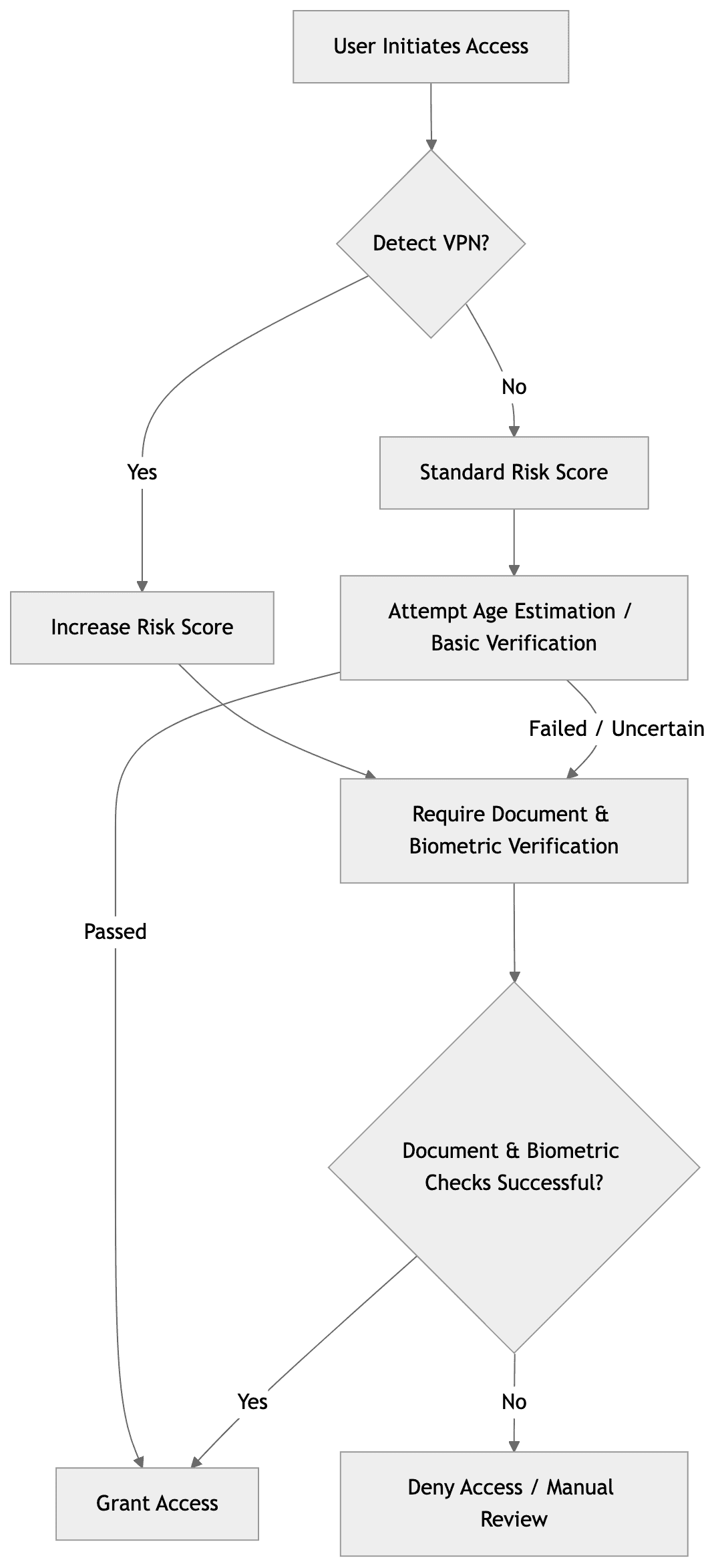
Implementasikan pendekatan berbasis risiko yang dinamis. Jika pengguna terdeteksi menggunakan VPN, skor risiko mereka meningkat, memicu langkah verifikasi usia yang lebih ketat. Ini bisa berarti meningkatkan dari estimasi usia ke pemeriksaan dokumen dan biometrik penuh. Pendekatan adaptif ini memastikan keseimbangan antara pengalaman pengguna dan kepatuhan.
Tantangan dan Solusi Implementasi
Mengimplementasikan sistem verifikasi usia di Inggris yang andal yang memperhitungkan VPN menghadirkan beberapa tantangan:
Pengalaman Pengguna vs. Keamanan
Proses verifikasi yang terlalu rumit dapat menyebabkan tingkat pengabaian yang tinggi. Solusi harus dirancang seminimal mungkin gesekannya sambil menjaga keamanan. Inferensi sub-2 detik Didit bertujuan untuk menyeimbangkan kebutuhan ini.
Biaya dan Skalabilitas
Solusi verifikasi usia tradisional bisa mahal. Bisnis membutuhkan opsi yang hemat biaya dan skalabel. Didit menawarkan model bayar per penggunaan dengan harga kompetitif, termasuk bundel KYC inti (ID + Kehidupan Pasif + Pencocokan Wajah + IP) seharga $0,33, dan 500 pemeriksaan gratis per bulan.
Kepatuhan Regulasi
Tetap mengikuti regulasi yang berkembang seperti AADC dan OSA sangat penting. Memilih penyedia verifikasi yang selaras dengan standar ini, seperti Didit dengan sertifikasi SOC 2 Type II dan ISO 27001, dapat menyederhanakan upaya kepatuhan.
| Metode Verifikasi Usia | Efektivitas Terhadap VPN | Gesekan Pengguna | Modul Didit |
|---|---|---|---|
| Analisis IP | Rendah (VPN menyamarkan IP) | Sangat Rendah | Analisis IP ($0.03) |
| Estimasi Usia | Sedang (Biometrik) | Rendah | Estimasi Usia ($0.10) |
| Verifikasi Dokumen | Tinggi (ID Fisik) | Sedang | Verifikasi ID ($0.15) |
| Kehidupan Pasif | Tinggi (Biometrik) | Rendah | Kehidupan Pasif ($0.10) |
| Pencocokan Wajah 1:1 | Tinggi (Biometrik) | Rendah | Pencocokan Wajah 1:1 ($0.05) |
| Pembacaan Chip NFC | Sangat Tinggi (Kriptografi) | Sedang | NFC ($0.15) |
Alur KYC inti Didit (ID + Kehidupan Pasif + Pencocokan Wajah + IP) hanya berharga $0,33 per verifikasi setelah tingkatan gratis, membuat verifikasi usia yang andal dapat diakses.
Bagaimana Didit Membantu dengan Verifikasi Usia Inggris dan Penggunaan VPN
Didit menyediakan serangkaian alat yang dirancang untuk mengatasi kompleksitas verifikasi usia di Inggris, termasuk tantangan yang ditimbulkan oleh VPN.
- Verifikasi Modular: Platform kami menawarkan berbagai modul, termasuk verifikasi ID, kehidupan pasif dan aktif, pencocokan wajah, dan estimasi usia. Ini memungkinkan bisnis untuk membangun alur kerja yang disesuaikan yang menggabungkan beberapa pemeriksaan, mengurangi ketergantungan pada IP saja.
- Orkestrator Alur Kerja: Orkestrator Alur Kerja tanpa kode memungkinkan jalur verifikasi dinamis. Misalnya, jika analisis IP mendeteksi potensi VPN, sistem dapat secara otomatis meningkatkan ke pemeriksaan dokumen dan biometrik penuh.
- Cakupan Global: Mendukung 14.000+ jenis dokumen dari 220+ negara memastikan bahwa meskipun VPN menyamarkan lokasi pengguna, dokumen identitas asli mereka masih dapat diverifikasi.
- Hemat Biaya dan Skalabel: Dengan harga bayar per penggunaan dan 500 pemeriksaan KYC inti gratis per bulan, Didit membuat verifikasi usia canggih dapat diakses oleh bisnis dari semua ukuran, tanpa biaya tersembunyi atau minimum.
- Penyelarasan Kepatuhan: Sertifikasi Didit (SOC 2 Type II, ISO 27001, iBeta Level 1 PAD) dan penyelarasan dengan kerangka kerja seperti GDPR dan eIDAS 2.0 membantu bisnis memenuhi persyaratan regulasi yang ketat.
Siap untuk Memulai?
Menavigasi verifikasi usia di Inggris dengan kompleksitas tambahan penggunaan VPN memerlukan pendekatan strategis dan berteknologi maju. Dengan menggabungkan beberapa metode verifikasi dan memanfaatkan orkestrasi alur kerja yang cerdas, bisnis dapat mencapai kepatuhan yang andal tanpa mengorbankan pengalaman pengguna.
FAQ
- Apa itu verifikasi usia di Inggris?
- Verifikasi usia di Inggris mengacu pada proses dan teknologi yang digunakan oleh bisnis untuk memverifikasi usia pengguna mereka, terutama untuk mencegah anak di bawah umur mengakses konten atau layanan yang dibatasi usia, sesuai dengan regulasi Inggris seperti AADC dan Online Safety Act yang akan datang.
- Bagaimana VPN memperumit verifikasi usia?
- VPN menyamarkan alamat IP asli pengguna, membuatnya tampak seolah-olah mereka berada di lokasi yang berbeda. Ini dapat melewati tindakan pemblokiran geografis dan menyulitkan bisnis untuk menentukan apakah pengguna mengakses konten dari yurisdiksi dengan persyaratan verifikasi usia tertentu.
- Apa dampak Online Safety Act terhadap verifikasi usia?
- Online Safety Act akan menempatkan kewajiban hukum pada penyedia layanan online untuk melindungi anak-anak dari konten berbahaya, kemungkinan memerlukan mekanisme verifikasi usia dan estimasi usia yang lebih ketat dan efektif untuk memastikan anak di bawah umur tidak dapat mengakses materi yang tidak sesuai usia.
- Bisakah saya hanya mengandalkan pemeriksaan IP untuk verifikasi usia di Inggris?
- Tidak, hanya mengandalkan pemeriksaan IP tidak cukup, terutama mengingat luasnya penggunaan VPN. Pendekatan berlapis yang menggabungkan verifikasi dokumen, pemeriksaan biometrik, dan sinyal penipuan lainnya diperlukan untuk kepatuhan yang andal.
- Bagaimana Didit membantu dengan tantangan verifikasi usia terkait VPN?
- Didit menawarkan alat verifikasi modular seperti verifikasi ID, deteksi kehidupan, dan estimasi usia, ditambah dengan Orkestrator Alur Kerja. Ini memungkinkan bisnis untuk membuat alur verifikasi dinamis yang dapat meningkatkan pemeriksaan jika penggunaan VPN dicurigai, memastikan verifikasi usia yang komprehensif.
Artikel terkait
- Kami memberi kecerdasan buatan tugas sederhana: mencoba membobol Didit
- Pahami Agen Anda: Mengapa Setiap Platform LLM Akan Membutuhkan Verifikasi Identitas (ID)
- Peringatan A7 Pertama Inggris Menjelaskan Jaringan untuk Lolos Verifikasi Identitas
- Kode Pedagang Empat Digit Menentukan Apakah Pembeli Memecoin Menghadapi KYC
- Korea Izinkan Bursa Kripto Gunakan Catatan Pemerintah untuk KYC
- Usulan FinCEN untuk Banque Misr dan 103 Perusahaan Depan