
Real-Time Transaction Monitoring: A Developer's Guide
Learn how to build robust real-time transaction monitoring systems for fraud detection and AML compliance. This guide covers architectures, technologies like Kafka and Flink, and key design considerations.
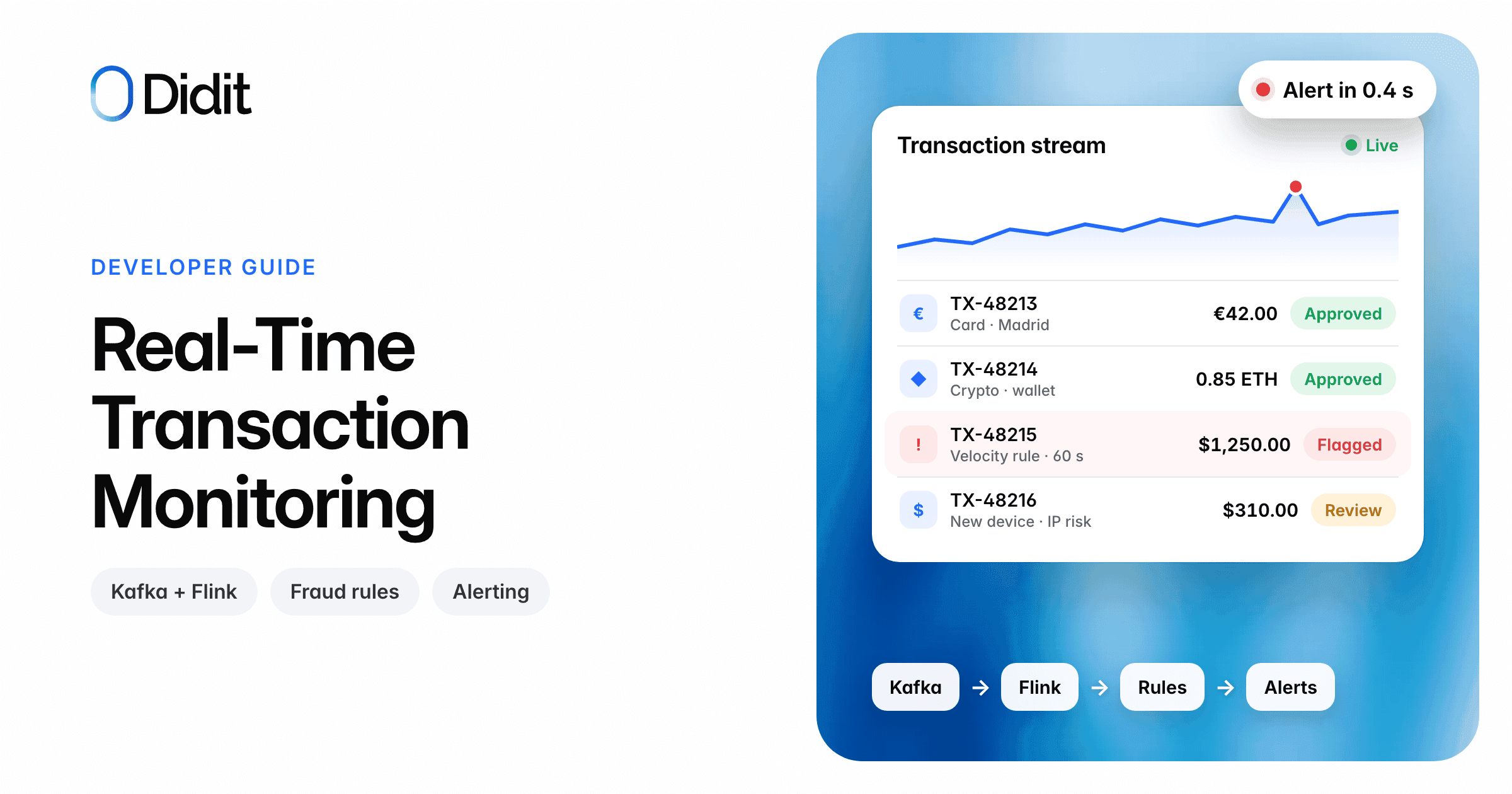
Real-Time Transaction Monitoring: A Developer's Guide
In today’s fast-paced digital world, fraud is an ever-present threat. Traditional batch processing methods for fraud detection are no longer sufficient. The need for real-time transaction monitoring has become paramount. This guide provides a deep dive into building these systems, focusing on the architectural considerations, technologies like Apache Kafka and Apache Flink, and essential best practices for developers.
Key Takeaway 1: Real-time transaction monitoring is crucial for preventing fraud and ensuring compliance in modern financial systems.
Key Takeaway 2: Streaming data pipelines built with Kafka and Flink offer the scalability and low latency required for effective real-time monitoring.
Key Takeaway 3: Feature engineering and model selection are critical components of a successful real-time fraud detection system.
Key Takeaway 4: Observability and alerting are key to maintaining the health and effectiveness of your monitoring system.
The Need for Speed: Why Real-Time Matters
Traditional fraud detection systems often rely on overnight batch processing. By the time a fraudulent transaction is flagged, the damage is already done. Real-time transaction monitoring identifies and prevents fraudulent activities as they occur. This proactive approach minimizes losses and protects both businesses and customers. Key benefits include:
- Reduced financial losses
- Improved customer trust
- Enhanced regulatory compliance (AML/KYC)
- Faster response times to emerging threats
Consider a scenario where a user’s credit card is compromised. A batch processing system might not detect the fraudulent charge until the next day. A real-time system, however, can identify the suspicious transaction within seconds, blocking it before it’s processed.
Building the Pipeline: Kafka and Flink for Streaming Data
At the heart of any robust real-time transaction monitoring system lies a scalable and reliable streaming data pipeline. Apache Kafka and Apache Flink are powerful tools for building such pipelines.
Kafka: The Distributed Streaming Platform
Apache Kafka acts as a central nervous system, ingesting, storing, and distributing transaction data in real-time. Its distributed architecture ensures high availability and fault tolerance. Key features include:
- High throughput
- Scalability
- Fault tolerance
- Data persistence
Transactions are published to Kafka topics, which can be consumed by multiple applications. A typical Kafka topic schema for transactions might include:
{
  "transaction_id": "string",
  "user_id": "string",
  "amount": "float",
  "currency": "string",
  "timestamp": "long",
  "merchant_id": "string",
  "location": {
    "latitude": "float",
    "longitude": "float"
  }
}
Flink: The Stream Processing Engine
Apache Flink is a powerful stream processing engine that enables complex event processing (CEP) and real-time analytics. It can consume data from Kafka, perform transformations, and trigger actions based on predefined rules. Flink’s key capabilities include:
- Low latency processing
- Exactly-once semantics
- Stateful stream processing
- Windowing and aggregation
Example Flink code snippet for a simple fraud detection rule (pseudocode):
DataStream<Transaction> transactions = env.addSource(new FlinkKafkaConsumer<>());

transactions
  .keyBy(Transaction::getUserId)
  .window(TumblingEventTimeWindows.of(Time.seconds(60)))
  .sum("amount")
  .filter(sum > 1000) // Flag transactions exceeding $1000 in a minute
  .addSink(new AlertSink());
Feature Engineering and Model Selection
Effective real-time transaction monitoring isn’t just about speed; it's about intelligence. Feature engineering involves extracting meaningful signals from transaction data. These features are then used to train machine learning models for fraud detection.
Common features include:
- Transaction amount
- Transaction frequency
- Location mismatch (user’s typical location vs. transaction location)
- Time of day
- Merchant category
Model selection depends on the specific use case and data characteristics. Popular algorithms include:
- Logistic Regression
- Decision Trees
- Random Forests
- Gradient Boosting Machines
- Neural Networks
Observability and Alerting
A real-time transaction monitoring system is only as good as its observability. Monitoring key metrics – such as transaction throughput, latency, and fraud detection rate – is crucial for identifying and resolving issues quickly. Effective alerting mechanisms ensure that anomalies are flagged immediately. Tools like Prometheus, Grafana, and Elasticsearch can be used for monitoring and visualization.
Teams can evaluate RawTree to query JSON event data with SQL and investigate patterns across transaction outcomes and operational logs.
How Didit Helps
Didit simplifies the process of building and deploying real-time transaction monitoring systems. Our platform offers:
- Pre-built fraud signals (IP address risk, device fingerprinting)
- Integration with Kafka and Flink
- Customizable workflows and rule engines
- Real-time AML screening
- Scalable infrastructure
By leveraging Didit, developers can focus on building innovative applications without having to worry about the complexities of building and maintaining a real-time fraud detection system from scratch.
Ready to Get Started?
Building a robust real-time transaction monitoring system requires careful planning and execution. By leveraging the right technologies and best practices, you can protect your business and customers from the ever-present threat of fraud.
Explore Didit’s identity platform and discover how we can help you build a more secure and compliant future: https://didit.me
View our pricing: https://didit.me/pricing
Now live on Didit: real-time transaction monitoring
Didit's Transaction Monitoring is now live — a real-time rule engine that scores every fiat or crypto transaction against 11 built-in rule bundles, opens alerts in a built-in case manager, and runs a full SAR workflow, at $0.02 per transaction with no minimums. Flagged transactions can pause on AWAITING_USER and auto-resume once the user clears them.
Read the Transaction Monitoring docs, see the product, check pricing, and start free — 500 free KYC checks every month.
Related articles
- Vietnam e-commerce law: KYB for sellers, livestreamers and affiliates
- Decree 320/2026: VNeID account verification for platforms in Vietnam
- Vietnam ID card verification: reading the CCCD chip with NFC
- MiCA regulation in 2026: the EU crypto compliance guide to 2028
- Companies House identity verification: Insolvency Service convictions
- Privacy coin regulation after FinCEN drops its mixing rule