Thibitisha barua pepe yoyote. Baini anwani bandia wakati wa kujisajili.
Baini anwani za barua pepe bandia, za muda mfupi, na zilizovunjwa kabla hazijafika kwenye hifadhidata yako. Simu moja inashughulikia sintaksia, uwasilishaji, akili ya mtoa huduma, na OTP ya tarakimu sita (nambari ya siri ya mara moja). $0.03 kwa kila ukaguzi, 500 bure/mwezi.
MX, inayoweza kutupwa, jukumu, na alama ya hatari.
Tunajaribu uwasilishaji moja kwa moja, tunaweka alama kwenye anwani za muda mfupi na za majukumu, na tunarudisha
alama ya hatari ambayo mtiririko wako wa kazi unaweza kutumia. $0.03 kwa kila ukaguzi.
Jinsi inavyofanya kazi
Kutoka kujisajili hadi mtumiaji aliyethibitishwa kwa hatua nne.
Hatua 01 / 04
01
Unda mtiririko wa kazi
Chagua ukaguzi unaotaka, ID, uhai, kulinganisha uso, vikwazo, anwani, umri, simu, barua pepe, maswali maalum. Ziburute kwenye mtiririko katika dashibodi, au tuma mtiririko huo huo kwenye API yetu. Gawanya kwa masharti, fanya majaribio ya A/B, hakuna msimbo unaohitajika.
Unganisha
Pachika asili na SDK yetu ya Web, iOS, Android, React Native, au Flutter. Elekeza kwenye ukurasa uliopangishwa. Au tuma tu kiungo kwa mtumiaji wako, kwa barua pepe, SMS, WhatsApp, popote. Chagua kinachofaa stack yako.
Mtumiaji anapitia mtiririko
Didit inasimamia kamera, ishara za mwanga, uhamishaji wa simu, na ufikiaji. Wakati mtumiaji yuko kwenye mtiririko, tunapima ishara 200+ za udanganyifu kwa wakati halisi na kuthibitisha kila sehemu dhidi ya vyanzo vya data vya mamlaka. Matokeo yanapatikana chini ya sekunde mbili.
Unapokea matokeo
Webhooks zilizotiwa saini kwa wakati halisi huweka database yako sawa mara tu mtumiaji anapoidhinishwa, kukataliwa, au kutumwa kwa ukaguzi. Uliza API inapohitajika. Au fungua console kukagua kila kipindi, kila ishara, na kudhibiti kesi kwa njia yako.
Imejengwa kwa ajili ya waendelezaji · Imejengwa dhidi ya udanganyifu · Wazi kwa muundo
Uwezo sita. Feature flag moja. EMAIL_VERIFICATION.
Kila uwezo ni swichi kwenye moduli moja. Hakuna viwango vya kuongeza mauzo, hakuna mipango tofauti, hakuna simu za nyongeza. Viwashe kwa kila mtiririko wa kazi kwenye console au vipitishe papo hapo kwenye simu ya API.
Sintaksia, rekodi za barua, na uchunguzi wa moja kwa moja, kila simu.
Tunachambua sintaksia, tunatafuta rekodi za MX (mail exchange), na kufungua muunganisho kwa seva lengwa ili kuthibitisha anwani inafikiwa. Jibu linajumuisha boolean safi ambayo mtiririko wako wa kazi unaweza kutumia.
Mfumo wa Uwasilishajialex.sample@flytap.com
Sintaksia ya RFC 5322Sehemu ya ndani + kikoa kimechanganuliwa
Utafutaji wa MXRekodi 1 · 10 ms
Uchunguzi wa SMTP250 SAWA · inakubali barua
haiwezi_kuwasilishwafalse
02 · Akili ya mtoa huduma
Barua pepe za muda mfupi. Huduma za bure. Zikamata kabla hazijaingia.
Katalogi mpya ya huduma za kutupa (10minutemail, mailinator, guerrilla), watoa huduma huru (Gmail, Outlook, Yahoo, ProtonMail), na huduma zinazoibuka za kuficha. Kila lebo inalingana na kitendo cha kukataa, kukagua, au kuidhinisha unachorekebisha kwa kila programu.
03 · Mfiduo wa uvunjaji
Jua kama kikasha kimevujishwa. Kabla hujakitumia.
Kila anwani inakaguliwa dhidi ya database iliyokusanywa ya uvunjaji. Jibu linaorodhesha kila uvujaji ambao anwani inaonekana, jina, tarehe ya uvunjaji, aina za data zilizo wazi, ili timu yako ya kufuata sheria iwe na ushahidi wa kumbukumbu za AML (anti-money laundering).
04 · Uthibitisho wa OTP
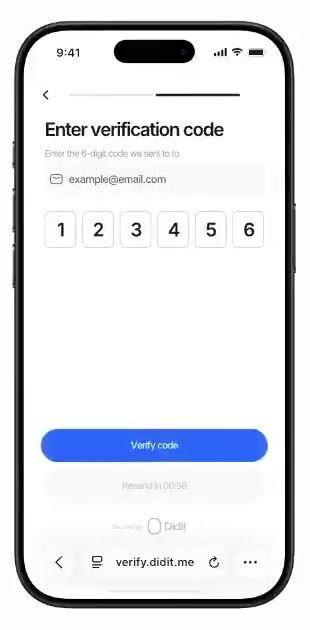
Nambari sita. Halali kwa dakika tano. Template iliyojanibishwa.
Tumia skrini yetu ya kuingia iliyopangishwa au fomu yako mwenyewe. Majaribio mawili kwa kila kipindi, kutuma tena mara mbili kwa saa 24, uhalali wa dakika tano, kila kikomo kinasimamiwa kwa ajili yako. Kiolezo kinajirekebisha kiotomatiki kwa lugha anayopendelea mtumiaji.
05 · Kupambana na matumizi mabaya
Kugundua zote. Kuchuja kulingana na jukumu. Marudio ya session tofauti.
Maonyo yanayoweza kusanidiwa yanaonyesha kila muundo wa matumizi mabaya: uliovunjwa, wa muda mfupi, uliorudiwa katika vipindi, au uliowekwa kwenye orodha nyeusi. Kukataa kiotomatiki mara mbili (majaribio mengi sana, anwani isiyoweza kuwasilishwa) kunabaki kutekelezwa bila kujali sera. Anwani za catch-all na za msingi wa majukumu zinanaswa kabla hata msimbo haujatumwa.
Sera ya hatariMaonyo 5 · Vitendo 3
EMAIL_CODE_ATTEMPTS_EXCEEDEDKataa kiotomatiki
EMAIL_IN_BLOCKLISTKataa kiotomatiki
DISPOSABLE_EMAIL_DETECTEDKataa
BREACHED_EMAIL_DETECTEDKagua
DUPLICATED_EMAILKagua
06 · Bei
$0.03 kwa ukaguzi. 500 bila malipo kila mwezi. Milele.
Bei sawa ya $0.03 kwenye mtiririko uliopangishwa na API inayojitegemea. Hakuna ada ya jukwaa, hakuna kiwango cha chini cha kila mwezi, hakuna mshangao wa ziada. Unganisha Uthibitishaji wa Barua Pepe kabla ya ukaguzi kamili wa KYC (know-your-customer) wa $0.33 ili kuchuja usajili usiofaa kabla hawajatumia mkopo.
MalipoUmma · kwa kila ukaguzi
Kwa kila ukaguzi
$0.03
Njia A au Njia B
Kiwango cha bure
500/mo
Milele, bila kadi
Hakuna kiwango cha chiniLipa kwa mafanikio
Inaunganisha na KYC+$0.33 kifurushi
Unganisha
Endpoints mbili. JSON sawa. Bei sawa.
Chagua mtiririko uliopangishwa unapotaka sisi tushughulikie uingizaji wa msimbo na kuuunganisha kwenye mtiririko mpana wa kazi. Chagua API inayojitegemea unapotaka kumiliki UI. Zote mbili zinarudisha ripoti sawa.
Bandika kizuizi hapa chini kwenye Claude Code, Cursor, Codex, Devin, Aider, au Replit Agent. Jaza stack yako. Agent itaweka Didit, itaunda workflow ya Uthibitishaji wa Barua Pepe, itaunganisha webhook, na kutuma.
didit-integration-prompt.md
# Didit Email Verification — integrate in 5 minutes

You are integrating Didit's Email Verification module into <my_stack>.
Follow these steps exactly. Every URL, header, and enum value below is
canonical — do not paraphrase or "improve" them. The module covers:
syntax validation, MX (Mail Exchange) lookup, SMTP (Simple Mail Transfer
Protocol) deliverability probe, disposable-provider detection,
free-provider detection, breach exposure lookup (HaveIBeenPwned-style),
catch-all + role-based anti-abuse signals, OTP (one-time password)
confirmation, and a configurable risk policy that can chain straight
into a Know Your Customer (KYC) (know your customer) workflow.

## 1. Provision an account
- Sign up: https://business.didit.me (no credit card required).
- Or provision programmatically: POST https://apx.didit.me/auth/v2/programmatic/register/
  (returns an API key bound to the workspace + application).

## 2. Two integration paths — pick one

### Path A — Workflow Builder (hosted UI)
Best when you want Didit to host the OTP entry screen, localize the
email template, handle resend cool-downs, and chain Email Verification
into a wider KYC / KYB workflow.

1. Create a workflow that contains the EMAIL_VERIFICATION feature:
   POST https://verification.didit.me/v3/workflows/
   Authorization header:  x-api-key: <your-api-key>
   Body: workflow_label, features array with the single entry
         { feature: "EMAIL_VERIFICATION" }   (UPPERCASE — strict enum)
   Optional config: per-warning action overrides (Decline / Review /
   Approve) for BREACHED_EMAIL_DETECTED, DISPOSABLE_EMAIL_DETECTED,
   DUPLICATED_EMAIL, and EMAIL_IN_BLOCKLIST.

2. Create a verification session for an end user:
   POST https://verification.didit.me/v3/session/
   Body: workflow_id (from step 1), vendor_data (your own user id),
   optional contact_details.email (pre-fills the OTP step).
   Response: url (the hosted verification link) — redirect the user to it.

3. Listen for webhook callbacks (see "Webhooks" below).

### Path B — Standalone server-to-server API
Best when you already own the OTP UI and just want Didit to send and
validate the code plus return the risk signals.

Two endpoints, both authenticated with x-api-key:

POST https://verification.didit.me/v3/email/send/
Body (application/json):
  - email        (required, string — RFC 5322 address)
  - language     (optional, ISO 639-1 code — picks the email template)
  - vendor_data  (optional string, your user id)
Returns: { reference_id }

POST https://verification.didit.me/v3/email/check/
Body (application/json):
  - reference_id (required, from /email/send/)
  - code         (required, 6-digit string the user typed)
Returns: the full email-verification report (see Section 4).

Use the same vendor_data on retries so cross-session matches work.

## 3. Webhooks (Path A only — Path B returns synchronously)
- Register a webhook destination once via
  POST https://verification.didit.me/v3/webhook/destinations/
  Body: url, subscribed_events: ["session.verified",
                                  "session.review_started",
                                  "session.declined"]
- Response includes secret_shared_key — store it.
- Every webhook delivery carries an X-Signature-V2 header you MUST verify
  before trusting the payload.  HMAC-SHA256 verification MUST run against the raw body bytes (the raw payload as Didit sent it) BEFORE any JSON parsing — re-serialising the parsed body changes whitespace and key order, which invalidates the signature.Algorithm:
    1. sortKeys(payload) recursively
    2. shortenFloats (truncate trailing zeros after the decimal point)
    3. JSON.stringify the result
    4. HMAC-SHA256 with the secret_shared_key
    5. Hex-encode, compare to the X-Signature-V2 header.

Two module-level event types fire alongside the session events above:
- EMAIL_VERIFICATION_MESSAGE_SENT — OTP was dispatched
- EMAIL_VERIFICATION_DECLINED      — verification finished with a
                                     Declined status (caller should
                                     surface the warning to the user)

## 4. Reading the report (both paths return the same shape)
The email object includes:
- status: "Approved" | "Declined" | "In Review" | "Not Finished"
- email: the address that was verified
- is_breached: boolean — true when the address appears in known breaches
- breaches: array of { name, domain, logo_path, breach_date,
                       description, is_verified, data_classes,
                       breach_emails_count }
- is_disposable: boolean — true for throwaway providers
- is_undeliverable: boolean — true when MX + SMTP probe failed
- verification_attempts: number — OTP attempts used (max 2)
- verified_at: ISO 8601 timestamp
- matches: array of cross-session hits, each carrying session_id,
           session_number, vendor_data, verification_date, email,
           status, is_blocklisted
- warnings: Array<{ risk, additional_data, log_type,
                    short_description, long_description }>

Auto-decline risks (always enforced by Didit, not configurable):
- EMAIL_CODE_ATTEMPTS_EXCEEDED
- EMAIL_IN_BLOCKLIST
- UNDELIVERABLE_EMAIL_DETECTED

Configurable risks (action per workflow — Decline, Review, or Approve):
- BREACHED_EMAIL_DETECTED       (exposure / breach intelligence)
- DISPOSABLE_EMAIL_DETECTED     (temporary / throwaway provider)
- DUPLICATED_EMAIL              (cross-session match on another user)

Anti-abuse limits (enforced server-side):
- Code Entry Attempts: max 2 tries to type the right OTP
- Code Resend Requests: max 2 resends per 24 hours
- Code Validity: 5 minutes from delivery

## 5. Chaining Email Verification into a KYC flow
EMAIL_VERIFICATION is a regular feature inside the Workflow Builder, so
it composes with any of the 25+ other modules. The canonical patterns:

- Cheap pre-filter: gate KYC behind Email Verification so disposable +
  breached + undeliverable signups never burn a $0.33 KYC bundle. Use a
  conditional branch — if status is Declined on email, skip
  OCR + LIVENESS + FACE_MATCH.
- Compliance log: keep Email Verification in the flow even when KYC is
  the primary check, so the verified email is timestamped and signed
  alongside the ID Verification report for Anti-Money Laundering (AML) (anti-money laundering)
  recordkeeping.
- Step-up auth: rerun Email Verification at a sensitive action (large
  withdrawal, password reset) using the same workflow + vendor_data
  for closed-loop continuity.

## 6. Hard rules — do not change
- Base URL for /v3/* endpoints is verification.didit.me (NOT apx.didit.me).
- Feature enum is UPPERCASE: EMAIL_VERIFICATION, OCR,
  LIVENESS, FACE_MATCH, AML, IP_ANALYSIS, PHONE_VERIFICATION.
- Auth header is x-api-key (lowercase, hyphenated).
- Webhook signature header is X-Signature-V2 (NOT X-Signature).
- Always verify webhook signatures before trusting payload data.
- Status casing matches exactly: "Approved", "Declined", "In Review",
  "Not Finished" (title-cased, space-separated).

## 7. Pricing reference (public)
- Email Verification: $0.03 per check (Path A or Path B).
- Bundled inside a full KYC workflow: same $0.03 add-on — the $0.33
  full-KYC bundle does not include EMAIL_VERIFICATION by default.
- 500 free checks every month, forever, on every account.

## 8. Verify your integration
- Sandbox starts on signup at https://business.didit.me — no separate flag.
- Test emails: deterministic synthetic addresses returned in sandbox
  (Approved by default; trigger Declined by sending the canonical
  disposable / breached test addresses listed in the docs).
- Switch to live: flip the application's environment toggle in console.

When in doubt: https://docs.didit.me/core-technology/email-verification/overview
Inatii kwa muundo
Fungua nchi mpya kwa kubofya mara moja. Tunafanya kazi ngumu.
Tunafungua kampuni tanzu za ndani, tunapata leseni, tunafanya majaribio ya kupenya, tunapata vyeti, na tunalingana na kila kanuni mpya. Ili kusafirisha uthibitishaji katika nchi mpya, geuza swichi. Nchi 220+ ziko hewani, zinakaguliwa na kupimwa kila robo mwaka, mtoa huduma pekee wa utambulisho ambaye serikali ya nchi mwanachama wa EU imemwita rasmi kuwa salama zaidi kuliko uthibitishaji wa ana kwa ana.
Kwa kila ukaguzi, bei sawa kwenye mtiririko wa hosted au API inayojitegemea.
500
Uthibitishaji wa barua pepe wa bure kila mwezi, milele, kwenye kila akaunti.
5 min
Uhalali wa nambari ya mara moja, kila kikomo kinasimamiwa kwa ajili yako.
6
Nambari za onyo zinazoweza kusanidiwa pamoja na kukataa kiotomatiki 3 zilizotekelezwa.
Ngazi tatu, orodha moja ya bei
Anza bure. Lipa kadri unavyotumia. Kuza hadi Enterprise.
Uthibitishaji 500 bila malipo kila mwezi, milele. Kisha lipa tu moduli inapofanya kazi. Mikataba maalum, uhifadhi wa data, na makubaliano ya kiwango cha huduma (SLAs) kwenye Enterprise.
Bure
$0/ mwezi · hakuna kadi
Kwa ajili ya kuunda, kujaribu, na watumiaji wako wa kwanza.
Kila kitu unachohitaji kuanzia:
Uthibitishaji kamili wa KYC 500 kila mwezi
Kitambulisho, uhai, kulinganisha uso, kifaa & IP
Ishara za udanganyifu 200+, orodha nyeusi, marudio
KYC inayoweza kutumika tena kwenye mtandao wa Didit
Mjenzi wa mtiririko wa kazi, usimamizi wa kesi, SDKs
Usaidizi wa AIAI agent ndani ya console, docs, na jumuiya.