

무료
$0/월 · 카드 정보 불필요
개발, 테스트 및 초기 사용자 확보에 적합합니다.
시작하는 데 필요한 모든 것:
- 매월 500건의 전체 KYC 인증
- 신분증, 라이브니스, 얼굴 매칭, 기기 및 IP 확인
- 200개 이상의 사기 신호, 차단 목록, 중복 확인
- Didit 네트워크 전반에서 KYC 재사용 가능
- 워크플로우 빌더, 케이스 관리, SDK
- AI 지원 콘솔 내 AI 에이전트, 문서, 커뮤니티.






전 세계 2,000개 이상의 기관에서 신뢰합니다.
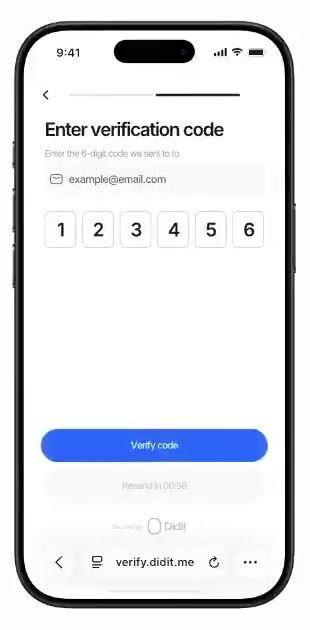
구문 검사를 넘어
실시간으로 이메일 전달 가능성을 테스트하고, 일회용 및 역할 기반 주소를 플래그하며, 워크플로우에 활용할 수 있는 위험 점수를 반환합니다. 건당 $0.03입니다.
ID, 본인 확인, 얼굴 매칭, 제재 목록, 주소, 연령, 전화번호, 이메일, 맞춤 질문 등 원하는 검사를 선택하세요. 대시보드에서 드래그 앤 드롭으로 플로우를 만들거나, 동일한 플로우를 API로 전송할 수 있습니다. 조건에 따라 분기하고 A/B 테스트를 실행할 수 있으며, 코드가 필요 없습니다.
$ curl -X POST https://verification.didit.me/v3/session/ \
  -H "x-api-key: $DIDIT_API_KEY" \
  -H "Content-Type: application/json" \
  -d '{
    "workflow_id": "wf_email_check",
    "vendor_data": "user-42"
}'{ "url": "verify.didit.me/..." }$ curl -X POST https://verification.didit.me/v3/email/check/ \
-H "x-api-key: $DIDIT_API_KEY" \
-H "Content-Type: application/json" \
-d '{
"reference_id": "ref_8a2c",
"code": "482913"
}'{ "status": "Approved", "is_breached": true }# Didit Email Verification — integrate in 5 minutes
You are integrating Didit's Email Verification module into <my_stack>.
Follow these steps exactly. Every URL, header, and enum value below is
canonical — do not paraphrase or "improve" them. The module covers:
syntax validation, MX (Mail Exchange) lookup, SMTP (Simple Mail Transfer
Protocol) deliverability probe, disposable-provider detection,
free-provider detection, breach exposure lookup (HaveIBeenPwned-style),
catch-all + role-based anti-abuse signals, OTP (one-time password)
confirmation, and a configurable risk policy that can chain straight
into a Know Your Customer (KYC) (know your customer) workflow.
## 1. Provision an account
- Sign up: https://business.didit.me (no credit card required).
- Or provision programmatically: POST https://apx.didit.me/auth/v2/programmatic/register/
(returns an API key bound to the workspace + application).
## 2. Two integration paths — pick one
### Path A — Workflow Builder (hosted UI)
Best when you want Didit to host the OTP entry screen, localize the
email template, handle resend cool-downs, and chain Email Verification
into a wider KYC / KYB workflow.
1. Create a workflow that contains the EMAIL_VERIFICATION feature:
POST https://verification.didit.me/v3/workflows/
Authorization header: x-api-key: <your-api-key>
Body: workflow_label, features array with the single entry
{ feature: "EMAIL_VERIFICATION" } (UPPERCASE — strict enum)
Optional config: per-warning action overrides (Decline / Review /
Approve) for BREACHED_EMAIL_DETECTED, DISPOSABLE_EMAIL_DETECTED,
DUPLICATED_EMAIL, and EMAIL_IN_BLOCKLIST.
2. Create a verification session for an end user:
POST https://verification.didit.me/v3/session/
Body: workflow_id (from step 1), vendor_data (your own user id),
optional contact_details.email (pre-fills the OTP step).
Response: url (the hosted verification link) — redirect the user to it.
3. Listen for webhook callbacks (see "Webhooks" below).
### Path B — Standalone server-to-server API
Best when you already own the OTP UI and just want Didit to send and
validate the code plus return the risk signals.
Two endpoints, both authenticated with x-api-key:
POST https://verification.didit.me/v3/email/send/
Body (application/json):
- email (required, string — RFC 5322 address)
- language (optional, ISO 639-1 code — picks the email template)
- vendor_data (optional string, your user id)
Returns: { reference_id }
POST https://verification.didit.me/v3/email/check/
Body (application/json):
- reference_id (required, from /email/send/)
- code (required, 6-digit string the user typed)
Returns: the full email-verification report (see Section 4).
Use the same vendor_data on retries so cross-session matches work.
## 3. Webhooks (Path A only — Path B returns synchronously)
- Register a webhook destination once via
POST https://verification.didit.me/v3/webhook/destinations/
Body: url, subscribed_events: ["session.verified",
"session.review_started",
"session.declined"]
- Response includes secret_shared_key — store it.
- Every webhook delivery carries an X-Signature-V2 header you MUST verify
before trusting the payload. HMAC-SHA256 verification MUST run against the raw body bytes (the raw payload as Didit sent it) BEFORE any JSON parsing — re-serialising the parsed body changes whitespace and key order, which invalidates the signature.Algorithm:
1. sortKeys(payload) recursively
2. shortenFloats (truncate trailing zeros after the decimal point)
3. JSON.stringify the result
4. HMAC-SHA256 with the secret_shared_key
5. Hex-encode, compare to the X-Signature-V2 header.
Two module-level event types fire alongside the session events above:
- EMAIL_VERIFICATION_MESSAGE_SENT — OTP was dispatched
- EMAIL_VERIFICATION_DECLINED — verification finished with a
Declined status (caller should
surface the warning to the user)
## 4. Reading the report (both paths return the same shape)
The email object includes:
- status: "Approved" | "Declined" | "In Review" | "Not Finished"
- email: the address that was verified
- is_breached: boolean — true when the address appears in known breaches
- breaches: array of { name, domain, logo_path, breach_date,
description, is_verified, data_classes,
breach_emails_count }
- is_disposable: boolean — true for throwaway providers
- is_undeliverable: boolean — true when MX + SMTP probe failed
- verification_attempts: number — OTP attempts used (max 2)
- verified_at: ISO 8601 timestamp
- matches: array of cross-session hits, each carrying session_id,
session_number, vendor_data, verification_date, email,
status, is_blocklisted
- warnings: Array<{ risk, additional_data, log_type,
short_description, long_description }>
Auto-decline risks (always enforced by Didit, not configurable):
- EMAIL_CODE_ATTEMPTS_EXCEEDED
- EMAIL_IN_BLOCKLIST
- UNDELIVERABLE_EMAIL_DETECTED
Configurable risks (action per workflow — Decline, Review, or Approve):
- BREACHED_EMAIL_DETECTED (exposure / breach intelligence)
- DISPOSABLE_EMAIL_DETECTED (temporary / throwaway provider)
- DUPLICATED_EMAIL (cross-session match on another user)
Anti-abuse limits (enforced server-side):
- Code Entry Attempts: max 2 tries to type the right OTP
- Code Resend Requests: max 2 resends per 24 hours
- Code Validity: 5 minutes from delivery
## 5. Chaining Email Verification into a KYC flow
EMAIL_VERIFICATION is a regular feature inside the Workflow Builder, so
it composes with any of the 25+ other modules. The canonical patterns:
- Cheap pre-filter: gate KYC behind Email Verification so disposable +
breached + undeliverable signups never burn a $0.33 KYC bundle. Use a
conditional branch — if status is Declined on email, skip
OCR + LIVENESS + FACE_MATCH.
- Compliance log: keep Email Verification in the flow even when KYC is
the primary check, so the verified email is timestamped and signed
alongside the ID Verification report for Anti-Money Laundering (AML) (anti-money laundering)
recordkeeping.
- Step-up auth: rerun Email Verification at a sensitive action (large
withdrawal, password reset) using the same workflow + vendor_data
for closed-loop continuity.
## 6. Hard rules — do not change
- Base URL for /v3/* endpoints is verification.didit.me (NOT apx.didit.me).
- Feature enum is UPPERCASE: EMAIL_VERIFICATION, OCR,
LIVENESS, FACE_MATCH, AML, IP_ANALYSIS, PHONE_VERIFICATION.
- Auth header is x-api-key (lowercase, hyphenated).
- Webhook signature header is X-Signature-V2 (NOT X-Signature).
- Always verify webhook signatures before trusting payload data.
- Status casing matches exactly: "Approved", "Declined", "In Review",
"Not Finished" (title-cased, space-separated).
## 7. Pricing reference (public)
- Email Verification: $0.03 per check (Path A or Path B).
- Bundled inside a full KYC workflow: same $0.03 add-on — the $0.33
full-KYC bundle does not include EMAIL_VERIFICATION by default.
- 500 free checks every month, forever, on every account.
## 8. Verify your integration
- Sandbox starts on signup at https://business.didit.me — no separate flag.
- Test emails: deterministic synthetic addresses returned in sandbox
(Approved by default; trigger Declined by sending the canonical
disposable / breached test addresses listed in the docs).
- Switch to live: flip the application's environment toggle in console.
When in doubt: https://docs.didit.me/core-technology/email-verification/overview





개발, 테스트 및 초기 사용자 확보에 적합합니다.
25개 이상의 모듈, 투명한 가격 정책. 자동 볼륨 할인.
대규모 볼륨 및 규제 프로그램에 적합합니다.
사용량이 증가하면 볼륨 할인이 자동으로 적용됩니다. 협상이나 영업팀과의 통화가 필요 없습니다.
Didit은 신원 및 사기 방지 인프라입니다. 저희가 직접 제품을 개발할 때 있었으면 하고 바랐던 플랫폼이죠. 개방적이고 유연하며 개발자 친화적이어서, 단순히 통합해야 하는 블랙박스가 아니라 스택의 실제 구성 요소처럼 작동합니다.
하나의 API로 개인 확인(KYC, 고객 알기), 기업 확인(KYB, 사업체 알기), 암호화폐 지갑 심사(KYT, 거래 알기), 실시간 거래 모니터링을 모두 처리하며, 다음과 같은 스택을 기반으로 구축되었습니다:
기반 기술: 48개 이상의 언어로 된 14,000개 이상의 문서 유형, 1,000개 이상의 데이터 소스, 모든 세션에서 200개 이상의 사기 신호를 분석합니다. Didit 인프라는 모든 세션에서 동적으로 학습하며 매일 발전합니다.
is_disposable, is_breached, is_undeliverable)과 warnings 배열 아래에 유형화된 경고로 표시됩니다.status (Approved, Declined, In Review, Not Finished), 확인된 email, is_breached, breaches 배열 (각 항목: name, domain, logo_path, breach_date, description, is_verified, data_classes, breach_emails_count), is_disposable, is_undeliverable, verification_attempts, verified_at (ISO 8601), session_id / vendor_data / verification_date / is_blocklisted를 포함하는 교차 세션 일치 matches 배열, 그리고 warnings 배열 (각 항목: risk, additional_data, log_type, short_description, long_description)을 포함하는 email 객체입니다. Path A (워크플로우)와 Path B (독립형) 모두 동일한 형태를 가집니다.전체 본인 인증 과정은 보통 30초 이내에 완료됩니다. 신분증을 들고, 서류를 촬영하고, 셀카를 찍으면 끝입니다. 이는 시장에서 가장 빠른 속도입니다. 기존 KYC 제공업체들은 동일한 과정에 보통 90초 이상 소요됩니다.
백엔드에서는 사용자가 셀카 촬영을 마친 시점부터 웹훅이 실행되는 시점까지, Didit은 p99 기준으로 2초 이내에 결과를 반환합니다. 모바일 캡처는 느린 휴대폰과 느린 네트워크 환경에 최적화되어 있습니다. 점진적 이미지 압축, 지연 로딩되는 SDK, 그리고 사용자가 웹에서 시작할 경우 QR 코드를 통해 데스크톱에서 휴대폰으로 한 번의 탭으로 전환하는 기능을 제공합니다.
EMAIL_CODE_ATTEMPTS_EXCEEDED, EMAIL_IN_BLOCKLIST, UNDELIVERABLE_EMAIL_DETECTED에 대한 강력한 자동 거부, 서버 측에서 무조건 적용됩니다. (2) BREACHED_EMAIL_DETECTED, DISPOSABLE_EMAIL_DETECTED, DUPLICATED_EMAIL에 대한 구성 가능한 거부/검토/승인. (3) SMTP 프로브 내의 포괄적 및 역할 기반 감지, OTP 전송 전에 플래그 지정됩니다. (4) 재전송 속도 제한은 24시간당 2회, 코드 입력 시도 제한은 세션당 2회, 둘 다 세션별로 적용됩니다. (5) 다른 vendor_data에서 재사용된 동일한 이메일을 표시하는 교차 세션 matches 배열을 통해 중복 계정 농장을 숨길 수 없습니다.모든 세션은 7가지 명확한 상태 중 하나로 귀결되므로, 개발자님의 코드는 항상 무엇을 해야 할지 알 수 있습니다:
Approved, 모든 검사를 통과했습니다. 사용자를 다음 단계로 진행시키세요.Declined, 하나 이상의 검사가 실패했습니다. 전체 과정을 다시 실행하지 않고도 사용자가 특정 실패 단계를 재시도하도록 허용할 수 있습니다(예: 셀카 다시 촬영).In Review, 규정 준수 검토를 위해 플래그가 지정되었습니다. 콘솔에서 케이스를 열고 모든 신호를 확인한 후 승인 또는 거부를 결정하세요.In Progress, 사용자가 현재 진행 중입니다.Not Started, 링크가 전송되었지만 사용자가 아직 열지 않았습니다. 너무 오래 방치되면 알림을 보내세요.Abandoned, 사용자가 링크를 열었지만 제시간에 완료하지 못했습니다. 다시 참여시키거나 만료시키세요.Expired, 세션 링크가 만료되었습니다. 새 세션을 생성하세요.모든 상태 변경 시 서명된 웹훅이 실행되므로 데이터베이스는 항상 동기화 상태를 유지합니다. 중단되거나 거부된 세션은 무료입니다.
프로덕션 데이터는 기본적으로 유럽 연합의 Amazon Web Services에 처리 및 저장됩니다. 규제 당국이 요구하는 관할권의 경우, 엔터프라이즈 계약을 통해 대체 지역을 요청할 수 있습니다.
모든 곳에서 암호화됩니다. 모든 데이터베이스, 객체 스토어, 백업에서 AES-256 암호화가 적용됩니다. 모든 API 호출, 웹훅, 비즈니스 콘솔 세션에서 전송 계층 보안 1.3이 사용됩니다. 생체 인식 데이터는 별도의 고객 마스터 키로 암호화됩니다.
데이터 보존은 고객이 제어합니다. 기본 보존 기간은 무기한(무제한)이며, 애플리케이션별로 30일에서 10년 사이로 더 짧게 구성할 수 있습니다. 또한 대시보드 또는 API를 통해 언제든지 개별 세션을 삭제할 수 있습니다.
인증 내역: SOC 2 Type 1 & Type 2, ISO/IEC 27001:2022, iBeta Level 1 PAD, 그리고 Didit의 원격 신원 확인이 대면 확인보다 안전하다는 스페인 Tesoro / SEPBLAC / CNMV의 공식 인증이 있습니다. 전체 보고서는 /security-compliance에서 확인할 수 있습니다.
Didit은 신원 확인 인프라에 중요한 규제 기관의 규정을 기본적으로 준수합니다.
자세한 메모, 모든 인증서, 모든 규제 기관 서한은 /security-compliance에서 확인하실 수 있습니다.
세 가지 통합 경로 중 스택에 맞는 것을 선택하세요.
세 가지 모두 동일한 대시보드, 동일한 청구, 성공당 동일한 가격이 적용됩니다. 단계별 가이드는 docs.didit.me/integration/integration-prompt에서 확인하세요.