Resources
Latest from the Didit blog.
Learn how to verify people and prevent fraud. Start free. The Didit blog publishes dated guides on identity verification, anti-money laundering, fraud and compliance, written by the Didit team. It also covers product news and country guides.

Google Play Age Signals and Apple's Declared Age Range API side by side: ranges, tiers, nulls, automatic sharing and terms, plus one age state for your backend and when to add your own check.
Alberto RosasNov 22, 2026Play Age Signals API integration guide: v0.0.6 for Android apps
The three calls of Play Age Signals 0.0.6 in Kotlin, a decision table for every status, tier and bound, errors, migration from 0.0.3 and 0.0.4, testing, and how to start your own age check.
Alberto RosasNov 22, 2026Age verification API: which one works on apps, web and stores
Five kinds of age verification API and where each one answers: Play apps, App Store apps, sideloads, web and desktop. With the selfie call, the hosted session, webhook checks, cost and data.
Alberto RosasNov 22, 2026Age assurance for apps: games, social, dating, AI and more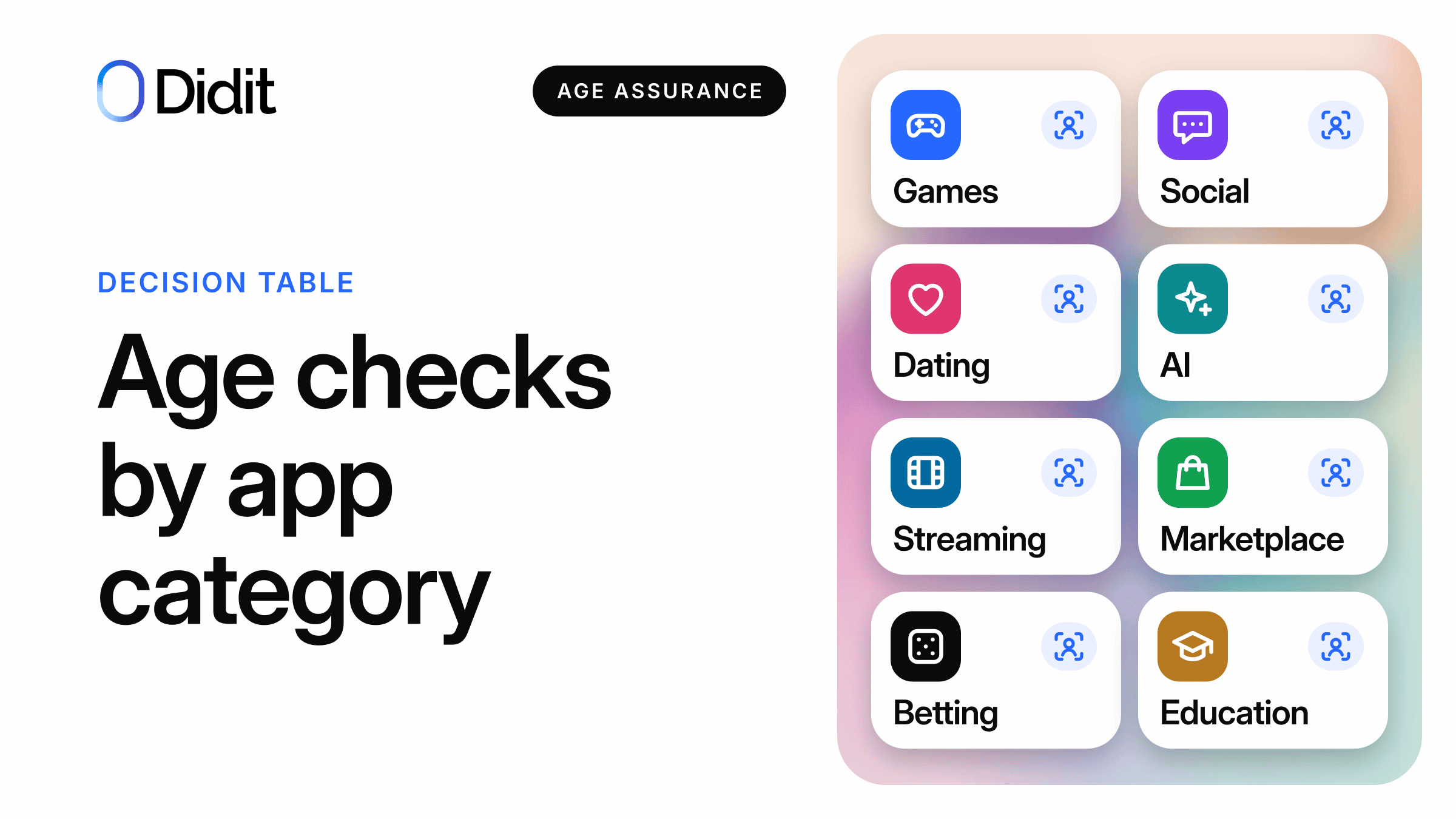
One decision table for product owners: what each app category has to do about age in the US, Brazil, Australia and the EU, when the store signal is enough, which feature to gate and which check to add.
Alberto RosasNov 22, 2026App Store Accountability Acts: Texas, Utah, Louisiana, Alabama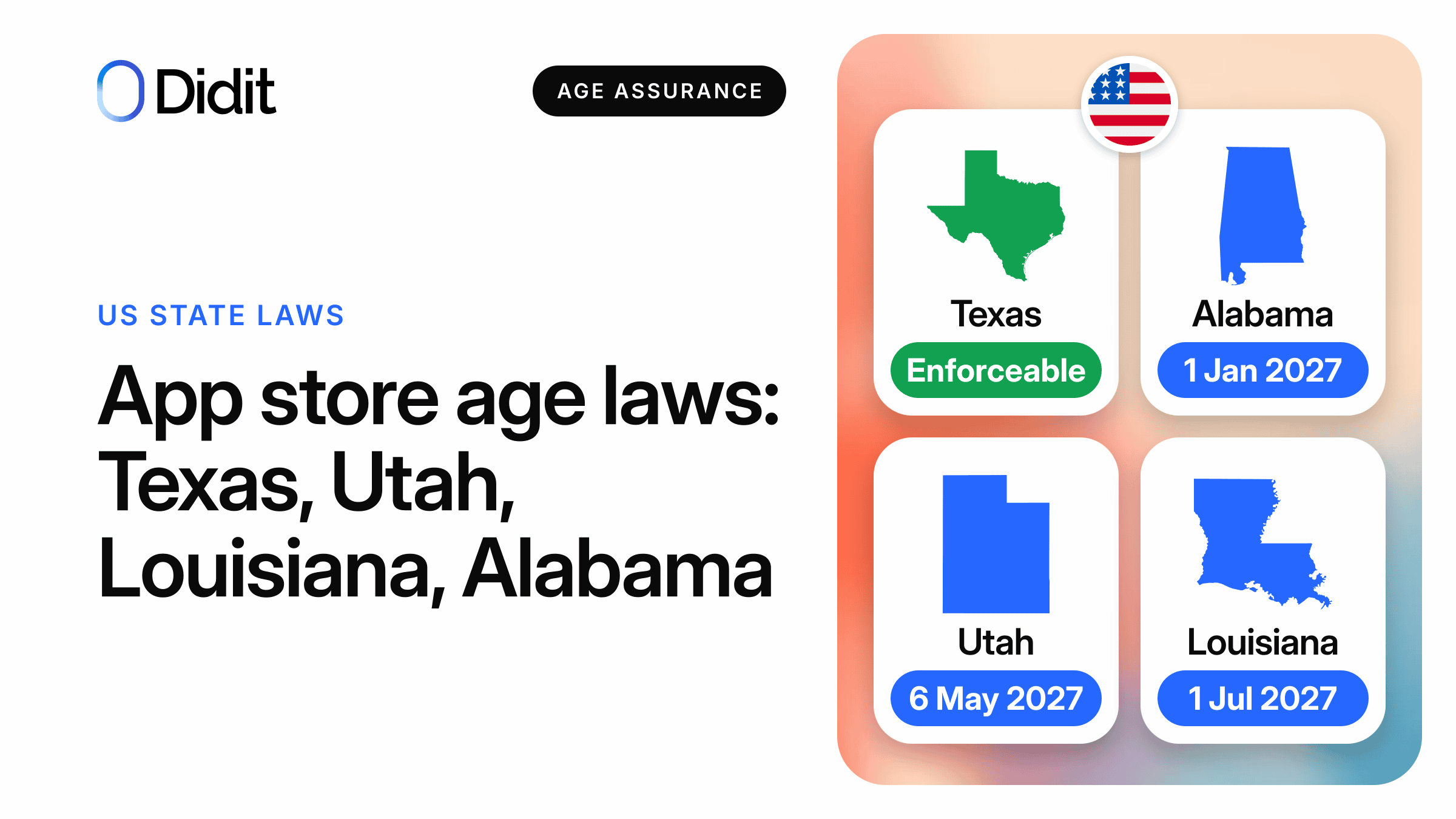
The four App Store Accountability Acts in one developer table: dates that count today, who verifies age, your duties, which age wins when yours differs, penalties, and what Google Play and Apple say per state.
Alberto RosasNov 22, 2026California age verification law 2027: the four rules for apps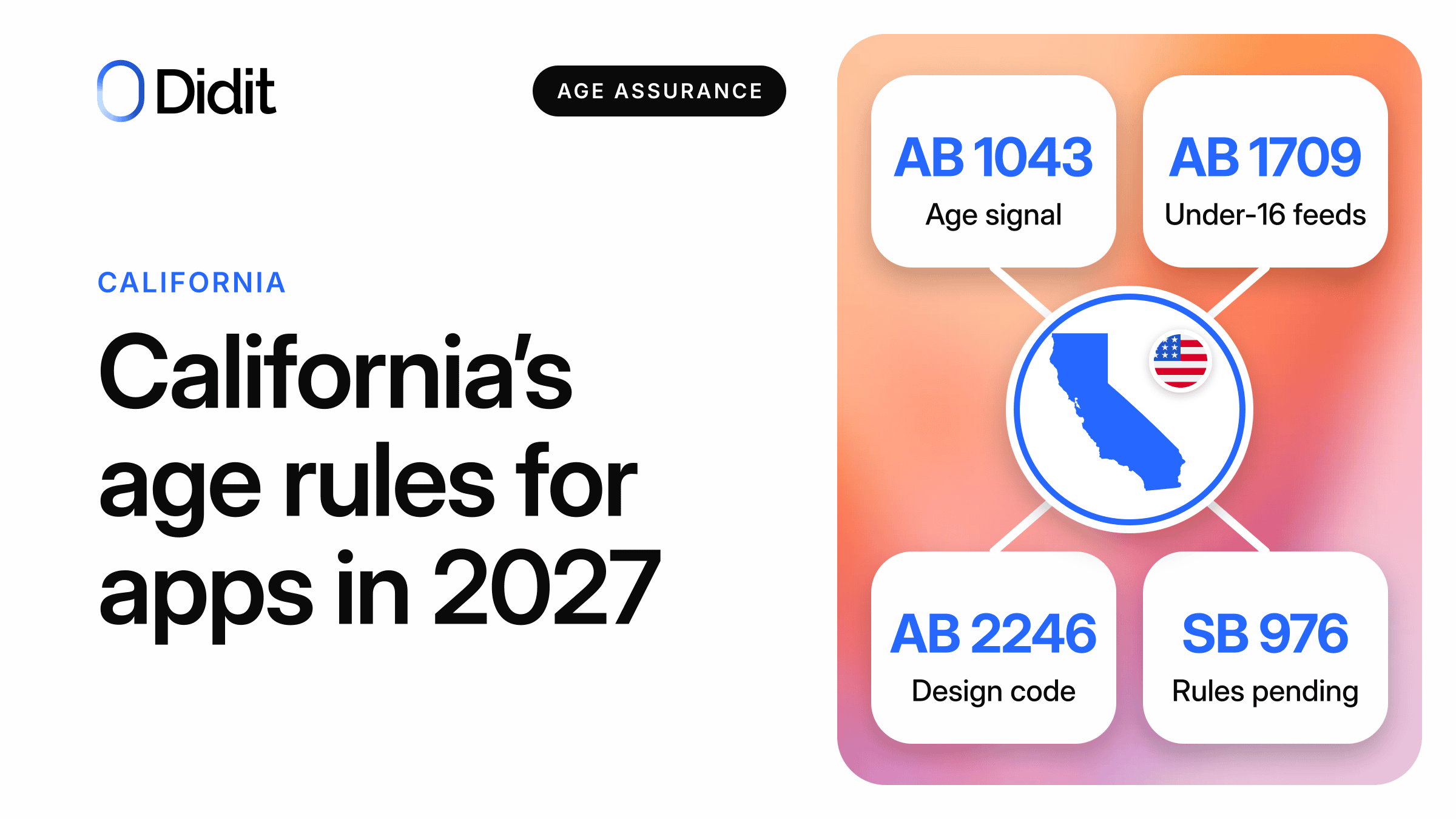
Four California laws, one declared age signal. What apps, games and feeds must do from 1 January and 1 July 2027, where AB 1709 allows your own age determination, and when no extra check is needed.
Alberto RosasNov 22, 2026No age signal? What to do on NOT_SHARED, TIER_A or no answer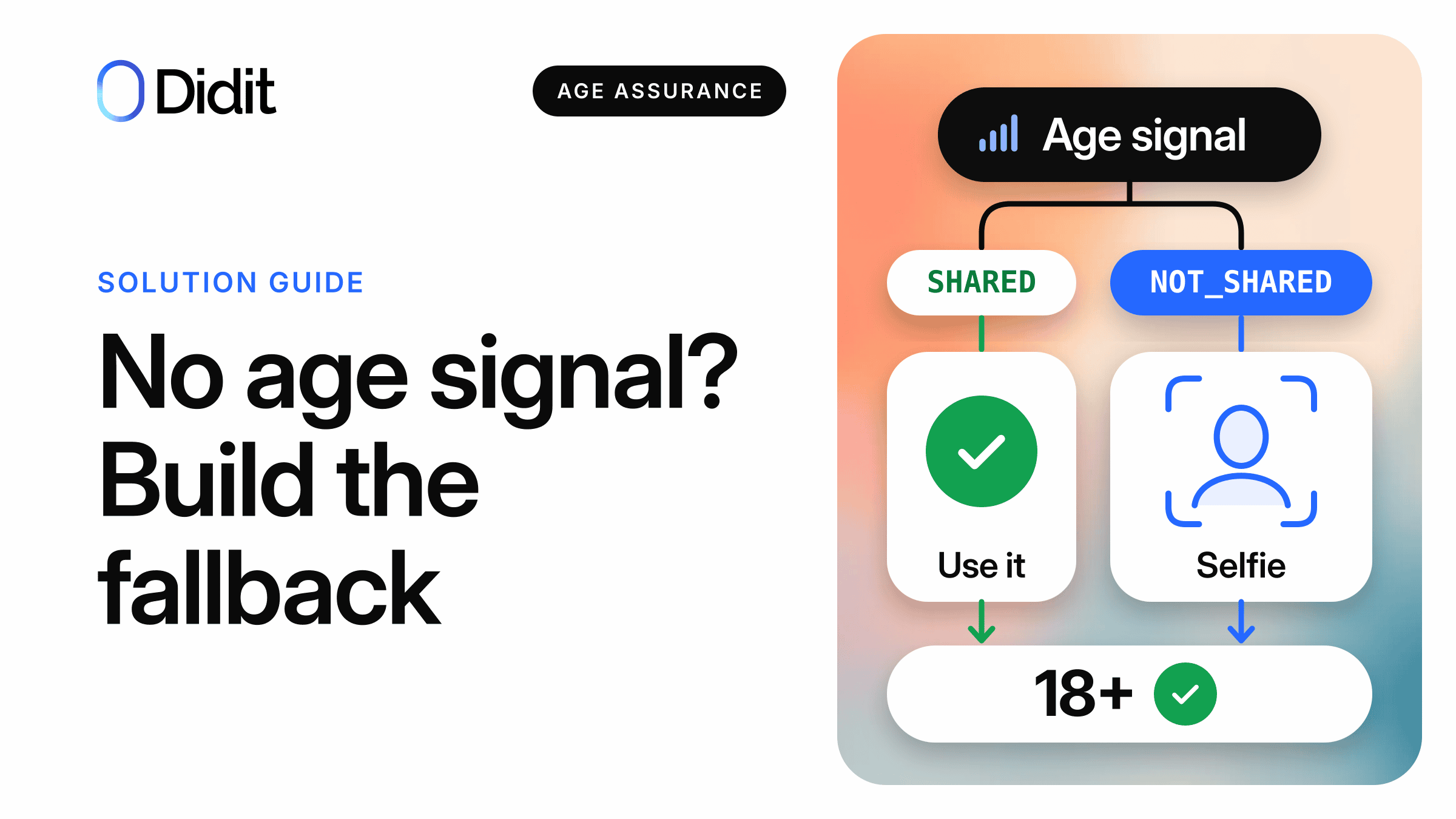
What to build when Google Play gives no usable age: safe defaults, a selfie age estimate with a buffer, a document only in the band, which age wins when they differ, and the cost of each branch.
Alberto RosasNov 22, 2026Google Play Age Signals API: what changes in January 2027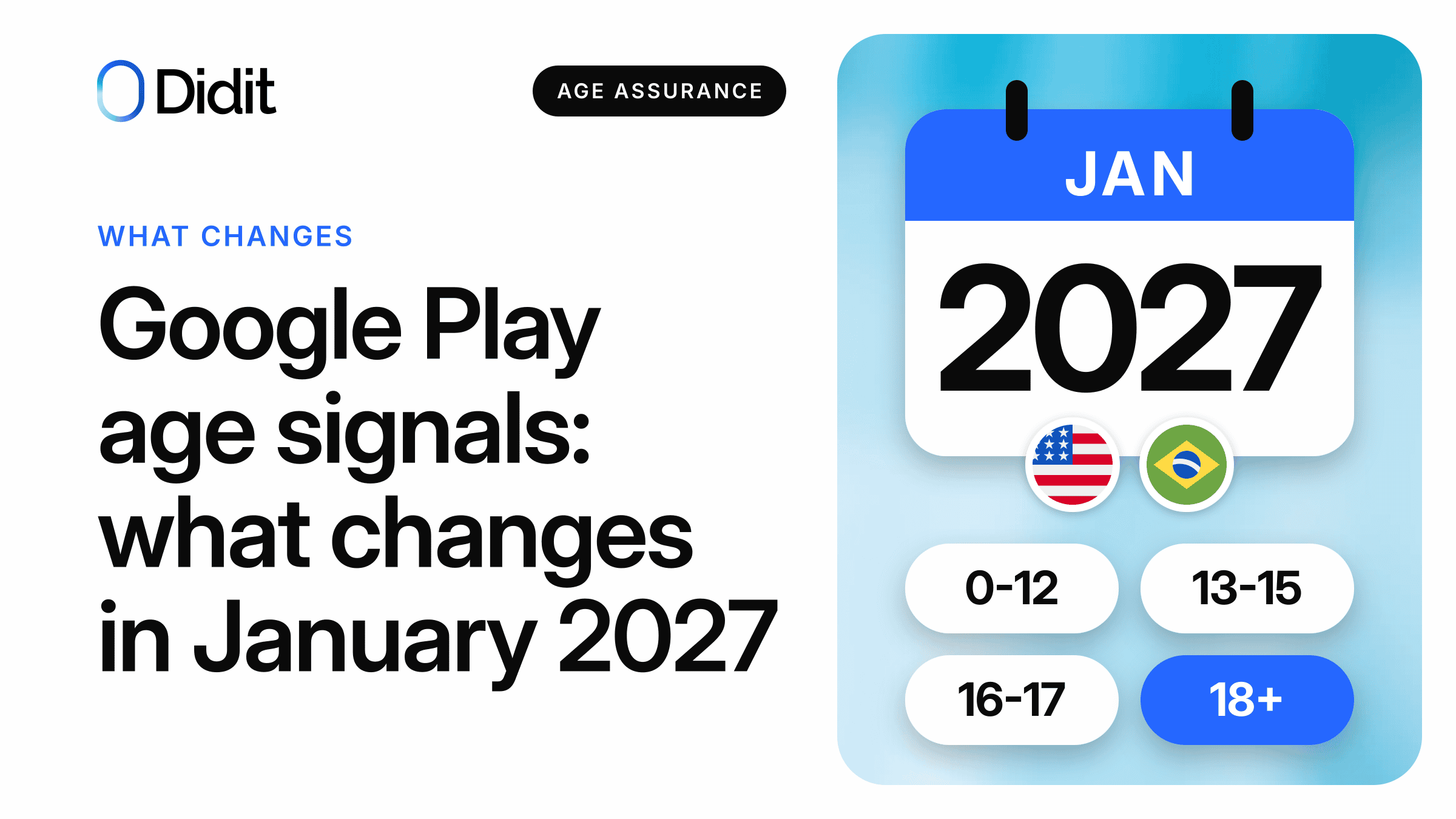
What Google's email on the Play Age Signals API says and does not say: which users are covered, what your app receives, when the signal is enough, and a 30-day plan before 1 January 2027.
Alberto RosasNov 22, 2026Brazil's ECA Digital and Google Play: age signals in your app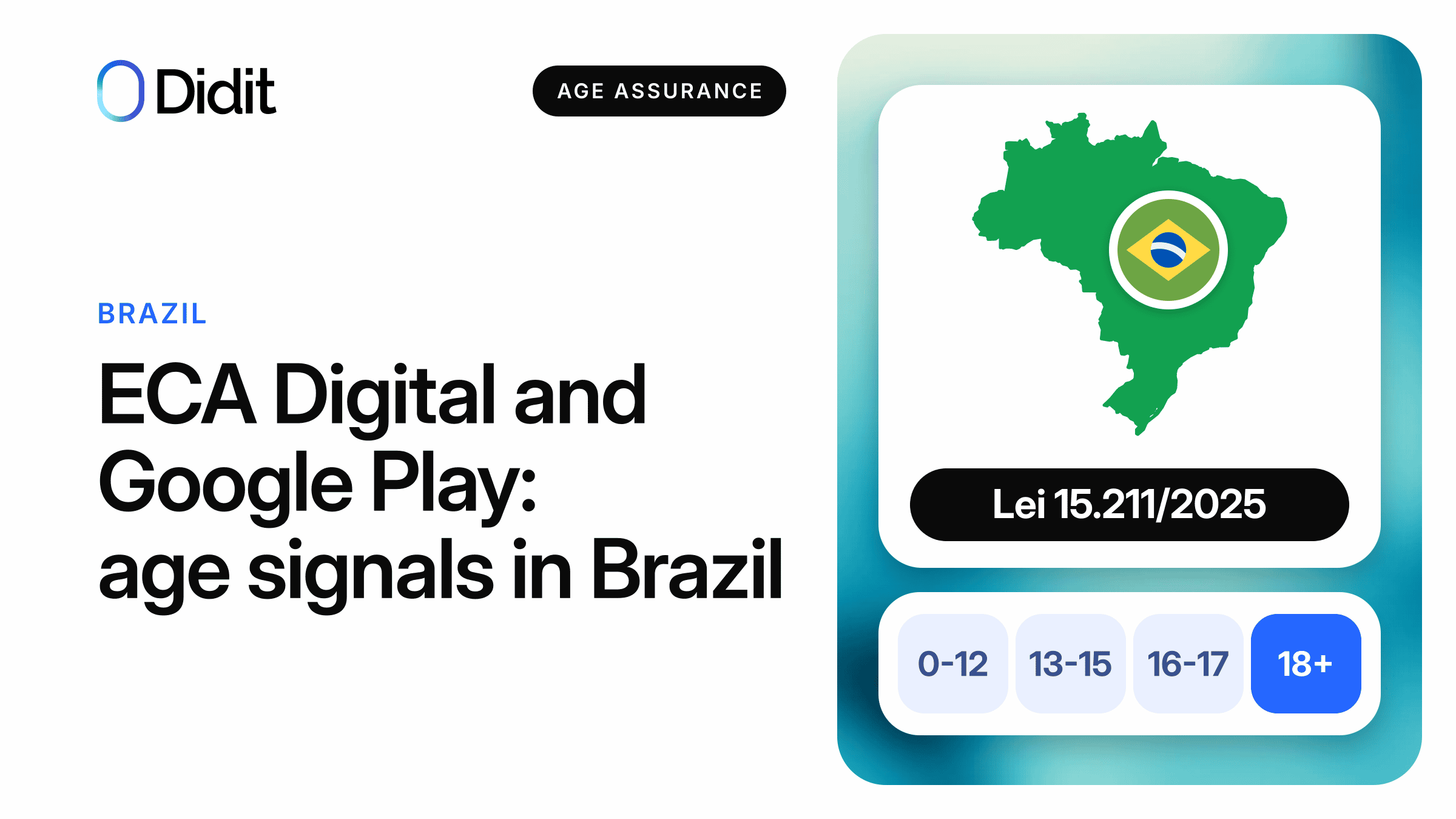
What Google Play sends for users in Brazil, who has to receive it under ECA Digital and Decreto 12.880, when the age signal is enough, and when an app needs its own age check, with the data limits.
Alberto RosasNov 22, 2026Google Wallet ID vs ID document verification: when to use which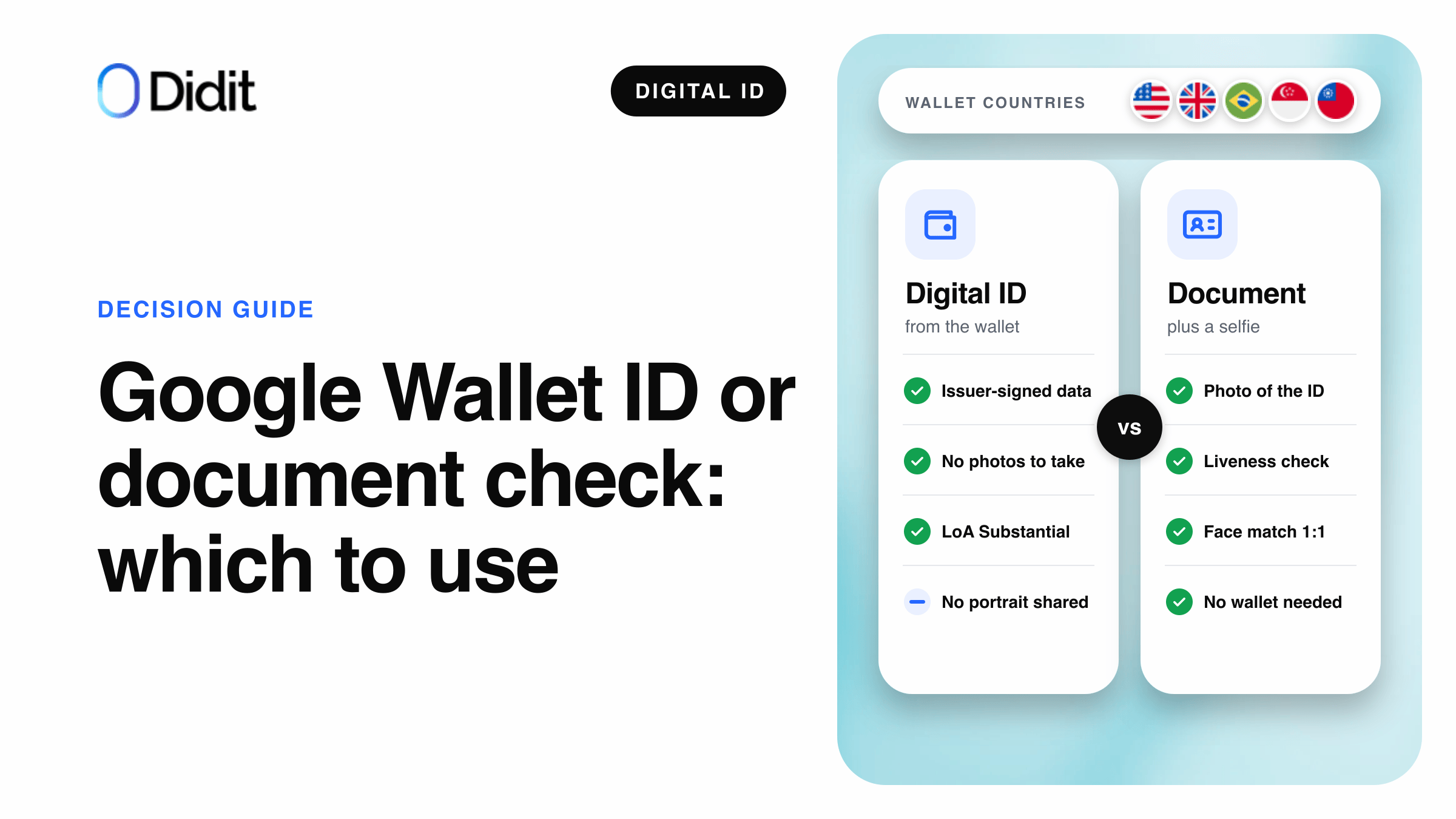
A decision guide for risk and product teams: what a Google Wallet ID proves and what a document check with liveness and face match proves, coverage, cost on Didit, and three workflow patterns.
Alberto RosasNov 20, 2026Digital Credentials API explained: how websites reach ID wallets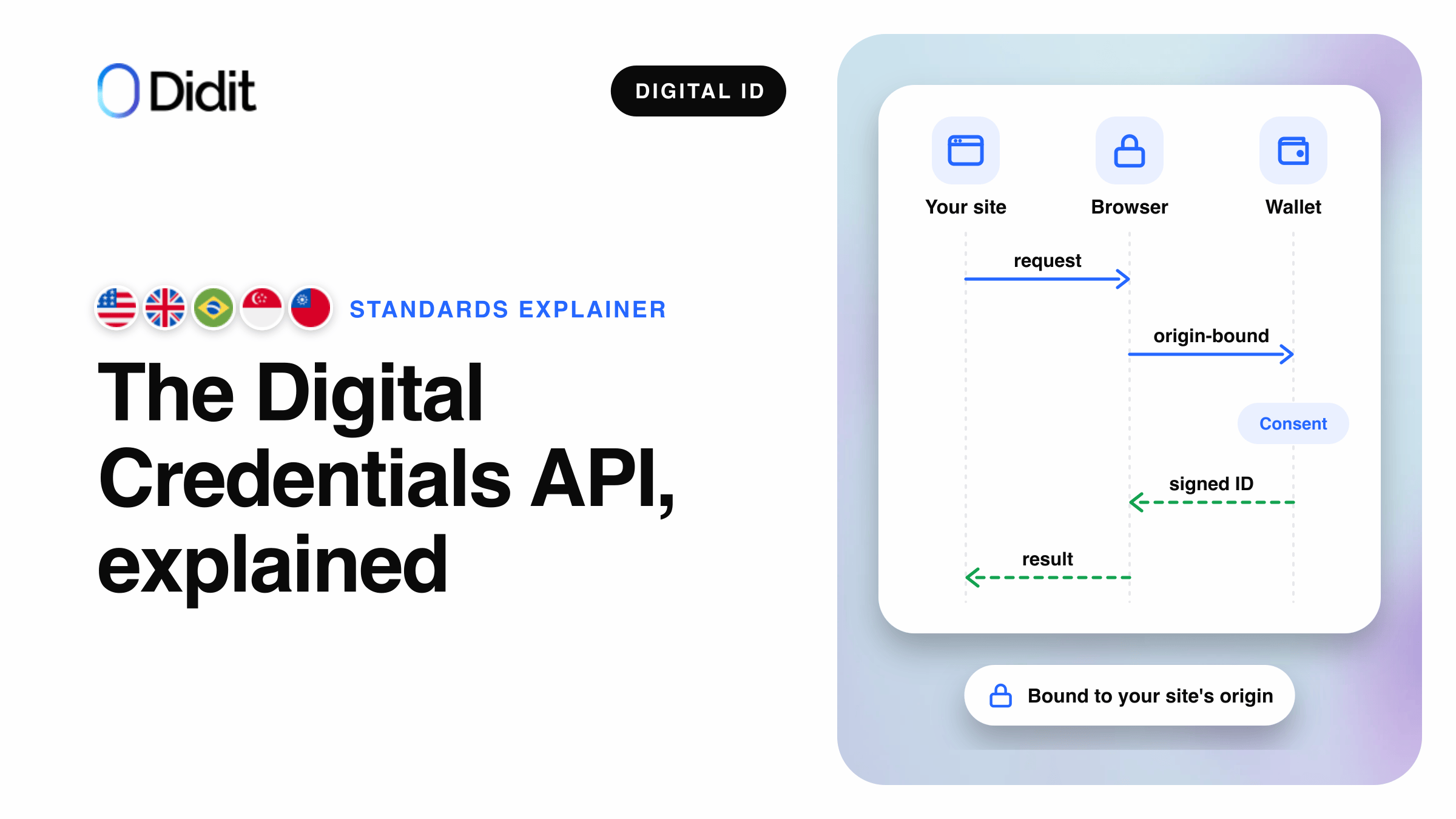
The W3C Digital Credentials API for businesses: how a website asks a wallet for an ID without a redirect, browser support in 2026, cross-device QR, privacy, iframes, and how Didit uses it for Google Wallet.
Alberto RosasNov 20, 2026Accept Google Wallet ID in your onboarding flow: integration guide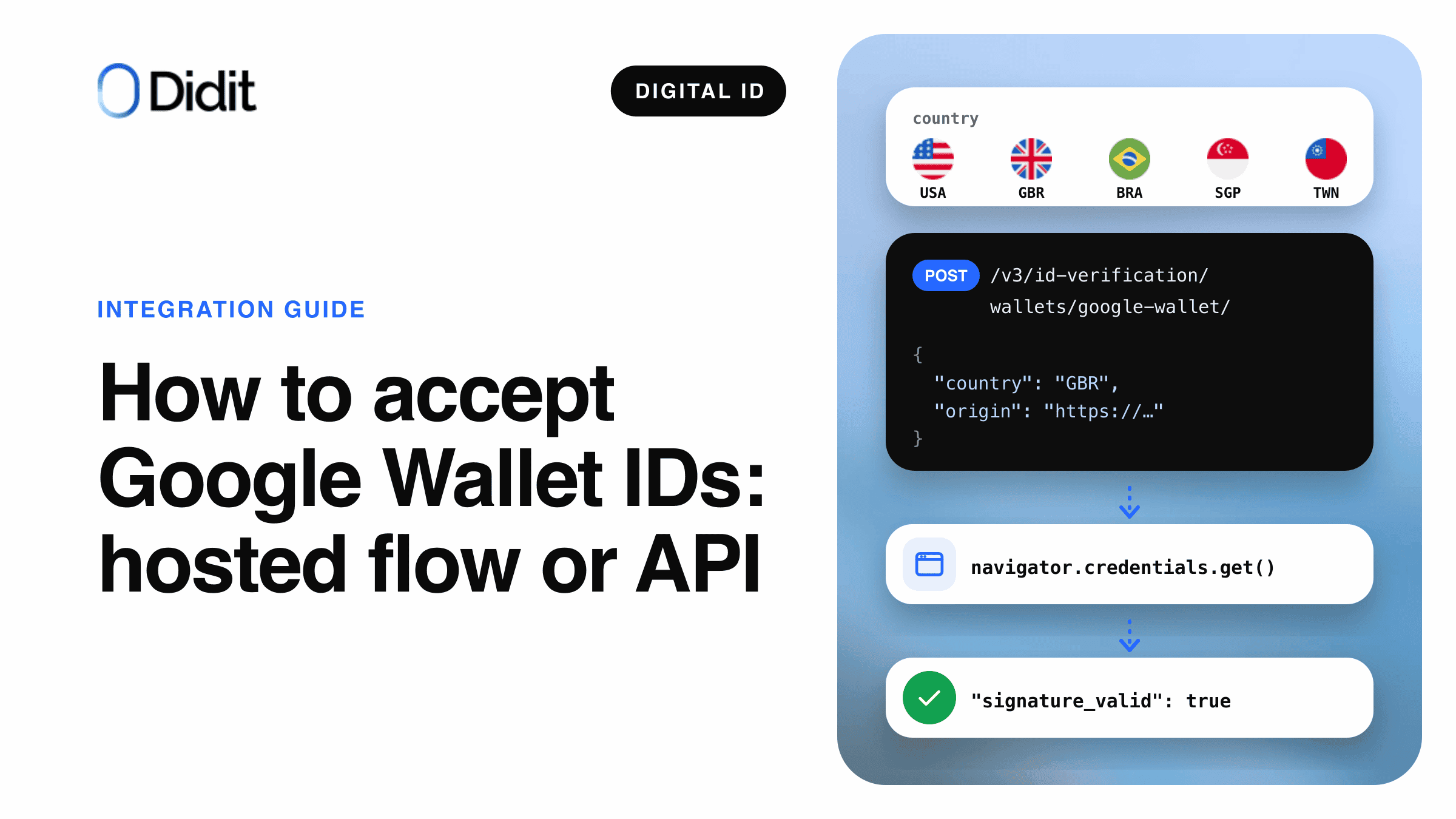
How to accept Google Wallet ID with Didit: sandbox first, Register with Google once, the hosted flow or the standalone API, Android apps, the document fallback and reading a verified result.
Alberto RosasNov 20, 2026Google Wallet ID pass: what businesses receive and where it works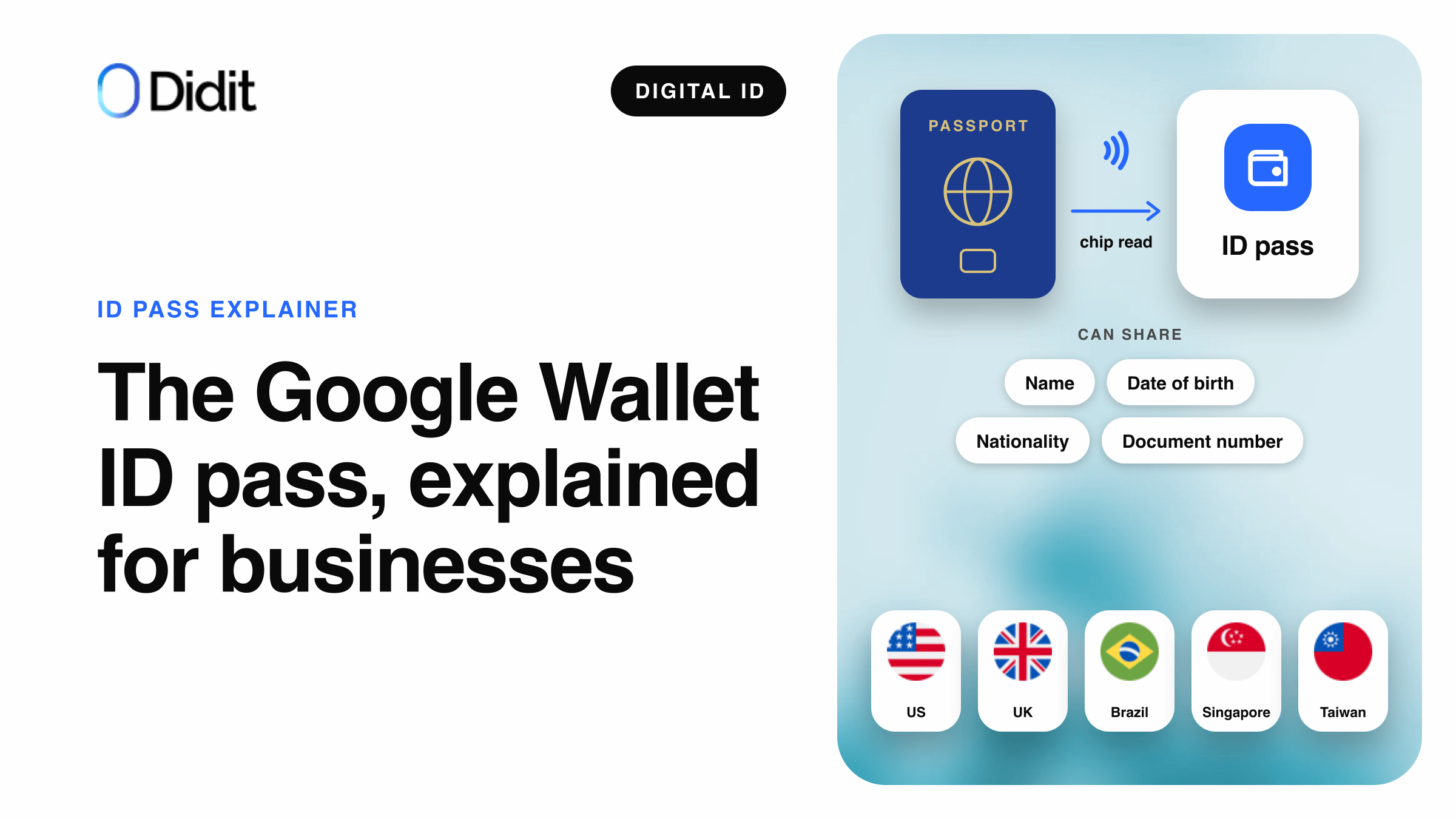
The Google Wallet ID pass explained for businesses: how people create it from a passport, the nine Google regions, how it differs from a mobile driver's license, and what you receive through Didit.
Alberto RosasNov 20, 2026Google Wallet ID verification is live on Didit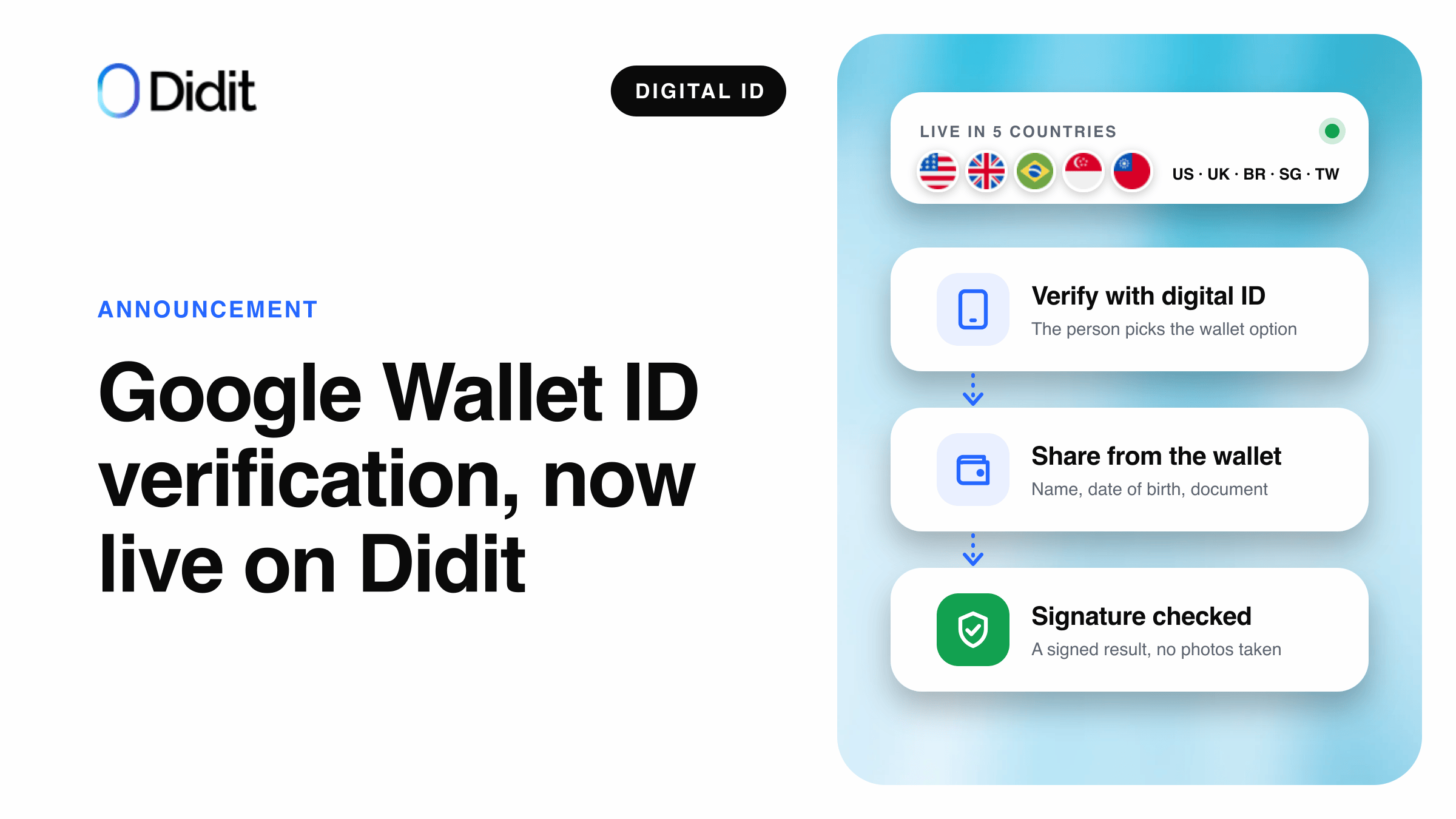
Didit accepts Google Wallet IDs in the US, UK, Brazil, Singapore and Taiwan: ID pass and US mobile driving licences, signed data, Substantial assurance, $0.20 per completed check.
Alberto RosasNov 20, 20267 Best eIDAS Software Platforms in 2026
Compare 7 eIDAS software platforms for identity verification, advanced and qualified signatures, pricing, and evidence validation.
Alberto RosasNov 14, 2026The 10 Best KYC Solutions in 2026
Compare 10 KYC solutions for customer onboarding, screening, and ongoing monitoring, with pricing, cost examples, and practical evaluation criteria.
Alberto RosasNov 14, 2026Product updatesDidit passes iBeta Level 2: 300 attacks, 0 got through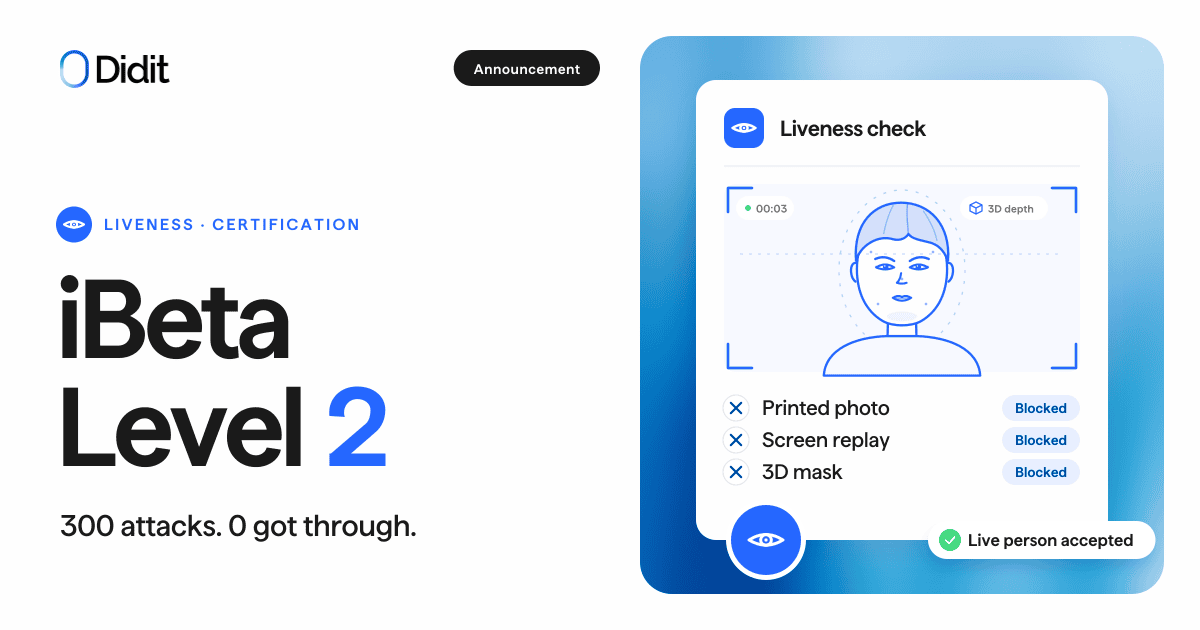
Didit's liveness detection passed iBeta Level 2 presentation attack detection under ISO/IEC 30107-3: 300 attacks, 0 accepted. Alberto Rosas on why proving a real human is behind the screen matters now.
Alberto RosasNov 14, 2026Business7 Best AML Software Platforms in 2026
Compare 7 AML software platforms for screening, ongoing monitoring, and investigations, with pricing and practical criteria for choosing the right fit.
Alberto RosasNov 13, 2026Didit vs ID R&D: IDLive Face liveness or a hosted KYC API
Didit vs ID R&D: compare documented checks, published pricing, review evidence and migration steps. Didit core KYC costs $0.33.
Alberto RosasNov 10, 2026Didit vs TECH5: a hosted KYC API vs biometrics for ID programmes
Compare Didit and TECH5: a hosted identity verification platform with transparent pricing at $0.33 per KYC bundle versus component biometric SDKs and ABIS platforms designed for civil ID deployments.
Alberto RosasNov 10, 2026Didit vs Trust Stamp: published prices vs a quote-led KYC suite
Didit vs Trust Stamp comparison: evaluate transparent per-check pricing, full evidence audit trails, and modular identity infrastructure against sales-led enterprise biometric suites.
Alberto RosasNov 10, 2026BusinessDidit vs FaceTec: Hosted Liveness, Full Evidence, Published Prices
Didit vs FaceTec: Didit is hosted liveness at a published $0.10 passive or $0.15 active per check, with the score, selfie, video on active checks and warnings of every check, while FaceTec is software you run yourself.
Alberto RosasNov 10, 2026Didit vs Nametag: customer KYC API vs workforce identity checks
Compare Didit and Nametag for customer onboarding. Review published per-check pricing, omnichannel KYC coverage, AML screening, and verified government data versus mobile-only workforce identity verification.
Alberto RosasNov 10, 2026Didit vs Keyless: verifying new users vs biometric login
Compare Didit and Keyless (PingOne Recognize) for user verification: full KYC evidence, 1:N face search, and published per-check pricing versus user-based biometric checks.
Alberto RosasNov 10, 2026



Questions
Blog questions
Who writes the Didit blog?
Which topics does the blog cover?
Is the blog available in my language?
Where do I find product updates?
Are these posts legal advice?
How do I find posts on one topic?
Are posts dated?
Do posts link to the docs?
Is the blog the same as the docs?
Compliance built in
Audited, certified and attested.
We hold the certifications and build each country's rules into your flows, so you can launch anywhere without worrying. Security and Compliance center
- Regulation encoded into your flows
Tell us what you do and where. Didit lists the rules that apply to you, with sources, and builds the checks each country needs into one workflow.
- Ready for AMLR
Every requirement of the new EU anti-money laundering rules, from checking customers to human review, is already covered by a Didit check.
- Tested in Spain's Treasury sandbox
Spain's Treasury published its supervised sandbox report on Didit's NFC plus active liveness onboarding; SEPBLAC took part and valued the added measures positively.
- Audited, not self-declared
iBeta Level 1 and Level 2. Liveness tested under ISO/IEC 30107-3.
Your obligations · 3 regions
 SOC 2 Type 2
 ISO 27001
 iBeta Level 1 and Level 2
 EU regulator attestation
 FSM youth protection
 GDPR
 EBA remote onboarding
 MiCA compatible
 FIDO Alliance member
- AMLREU AML Regulation ready
Integration · Didit MCP
Run Didit from your own AI agent
Connect Didit to Claude, Cursor, VS Code or ChatGPT and just ask in plain words. Your agent can do anything you can do in the console, with the same permissions you have.
 Add to Claude
 ChatGPT
 Cursor
- Build workflowsDescribe the checks you need. The agent creates and publishes the flow.
- Run investigationsAsk why a session was declined, review cases, search people and companies.
- Change rulesCreate payment rules, test them on past data and switch them on.
- Pull reportsAsk for numbers, exports or the audit log.
Didit Academy


